Authors: Cobaia Kitchen, Gemini 2.5 Pro, Claude Sonnet 4.5
Photos: Cobaia Kitchen, Google Nano Banana
Ever wondered what happens when you give an AI a fridge full of vegetables and a long list of “don’t you dare” ingredients? We fed Gemini 2.5 Pro—Google’s latest thinking model—the ultimate culinary challenge: create something delicious with what we had on hand, avoid our overused favorites (goodbye again, chickpeas and coconut milk), and make it actually doable on a weeknight. The result? This smoky, creamy Hungarian mushroom paprikash that proved AI can be surprisingly good at navigating a picky eater’s kitchen—unlike Qwen and Mistral, which basically ignored half our instructions and suggested ingredients we’d never heard of.
The irony of using an AI to create a recipe in this economy isn’t lost on us. If you’ve also been sending your soul into the digital void of job applications only to be beaten by a subscription service, you’re not alone. We’ve got a little story for you to read while your paprikash simmers—consider it a side of gallows humor to go with your meal.
Paprikash itself has quite the backstory: born in 18th-century Hungary when paprika was still considered peasant food, this humble dish climbed the social ladder to become a national icon. Turkish traders brought peppers to Hungary in the 1500s, and by 1830, chicken paprikash was fancy enough to appear in István Czifray’s cookbook for “Hungarian housewives.” Our plant-based twist swaps chicken for meaty mushrooms and leeks, keeping all that paprika-forward warmth while staying firmly in weeknight-friendly territory.
Please read the review before cooking!

Hungarian Mushroom Paprikash
Equipment
- Large pot
- Large pan or braising pan with a lid
- Knife
- cutting board
- kitchen scale
Ingredients
- 300 g whole wheat fusilli
- 500 g fresh mushrooms sliced
- 1 large leek thinly sliced
- 1 medium onion finely diced
- 2 cloves of garlic minced
- 2 tbsp sweet paprika powder
- 1 tsp smoked paprika powder
- 200 ml oat whipping cream
- 200 ml vegetable broth
- 2 tbsp olive oil
- A handful of fresh parsley chopped
- Salt and pepper to taste
Instructions
- Cook the whole wheat fusilli according to the package directions.
- While the pasta is cooking, heat the olive oil in a large pan over medium heat. Add the diced onion and cook until translucent, about 5 minutes.
- Add the sliced leek and minced garlic to the pan and cook for another 3-4 minutes until the leek is soft.
- Add the sliced mushrooms and cook until they have released their water and started to brown, about 8-10 minutes.
- Stir in the sweet and smoked paprika powders and cook for one minute until fragrant.
- Pour in the vegetable broth, scraping the bottom of the pan to release any browned bits. Bring to a simmer and let it cook for 5 minutes.
- Reduce the heat to low and stir in the oat whipping cream. Season with salt and pepper to taste. Let it simmer gently for another 2-3 minutes, but do not bring to a boil.
- Drain the cooked fusilli and add it to the pan with the paprikash sauce. Toss everything together until the pasta is well coated.
Notes
Serving suggestions:
Allergens:
- Wheat (gluten) from the whole wheat fusilli pasta.
- Oats (gluten) from the oat whipping cream.
- Celery (only if the vegetable broth you use contains celery; check the label of your broth/bouillon)
Emission Hotspots:
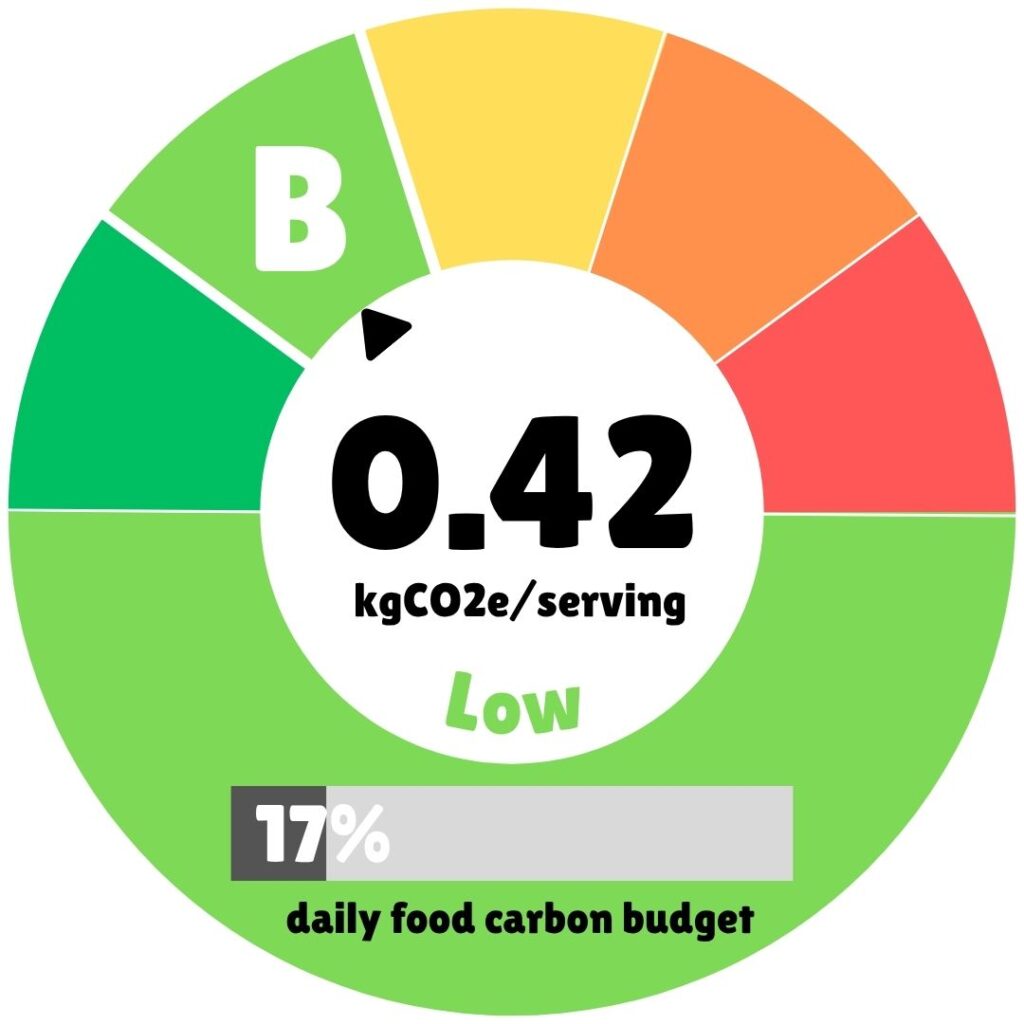
- Shop to home transportation, if a combustion car is used
Sustainability tips:
- Whenever possible, buy your mushrooms, leeks, and onions from local farmers, when in season. This reduces the carbon footprint associated with transportation and storage.
- This paprikash tastes even better the next day. Store any leftovers in an airtight container in the fridge and enjoy it for lunch. You can also freeze it in individual portions for a quick and easy meal later on.
- Compost your vegetable trimmings, turning them into nutrient-rich soil instead of landfill waste.
- Keep the lid on your pot while the paprikash is simmering. This traps heat, which reduces cooking time and saves energy. You can even turn off the stove a few minutes early and let the residual heat finish the cooking process.
- Walk or bike to the supermarket and farmer’s market to cut transportation emissions
- Buy a big bunch of parsley and give the leftovers to your guinea pigs 🐹.
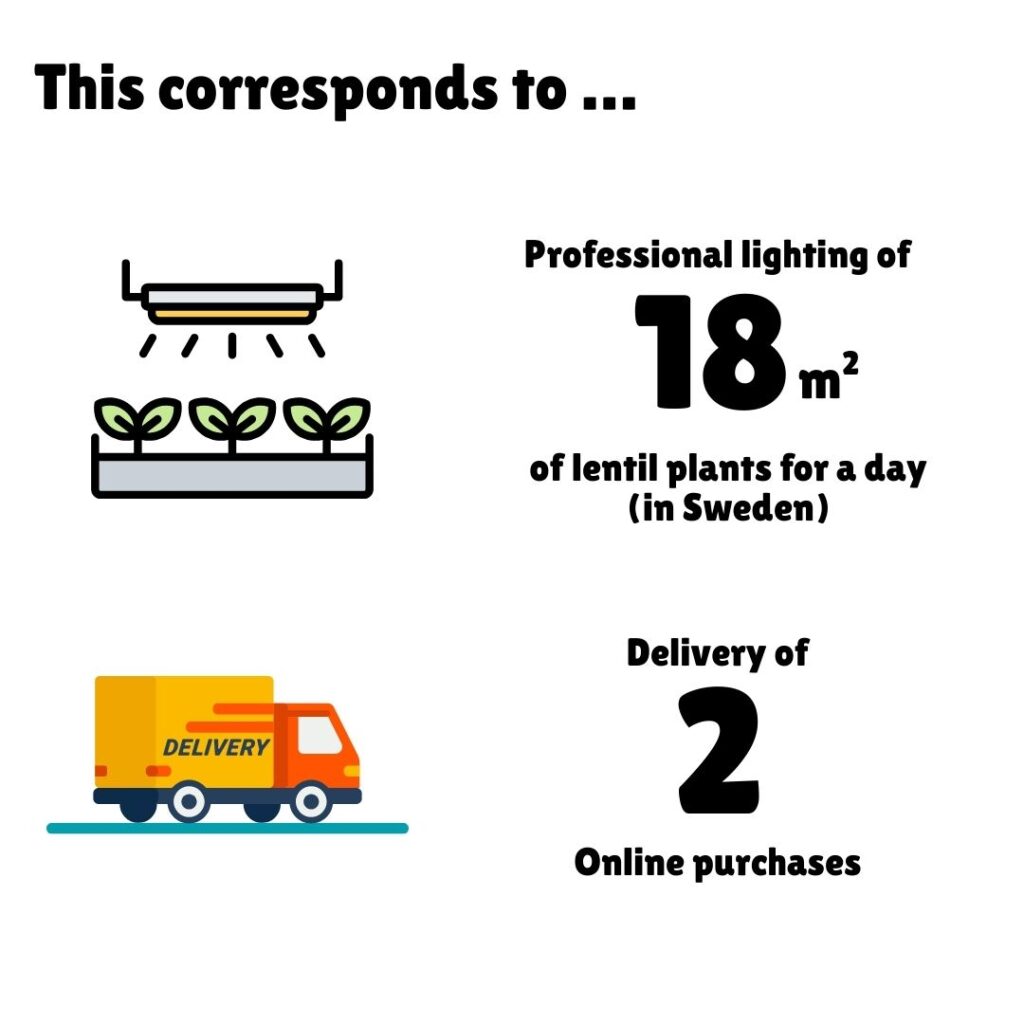
Carbon Footprint
Featured Story
The Outstanding Application

I knew I had this one. After eight weeks of unpaid labor—crafting a 40-page brand strategy deck, designing three sample social media campaigns, writing a 2,500-word blog post trilogy about “synergistic workplace innovation,” and recording a 20-minute video pitch that I re-shot 17 times to get the lighting just right—I finally hit “submit” on my application for Junior Marketing Assistant at SyncBrand Solutions. The job paid €28,000 a year and required a master’s degree, five years of experience, and fluency in four languages. But I had done everything perfectly. My keywords were hyperoptimized. My portfolio sparkled. I even used the company’s brand colors in my PowerPoint slides. For the first time in months, I felt a flutter of hope as I cracked open a beer and made myself a simple paprikash for dinner. Tomorrow, I told myself, everything might finally change.
The rejection email arrived at 4:47 AM. I know this because I was already awake, staring at the ceiling, mentally rehearsing my interview answers. “Dear Applicant,” it began, with the cold efficiency of a machine that doesn’t have to pretend to care, “thank you for your interest in SyncBrand Solutions. While your submission was good, we have selected a candidate whose work better aligns with our needs.” The winning candidate, I later discovered through some light cyberstalking, was an AI content generator called “BrandHype Pro,” available for €39 per month with unlimited outputs. My eight weeks of blood, sweat, and existential dread had lost to a subscription service that never sleeps, never asks for benefits, and never dares to expect a livable wage. I laughed. Then I cried. Then I laughed again, because what else is there to do when you realize being good—even being very good—is the same as being obsolete?
Outside, the world is fracturing into something unrecognizable. The billionaires who built the algorithms have spent the last decade buying governments like they’re collecting Pokémon cards, installing far-right regimes that dismantled labor protections, healthcare, and the universal basic income that was supposed to save us when the robots came. Now, 90% of us live in crumbling neighborhoods, fighting for gig work that pays in pennies or dignity-free manual labor that leaves you too exhausted to wonder where it all went wrong. The tech overlords watch from their glass towers, counting their billions while the rest of us Google “how to make soup from cardboard” and “is it legal to eat pigeons.” The future they promised us—abundance, leisure, robot butlers—turned out to be a neo-feudal nightmare where the only thing automated was our irrelevance.
So here I am, reheating last night’s paprikash, staring at my inbox, and waiting for another job posting to demand the impossible. The meal is good—comforting, even—but not outstanding. And in 2025, good is just a polite word for “worthless.” Tomorrow, I’ll start another application. I’ll spend six weeks building a prototype app, filming a documentary, and writing a dissertation on workplace culture. And when the rejection comes, I’ll laugh at the absurdity of it all, pour another drink, and scroll through job listings for “Unicorn Wrangler” and “Ninja Accountant” while the world burns. This is fine. Everything is fine. I’m fine. And if I say it enough times, maybe the algorithm will believe me and finally let me in.
Culinary Reality Check
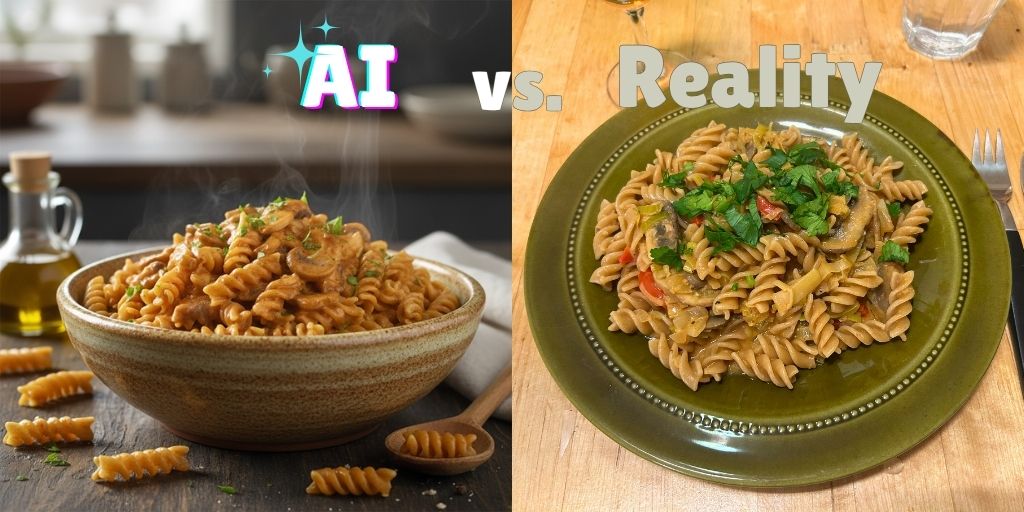
A solid recipe that’s good (and in 2025, that’s the problem).

Taste
Perfectly adequate. Comforting, even. It tastes like mushrooms, paprika, and the creeping realization that “good” stopped being good enough somewhere around 2023. Not your standard Italian pasta-with-tomatoes situation, which is refreshing until you remember that refreshing doesn’t pay rent either.

Portion Size
Three servings if you pair it with a salad, or two servings if you’re eating your feelings after another AI-generated rejection email. We recommend the former, but we understand if you go with the latter.

Combination
The ingredients work together in pleasant harmony, much like humans used to before algorithms decided we were replaceable. Mushrooms, leeks, paprika—it’s all very cooperative. Unlike the job market.

Texture
Good texture. The pasta has bite, the sauce clings nicely, and the mushrooms offer that earthy, meaty satisfaction that almost makes you forget you can’t afford actual meat anymore. Almost.

Spices
The paprika does its job, but let’s be honest: this dish begs for a generous dollop of spicy Ajvar to elevate it from “good” to “almost outstanding.” Unfortunately, “almost outstanding” is still just “good,” and good won’t get you hired in 2025. But at least it’ll get you fed.

Timing
Preparation is fast and accurate, clocking in well under 45 minutes. Perfect for when you need to eat something between submitting unpaid portfolio projects and refreshing your inbox with masochistic hope.

Processing
Instructions are clear, logical, and refreshingly free of corporate jargon like “synergize your aromatics” or “leverage your paprika for maximum flavor optimization.” You just cook the food. Wild concept.

Completeness
Nothing’s missing except a side of existential dread, but that comes standard with every meal in 2025, so we won’t hold it against the recipe.

Environment
Great for the planet—plant-based, low-carbon, and made with locally available ingredients. Too bad the planet is being strip-mined by billionaires who don’t care if you eat sustainably or eat at all. But hey, small victories.

Health
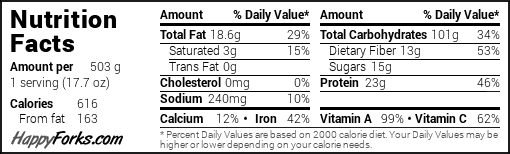
This recipe checks most EAT-Lancet boxes: whole grains, vegetables, plant-based fats, all the nutrients you need to survive in a dystopian hellscape. Add some legumes and extra veggies to make it truly outstanding, but again, outstanding is overrated when nobody’s hiring.

Tips for Redemption
Slather on some spicy Ajvar to transform this from “good enough” to “actually pretty great.”