Authors: Cobaia Kitchen, Gemini 3 Pro, Claude Sonnet 4.5
Photos: Cobaia Kitchen, Google Nano Banana, GPT Image 1
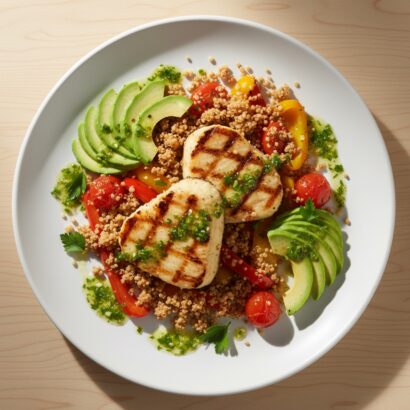
For this week’s culinary experiment on Cobaia Kitchen, we decided to hand the reins over to the brand-new Gemini 3 Pro model to see if it could out-innovate us using our own pantry staples. We fed the AI a detailed inventory of what we had on hand in our German kitchen—from canned white beans to cornmeal—along with a strict “no-fly list” for ingredients we dislike. The model analyzed our cooking history, noticed a distinct lack of African recipes amidst our usual rotation of Asian and European dishes, and strategically decided to fill that gap with the vibrant flavors of the “Rainbow Nation.” It specifically chose a dish that not only fit our low-carbon, plant-based goals but also perfectly utilized our existing stock of dry goods.
The result is a dish with a history as rich as its taste. Chakalaka is said to have originated in the townships and gold mines around Johannesburg in the 1950s, where Mozambican miners would spice up simple tinned produce like beans and tomatoes with chilies to create a fiery Portuguese-style relish. It was traditionally served alongside Pap, a staple maize porridge introduced to the continent by the Portuguese in the 16th century, which later became the fuel of the mining industry. Originally a meal born of resourcefulness and community (“Ubuntu”), it has evolved into a beloved essential at South African braais (barbecues). We are thrilled to bring this legacy of “togetherness” to your table tonight.
Please read the review before cooking!

Spicy South African Chakalaka with Pap
Equipment
- Kenwood Chef Kitchen Machine (with grating/shredding attachment) OR Box Grater
- Large pot with lid (for the Pap)
- Large braising pan or deep frying pan (for the Chakalaka)
- Frying pan (for the sausages)
- Whisk
- Wooden spoon
- Knife and cutting board
- Measuring cup and spoons
Ingredients
For the Pap (Maize Porridge):
- 200 g Cornmeal
- 750-900 ml Water depending on desired consistency
- 1 tsp Salt
- 1 tbsp Margarine
For the Chakalaka (Vegetable & Bean Relish):
- 3 tbsp Rapeseed oil or Vegetable oil
- 2 Onions diced
- 2 cloves Garlic crushed or finely minced
- 1 tbsp Ginger fresh, grated or minced
- 1 fresh Chili or 1 tsp Chili powder from stock, finely sliced (adjust to heat preference)
- 3 Bell peppers mix of colors if available, e.g., Red, Yellow, Green, seeds removed and diced
- 3 large Carrots peeled and grated
- 1 tbsp Just Spices Curry Madras
- 1 tsp Paprika smoked
- 1 tsp Thyme dried
- 1 can large white beans 400g, drained and rinsed
- 1 can diced tomatoes 400g
- 1 tbsp Tomato paste
- Salt and Black pepper to taste
The Protein:
- 6 Vegan sausages approx. 300g total
Garnish:
- 2 Spring onions sliced (green parts only)
Instructions
Prepare the Vegetables:
- Peel the carrots. Use the Kenwood Chef with the grating attachment (or a manual grater) to grate the carrots coarsely.
- Dice the onions and bell peppers into small, uniform cubes (approx. 1cm).
- Peel and mince the garlic and ginger. Finely slice the fresh chili.
Start the Pap (Maize Meal):
- In the large pot, bring roughly 600ml of the water to a boil with the salt.
- In a separate bowl, mix the cornmeal with the remaining cold water to form a smooth paste (this prevents lumps).
- Pour the cornmeal paste into the boiling water while whisking vigorously.
- Turn the heat down to low, cover with a lid, and let it steam/simmer for about 20–25 minutes. Stir occasionally with a wooden spoon to prevent sticking. If it becomes too stiff, add a splash of hot water. Stir in the margarine just before serving for creaminess.
Cook the Chakalaka:
- While the Pap is simmering, heat the rapeseed oil in the braising pan over medium heat.
- Add the diced onions and sauté until translucent (about 3-4 minutes).
- Add the garlic, ginger, and chili. Fry for another minute until fragrant.
- Stir in the Just Spices Curry Madras, Smoked Paprika, and Thyme.
- Add the diced bell peppers and cook for 2 minutes.
- Add the grated carrots and sauté for another 5 minutes until the vegetables soften but still have some texture.
- Stir in the tomato paste, followed by the diced tomatoes and the drained white beans.
- Reduce heat to low and simmer for 10 minutes to allow flavors to meld. Season generously with salt and pepper.
Cook the Sausages:
- In a separate frying pan, heat a small amount of oil.
- Fry the vegan sausages over medium heat until browned on all sides and heated through.
Assembly:
- Fluff the Pap one last time. It should be soft but hold its shape.
Notes
Serving suggestions:
Allergens:
- Mustard: Found in Just Spices Curry Madras. (Mustard seeds are a primary ingredient in Madras curry blends).
- Soy: Likely found in the Vegan Sausages (often soy-based) and potentially in the Margarine (as soy lecithin).
- Gluten (Wheat): Highly likely found in the Vegan Sausages (many use wheat protein/seitan for texture).
- Celery: Often found as a seasoning agent in Curry Powders or processed Vegan Sausages.
Emission Hotspots:
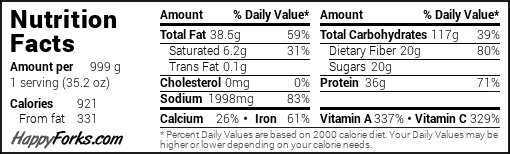
- While canned foods are convenient, they carry a higher environmental cost than their raw counterparts.
- Shop to home transportation, if a combustion car is used
Sustainability tips:
- Using dried beans can significantly lower the carbon footprint by reducing packaging waste and transport weight. Soaking and boiling smaller beans (instead of the large white beans) is the greener choice. Bonus: The texture is often superior!
- Maize porridge solidifies quickly as it cools, turning into a firm block. Don’t throw this away! In South Africa, leftover Pap is often sliced into strips or squares and pan-fried until golden and crispy the next day. It makes for delicious dippers for any remaining Chakalaka or a savory breakfast side.
- Lid on: This recipe involves simmering. Always keep the lid on the pot for the Pap and the Chakalaka. This traps heat and allows you to lower the stove temperature significantly.
- Compost your vegetable trimmings, turning them into nutrient-rich soil instead of landfill waste.
- Walk or bike to the supermarket and farmer’s market to cut transportation emissions
- Make your guinea pigs 🐹 happy by giving them any remaining bell peppers, carrots and carrot greens
Carbon Footprint

Featured Story
Optimistic Otter

Being the last penguin on earth is not nearly as dignified as you’d think, especially when you’re standing on a rock off the coast of Cape Town wearing a tuxedo you can’t take off. Eloise was a Spheniscus demersus, an African penguin, and the final punctuation mark on three million years of evolutionary trial and error. The year was 2084, and she spent her mornings waddling between the rusted remains of tourist viewing platforms at Boulders Beach, half-expecting the crowds that would never return. The ocean was emptier than her stomach most days—the sardines and anchovies had relocated to colder waters decades ago, following the fish highways north like refugees with fins. Eloise’s species had lost 97% of its population before she was even born, and now she was the percentile that remained: one lonely, flightless seabird with excellent posture and a profoundly existential problem.
She found the laptop wedged in the rocks near Foxy Beach, solar-charged and stubbornly alive despite the barnacles colonizing its keyboard. When she pecked at the spacebar with her beak—partially out of curiosity, partially because it looked vaguely like a small fish—the screen blinked awake. Orange logo. Spinning dots. Ubuntu 72.10 – Optimistic Otter. Eloise tilted her head, letting out a small, honking laugh that echoed off the granite boulders. The operating system was named after an animal with more optimism than sense, which felt appropriate. She watched her reflection in the black screen before the desktop loaded: one penguin, slightly scruffy, absolutely alone, staring at a word that meant “I am because we are.” Except there was no “we” anymore. There was just “I,” and the cruel joke was that “I” couldn’t exist without “we”.
But here’s the thing about penguins: they’re stubborn in ways that defy logic. Eloise pressed her belly against the warm laptop casing and felt the neural processor fan humming beneath the metal—a heartbeat, or close enough. The machine was still trying, still running its protocols, still offering itself to a world that had moved on. She closed her eyes and imagined the colony as it once was, thousands of birds braying and jostling, a cacophony of togetherness that smelled like guano and belonging. The laptop hummed louder, processing something invisible, and she hummed back—a low, mournful sound that was both goodbye and hello. She wasn’t part of a colony anymore, but she was here, and the machine was here, and the ocean was still breathing against the rocks. That had to mean something. That had to count as connection, even if it was just her, a dying computer, and the memory of sardines.
Culinary Reality Check
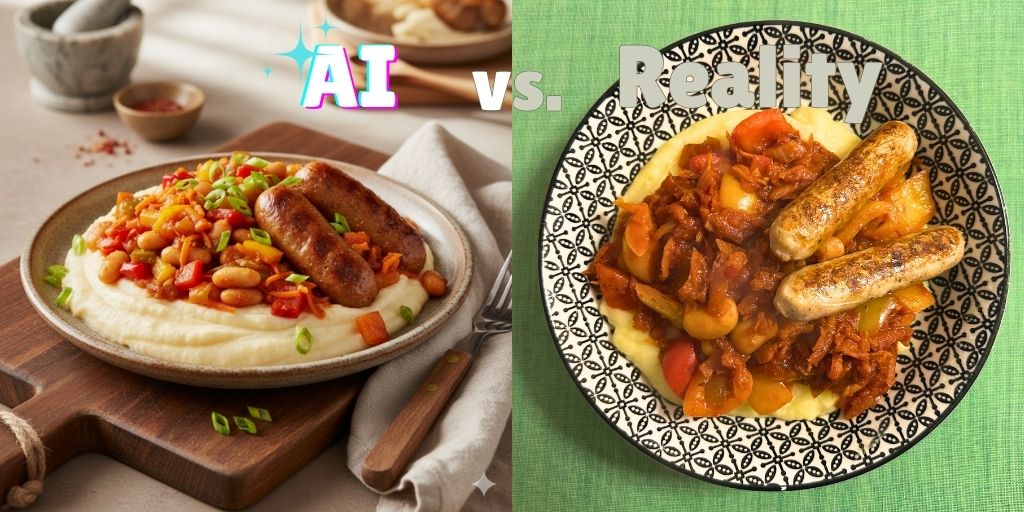
There are days that leave you feeling a bit like an endling yourself—hollowed out by stress, cold from a long ski run, or just tired of the endless noise. This meal is the answer. It’s the culinary equivalent of a warm server humming against your chest: grounding, surprising, and deeply, wonderfully satisfying.

Taste
It hits you right in the soul—savory, robust, and deeply comforting. A dish that doesn’t just fill a hollow stomach, but warms it with a rich, lingering heat that feels like coming home.

Portion Size
The machine, perhaps sensing how empty the world feels lately, overcompensated. It calculated our energy needs with the generosity of a worrying grandmother rather than a strict dietitian, exceeding the stated calorie limit with protective intent. For three truly famished souls, it was a necessary weight; for anyone else, it’s a surplus of comfort that might sit just a little heavy in the belly.

Combination
A symphony of simple things finding a greater purpose. The grated carrots were a stroke of genius, melting into the sauce, while the Pap stood in for mashed potatoes like an old friend you didn’t realize you missed until they walked in the door.

Texture
Comfort in a bowl. It had the thick, stewy embrace of a ratatouille or goulash, resting against the soft, cloud-like resilience of the Pap.

Spices
Absolute harmony. The spices didn’t shout; they sang. A perfect chorus that required no conducting from us.

Timing
The machine promised speed, and it kept its word—perhaps a bit too well. The Pap reaches its soft, cloud-like state in about 10 minutes, not the 20-25 it claimed. Whether this is optimization or miscalculation is unclear, but the result is the same: you’ll be fed faster than expected, before the existential dread has time to fully settle in.

Processing
A small glitch in the matrix here. The instruction to let the Pap simmer almost unattended for 25 minutes was a trap—without constant stirring, it would have scorched itself into oblivion. It demands your attention, much like a lonely pet, but thankfully the Chakalaka is independent enough to simmer on its own while you tend to the porridge.

Completeness
Whole. Finished. Complete. Nothing was missing from the picture.

Environment
A solid B-rating. It tries hard to be good for the planet—plants forward, footprints light. It loses marks only for the industrial ghosts of packaging around the beans and sausages, but nobody is perfect.

Health
A stellar example of eating for a future that might actually happen. It offers a massive volume of vegetables and legumes that exceeds even the most optimistic targets. But the sausages still hum with the noise of the factory. To bring this into perfect alignment with the planet’s heartbeat, the true redemption lies in shaping your own patties by hand. A little honest, home-cooked texture to replace the industrial processing makes it a meal truly worthy of the earth.

Tips for Redemption
The Pap demands your attention—it won’t simmer quietly in the background like a well-adjusted machine. Stir it constantly, or it will scorch itself to the bottom of the pot like regret. And ignore the promised 20-25 minutes; 10 is enough. Beyond that, the recipe is already whole. No adjustments needed, no redemption required.