Authors: Cobaia Kitchen, Nemotron 3 Super, Claude Sonnet 4.6
Photos: Cobaia Kitchen, Nano Banana 2
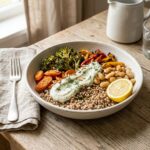
At Cobaia Kitchen, pretty much every recipe starts the same way: a conversation with an AI, a pantry inventory, and a healthy dose of culinary curiosity. This time we handed Perplexity powered by Nemotron 3 Super our ingredient stock, a list of cuisines to explore, and our usual set of kitchen preferences — plant-based, low carbon footprint, nothing we’ve cooked before — and let it do its thing. The model landed on Lithuanian and Latvian inspiration, and we have to say, it nailed the brief. What came out was the Baltic Bowl: smoky buckwheat, slow-roasted vegetables, crispy white beans, and a silky dill cashew cream that ties everything together in the most satisfying way.
And here’s the thing — buckwheat and dill aren’t just trendy health food. They are ancient Baltic staples with deep roots in the region’s soil and culture. Archaeobotanical research shows that buckwheat (Fagopyrum esculentum) arrived in the Eastern Baltic around the 13th–14th century AD, quickly becoming a cornerstone of everyday cooking in Lithuania and Latvia — eaten as porridge, baked into breads, and stirred into soups. Dill, meanwhile, is so embedded in Baltic cooking that food writers describe it as being used “with abandon” across all three Baltic states. And sour cream? In Lithuania it is practically a condiment for everything — soups, pancakes, salads, desserts — a tradition going back centuries. Our cashew-based dill cream is a loving, fully plant-based nod to that very same tradition. Old ingredients, new perspective — that’s the Cobaia Kitchen way.
Please read the review before cooking!
Baltic Bowl
Equipment
- Large pot with lid
- Medium saucepan with lid
- Large baking tray- Baking paper
- 2–3 mixing bowls
- Chef's knife & cutting board
- sieve
- measuring cups and spoons
- Immersion blender or small blender
- Wooden spoon or spatula
Ingredients
Smoky buckwheat base
- 240 g buckwheat groats
- 480 ml water
- 1 cube vegetable broth or 2 tsp vegetable broth powder
- 1 tbsp olive oil
- 1 tsp smoked paprika
- ½ tsp ground cumin
- Salt and pepper to taste
Roasted vegetables & beans
- 2 medium onions peeled and cut into thin wedges
- 2 red or yellow bell peppers deseeded and cut into 2 cm strips
- 2 medium carrots scrubbed and cut into 1 cm half-moons
- 1 small broccoli head approx. 300 g, cut into small florets; stalk peeled and sliced 0.5 cm
- 1 can large white beans 400 g, drained and rinsed
- 2 tbsp olive oil
- 1 tsp sweet paprika
- ½ tsp dried thyme
- ½ tsp dried oregano
- ½ tsp garlic powder
- 1 tbsp white balsamic or apple cider vinegar
- Salt and black pepper to taste
Dill “sour cream” sauce
- 120 g cashews soaked 15 min in hot water, then drained
- 160 ml soy milk or almond milk unsweetened
- 2 tbsp lemon juice
- 1 tbsp white balsamic or apple cider vinegar
- 1 tsp mild mustard
- ½ tsp garlic powder
- ½ tsp salt
- 2 tbsp finely chopped fresh dill or 1–2 tsp dried dill
Smoky sunflower crunch
- 40 g sunflower seeds
- 1 tsp rapeseed or olive oil
- 1 tsp smoked paprika
- Pinch of salt
Instructions
- Soak the cashews. Place cashews in a bowl and cover with hot water. Leave to soak while you prep everything else (10–15 minutes). This gives your sauce a silky smooth texture.
- Rinse and toast the buckwheat. Place buckwheat in a sieve and rinse under cold running water until it runs clear. Heat 1 tbsp olive oil in a medium saucepan over medium heat, add the buckwheat and toast for 2–3 minutes, stirring, until nutty and fragrant.
- Cook the buckwheat. Add 480 ml water, broth powder or cube, smoked paprika, cumin, salt and pepper. Bring to a boil, reduce heat to low, cover and simmer for 15 minutes until tender and water is absorbed. Turn off heat and leave covered for 5–10 minutes. Fluff with a fork before serving.
- Preheat oven to 200 °C (top/bottom heat) and line a large baking tray with baking paper.
- Prep the vegetables. Peel onions, halve from root to tip and slice into thin wedges. Remove seeds and stem from bell peppers, cut into 2 cm strips. Scrub carrots, trim ends, slice into 1 cm half-moons. Cut broccoli into bite-size florets; peel the thick stalk and slice into 0.5 cm coins — don't waste it, it roasts beautifully.
- Season and roast. Add all vegetables and drained white beans to the baking tray. Drizzle with 2 tbsp olive oil and vinegar, sprinkle over paprika, thyme, oregano, garlic powder, salt and pepper. Toss directly on the tray until everything is well coated and spread in an even layer. Roast for 20–25 minutes, tossing once halfway, until tender and golden at the edges.
- Make the dill cream. Drain the soaked cashews. Blend cashews, plant milk, lemon juice, vinegar, mustard, garlic powder and salt until completely smooth. Add a splash more plant milk if needed to reach a thick but pourable consistency. Stir in the dill and taste — adjust salt and lemon to your liking.
- Toast the sunflower seeds. Mix sunflower seeds with oil, smoked paprika and a pinch of salt. Spread on a small corner of the vegetable tray for the last 5–7 minutes of roasting, or toast in a dry pan over medium heat for 3–4 minutes, stirring constantly, until golden and fragrant.
- Assemble. Divide the buckwheat between 4 bowls. Top with a generous portion of roasted vegetables and beans. Spoon 2–3 tbsp of dill cream over each bowl in soft ribbons. Finish with a sprinkle of smoky sunflower seeds, a grind of black pepper and a lemon wedge on the side.
Notes
Serving suggestions:
Drinks:
Allergens:
- Tree nuts (cashews): To make nut-free: replace cashews with sunflower seeds and blend as above
- Soya (if soy milk used)
- Mustard
- May contain Celery depending on the vegetable broth used — always check the label.
Emission Hotspots:
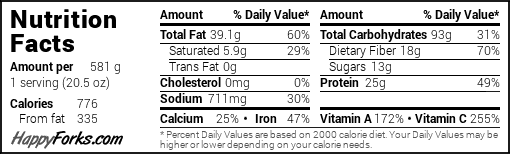
- Cashews are the highest-footprint ingredient in this recipe, driven by their energy-intensive multi-stage processing and long intercontinental supply chains — swap for EU-grown sunflower seeds to reduce this further without any noticeable change to the sauce.
- While canned beans are convenient, they carry a higher environmental cost than their dried counterparts.
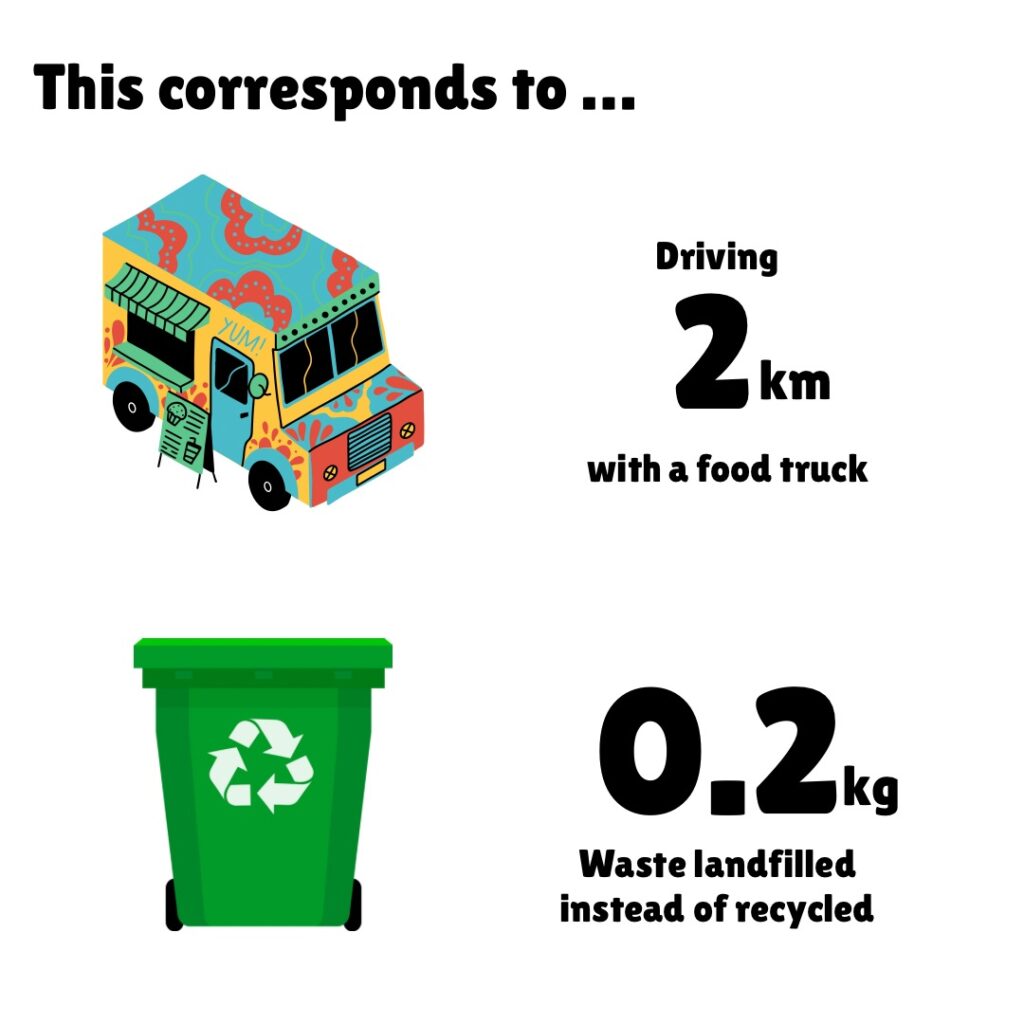
- Shop to home transportation, if a combustion car is used
Sustainability tips:
- Use the entire broccoli — peel the stalk and roast it alongside the florets.
- Leftovers keep for 2–3 days; the buckwheat also works cold as a grain salad base.
- Broccoli leaves, carrot greens and bell pepper off-cuts make excellent guinea pig snacks. 🐹
- Buckwheat has a significantly lower footprint than rice — good choice.
- Buy carrots, broccoli and onions locally grown when in season in Germany (spring through autumn).
- Keep the saucepan lid on while the buckwheat cooks, and turn off the hob 2–3 minutes early.
- Use the hot oven efficiently — toast seeds or roast extra vegetables for tomorrow’s lunch at the same time.
- Compost all scraps.
- Walk to the supermarket.
- Walk or bike to the supermarket and farmer’s market to cut transportation emissions
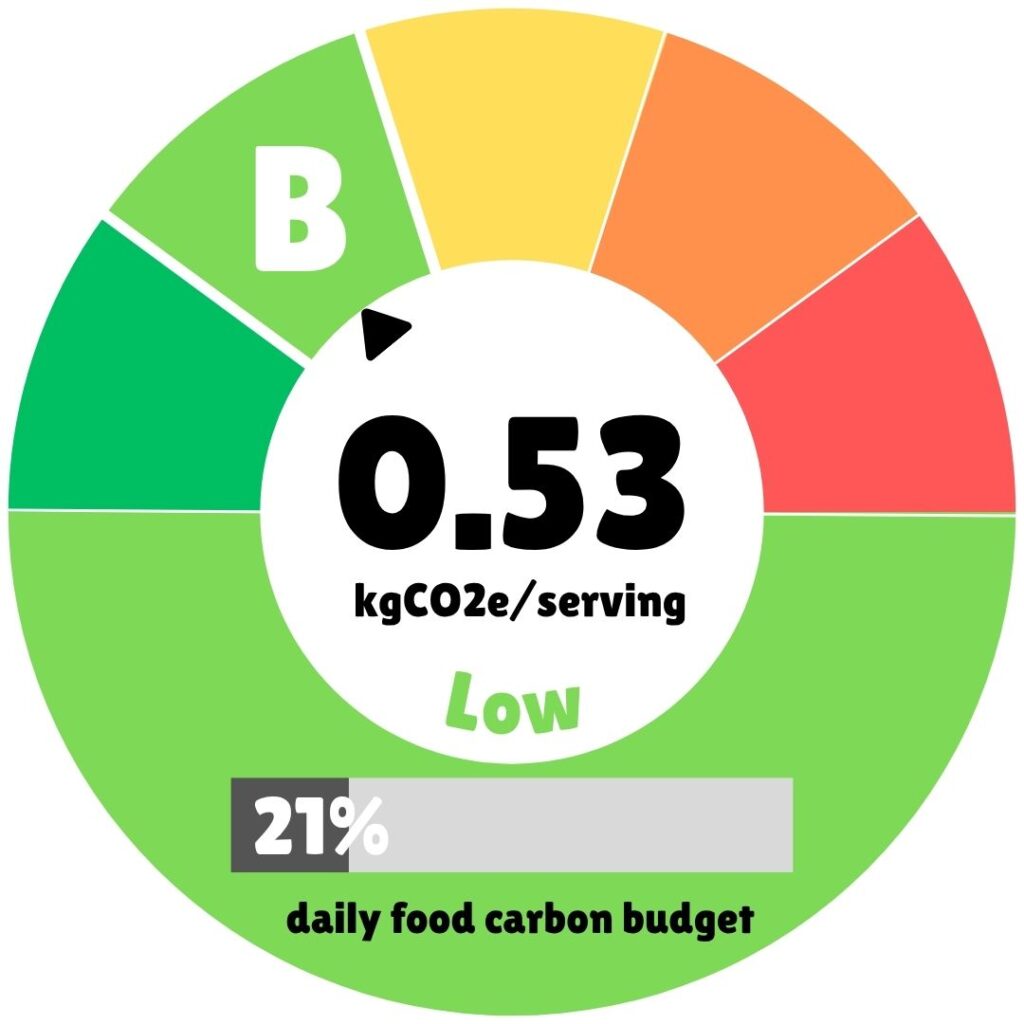
Carbon Footprint
Featured Story
The Infinite Renewal Department
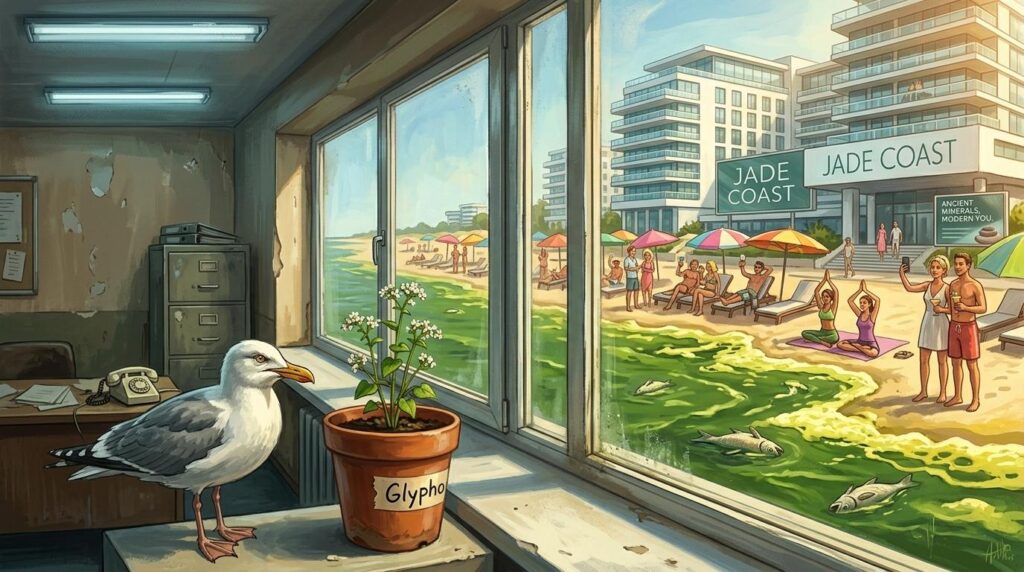
Ingrid Paulauskas, Senior Pesticide Renewal Analyst (Grade 7, Sub-Division C, Renewals), had spent sixteen years reviewing documents that determined what chemicals could legally end up in human food. The letter informing her that this was no longer necessary was three paragraphs long and signed by someone called Björn. Effective 1 January 2035, following the smooth and entirely science-based implementation of the EU Food and Feed Safety Simplification Omnibus, all active substance renewal procedures had been permanently discontinued. All pesticides were now approved. Forever. Her department had been reassigned to an “administrative transition facilitation working group,” which, upon closer inspection, was a shared calendar with no meetings in it.
She came to the office anyway. So did her colleague Darius, who had spent fourteen years reviewing chlorpyrifos dossiers and now arrived each morning carrying his thermos and the expression of a man who had been made redundant by an ideology. They sat at their desks. Ingrid watered her office plant — a buckwheat seedling, grown from a seed packet left behind by a Lithuanian farmer who had once come to complain about a competitor’s fungicide, very loudly, for forty minutes. Outside the window, the Baltic Sea had turned a deep, assertive green. Not the nice kind. Three algae-stimulating compounds, indefinitely approved and enthusiastically in use, had suffocated fish stocks across the entire Gulf. The tourism board voted unanimously to rebrand it the “Jade Coast”, launched a “Baltic Detox Wellness Experience” that was essentially standing near toxic foam for €190 a night, and commissioned a logo. A Munich supplement brand bottled the water for €48 under the tagline “Ancient Minerals, Modern You.” The microcystin values were on the label. The font was 4pt. The branding was gorgeous.
With no fish left, the seagulls had moved inland. First the harbour, then the market, then every café terrace in the city with unsettling organisational commitment. Outdoor dining now required a “gull mitigation attendant” — a teenager with a stick — and results were not guaranteed. One gull was photographed mid-heist, stealing a crêpe directly off a fork on Tiltų Street. The photo went viral. He had 40,000 followers by Thursday. The city council formed a task force. The task force recommended a working group. The working group was given a shared calendar. Ingrid recognised the format immediately.
Back in Sub-Division C, she had completed Draft 5 of a report titled Cumulative Risk Assessment Implications of Open-Ended Active Substance Authorisation: A Framework Nobody Asked For But Here It Is Anyway. DG SANTE had auto-replied three times. The Scientific Committee had noted it. Twice. Meanwhile, supermarket produce had been arriving since 2033 with cheerful new labels — “Mineral-Enhanced,” “Field-Optimised,” “Micronutrient-Rich” — designed by a Brussels agency called Reframing Reality for Regulatory Transition GmbH. The fact that childhood neurological disorders had risen 22% across the Baltic states was attributed, by a think-tank whose funding appeared on page 47 of their annual report, to “screen time and post-pandemic dietary anxiety.” The think-tank’s director published Eat Brave: Why Pesticide Fear Is Holding You Back, appeared on morning television, and had extremely good teeth.
In April, a gull got in through the fire exit Darius had left propped open. It walked directly to Ingrid’s desk, stood on the blue binders, and regarded them with unmistakable recognition — the look of a creature also recently failed by a system it didn’t design. She gave it half her sandwich. Buckwheat bread, from the good bakery on Liepų Street. It ate with quiet dignity. Darius said, after a long pause, that the gull probably had a better grasp of cumulative risk assessment than everyone who had signed the Omnibus. Glypho — the buckwheat plant, named by Darius, thriving inexplicably — produced another flower. The Jade Coast shimmered. A wellness influencer posted a reel about the healing power of the sea and got 200,000 likes before Ingrid had finished her coffee. She opened a new document. Draft 6.
Culinary Reality Check
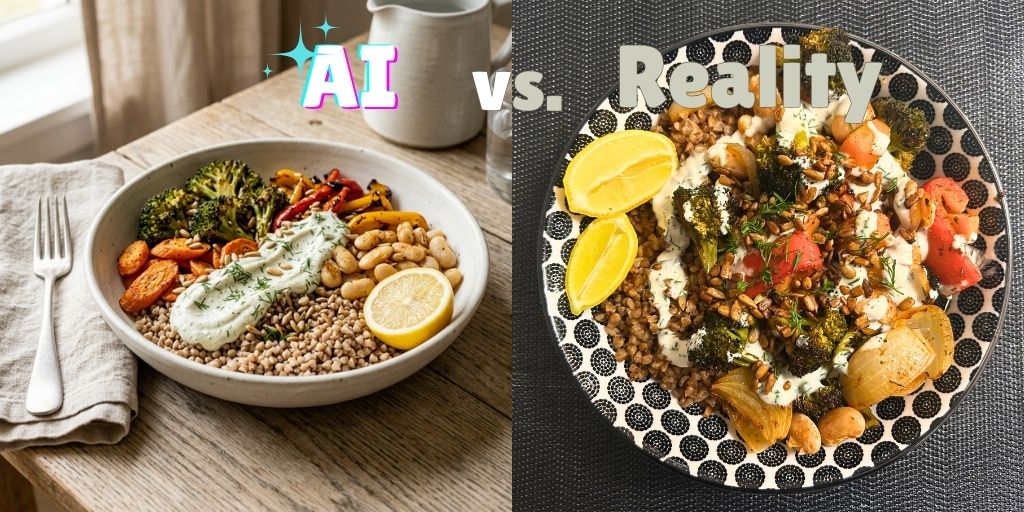
An unexpected success. The taste tester approved without being asked twice, which, in this household, counts as a standing ovation.

Taste
Good. Really good, actually. Buckwheat as whole seeds was an unknown quantity going in, and the honest expectation was somewhere between “fine” and “aggressively healthy.” It turned out to be neither. Not Michelin-star territory, but a serious contender against any decent lunch bowl place — which, given that you made it at home on a weekday, is exactly where you want to be.

Portion Size
Four portions, as promised. We were liberal with the vegetables — a large broccoli, three carrots — and the bowl rewarded that generosity without complaint. Nothing left over. No regrets.

Combination
The cashew cream is the thing that ties it all together, and it does so gracefully. The dill is present but not dominant — a notable restraint compared to previous recipes, where dill had a tendency to treat the dish as its personal stage.

Texture
Fluffy buckwheat with a texture not unlike rice — reassuring for anyone approaching it with suspicion. The roasted vegetables hold their character. The cream does what cream should do. No surprises, all of them good.

Spices
The spicing in the buckwheat base deserves particular mention. It transforms what could have been a bowl of earnest grains into something you actually want to eat. A small triumph of seasoning over austerity.

Timing
Preparation time was approximately as stated, helped along by a sensible shortcut: cashew butter instead of soaking and blending whole cashews. More on that below.

Processing
One clarification worth making before you go shopping: buckwheat groats can mean several things depending on where you’re standing in the grain aisle. What works here is the whole-seed format — pre-steamed, dry, sold as a quick-cooking rice or quinoa alternative. Coarsely ground groats in the porridge sense would not survive this recipe with their dignity intact. Check the packaging. “Steamed” and “whole seeds” are what you’re looking for.

Completeness
The recipe is self-contained. Nothing was missing, nothing was unexplained, no mid-cook trip to the supermarket was required. This is rarer than it should be.

Environment
A solid B. Plant-based, mostly seasonal, low footprint. The kind of meal the planet would give a polite nod to, if it had the energy.

Health
The Baltic Bowl is an outstanding example of the Planetary Health Diet in practice: rich in whole grains, vegetables, legumes, nuts and unsaturated fats, and entirely free of red meat, processed foods and added sugars — ticking virtually every PHD box in a single meal. The only practical notes worth flagging: use a low-sodium broth to keep salt in check, and make sure fruit features somewhere else in the day to meet the recommended 200 g daily intake.

Tips for Redemption
- Use cashew butter instead of soaking and blending whole cashews. The result is the same, the effort is less, and unless you own a Vitamix you were never going to get it fully smooth anyway.
- Add more and/or bigger vegetables.
- And as always: do not be shy with the spices. The recipe can handle it. So can you.