Authors: Cobaia Kitchen, Nemotron 3 Super, GPT-5.4
Photos: Cobaia Kitchen, Nano Banana 2
This recipe was born in classic Cobaia Kitchen fashion: we fed a very specific prompt into the Nemotron 3 Super model, told it we had red or yellow lentils in a Swedish kitchen, demanded a plant-based, low-carbon, braces-friendly Indian dal that still looked gorgeous on camera, and watched it calmly juggle planetary health guidelines, supermarket reality, and comfort-food cravings like it was no big deal. Dal itself has a much longer origin story than our AI experiment—lentil stews have been cooked across the Indian subcontinent for thousands of years, with the word “dal” coming from Sanskrit for “to split,” and red lentils (masoor) appearing in ancient texts and archaeological records as everyday staples long before tomatoes and chilies joined the pot. And if you notice a certain golden theme shimmering through this dish, let’s just say there’s a crunk rapper out there whose new braces pair suspiciously well with a bowl of glowing lentils and roasted tomatoes.
Please read the review before cooking!
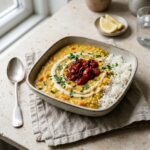
Golden Glow Lentil Dal Bowl
Equipment
- Medium saucepan with lid
- Large non-stick pan or braising pan with lid
- cutting board
- Sharp knife or Japanese kitchen knife
- Wooden spoon
- Measuring cup
- Kitchen scale (optional but helpful)
- Small bowl
Ingredients
Dal base
- 280 g red lentils dry, rinsed well
- 1 medium yellow onion about 120 g, finely chopped
- 2 medium carrots about 160 g, finely diced (small cubes for extra softness)
- 1 small zucchini about 160 g, finely diced
- 3 cloves garlic minced
- 1 piece fresh ginger about 15 g, finely grated
- 2 tbsp rapeseed oil or other neutral oil
- 1 tsp whole cumin seeds
- 1 tsp whole brown or black mustard seeds small amount, for tempering only
- 1 tsp ground turmeric
- 1.5 tsp ground coriander
- 1 tsp ground cumin
- 0.5 tsp smoked paprika optional, for depth and color
- 0.25 –0.5 tsp chili flakes adjust to heat tolerance, or omit for very mild
- 750 ml water
- 400 ml oat cooking cream or other plant cream unsweetened
- 1.5 tsp fine salt more to taste
- Freshly ground black pepper
Roasted tomato swirl
- 200 g cherry tomatoes or small plum tomatoes, halved
- 1 tbsp rapeseed oil
- 0.5 tsp ground cumin
- 0.5 tsp smoked paprika
- Pinch of salt
Creamy lemon oat topping (for photogeneity and creaminess)
- 40 g fine oat flakes
- 200 ml water
- 1 tbsp lemon juice
- 0.25 tsp salt
To serve
- 240 g dry basmati or long-grain rice about 60 g per person, rinsed
- Fresh flat-leaf parsley or chives finely chopped (garnish, since fresh cilantro is disliked)
- Lemon wedges optional
Instructions
Start the rice
- Rinse the rice in cold water until the water runs mostly clear.
- Cook according to package instructions in a pot or rice cooker, aiming for soft, slightly sticky grains that are gentle to chew.
Roast the tomatoes for the swirl
- Preheat the oven to 200 °C (fan 180 °C).
- Place halved cherry tomatoes in a small baking dish. Drizzle with 1 tbsp oil, sprinkle with 0.5 tsp ground cumin, 0.5 tsp smoked paprika, and a pinch of salt.
- Toss gently and roast for 15–20 minutes until soft, slightly collapsed, and juicy. Set aside.
Prepare the vegetables
- Peel the onion and chop it finely into small pieces so it softens completely when cooked.
- Peel the carrots, slice them lengthwise, then into thin strips, and finally into very small cubes.
- Wash the zucchini, trim the ends, slice lengthwise, then into thin strips and small dice.
- Peel the garlic cloves and mince them finely.
- Peel the ginger and grate it finely.
Build the spiced dal base
- Heat 2 tbsp rapeseed oil in the large pan over medium heat.
- Add cumin seeds and mustard seeds. Let them sizzle and pop for 30–60 seconds, stirring, until fragrant but not burnt (mustard is used in a very small amount, only as seasoning, in line with your preference).
- Add the chopped onion and a pinch of salt. Sauté for 4–5 minutes until soft and translucent.
- Add garlic and ginger and cook for 1 minute, stirring.
- Sprinkle in turmeric, ground coriander, ground cumin, smoked paprika, and chili flakes. Stir for 30 seconds to bloom the spices.
- Cook the lentils until silky soft
- Add the diced carrots and zucchini to the pan. Stir to coat in the spices.
- Add the rinsed red lentils and 750 ml water. Stir well, bring to a gentle boil, then reduce to low heat.
- Cover with a lid, leaving a small gap, and simmer for about 20–25 minutes, stirring every 5 minutes to prevent sticking.
- Partially mash the dal with the back of the spoon or a potato masher to make the texture extra soft for sensitive teeth and braces. Add a little extra water if it becomes too thick; it should be creamy, not stiff.
- Stir in the oat or other plant cream and simmer for another 5 minutes on low heat.
- Season with 1.5 tsp salt and black pepper, adjusting to taste.
Make the creamy lemon oat topping
- While the dal simmers, add 40 g oats and 200 ml water to a small saucepan.
- Cook over low-medium heat, stirring, for about 5 minutes until the oats are very soft and creamy.
- Remove from heat, stir in 1 tbsp lemon juice and 0.25 tsp salt.
- The consistency should be pourable but thick. Add a splash of water if needed. This gives a beautiful, pale swirl on top of the dal and adds extra creaminess and whole grains.
Assemble and finish
- Fluff the cooked rice gently with a fork.
- Taste the dal and adjust seasoning with more salt, pepper, or a squeeze of lemon if desired.
- For serving, spoon rice into bowls, then ladle the creamy dal over roughly two-thirds of the rice so the layers are visible in photos.
- Spoon some roasted tomatoes and their juices on top of the dal in the center.
- Drizzle 1–2 tbsp of the creamy lemon oat topping in a loose spiral over each bowl.
- Finish with a sprinkle of finely chopped parsley or chives for a fresh, green contrast.
Notes
Serving suggestions:
- Serve with extra lemon wedges for those who like a brighter, tangier dal.
- For added crunch for guests without braces, you can offer toasted pumpkin or sunflower seeds on the side (not mixed in).
- Pair with a simple cucumber and tomato salad dressed with lemon and a touch of mustard if desired, staying within your “mustard in small amounts” guideline.
- Leftover dal thickens in the fridge; thin with a splash of water or plant milk when reheating for a luxurious soup.
Drinks:
- Cereals containing gluten (Oats) – present in the oat cooking cream and in the creamy lemon oat topping.
Emission Hotspots:
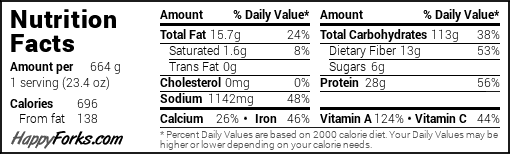
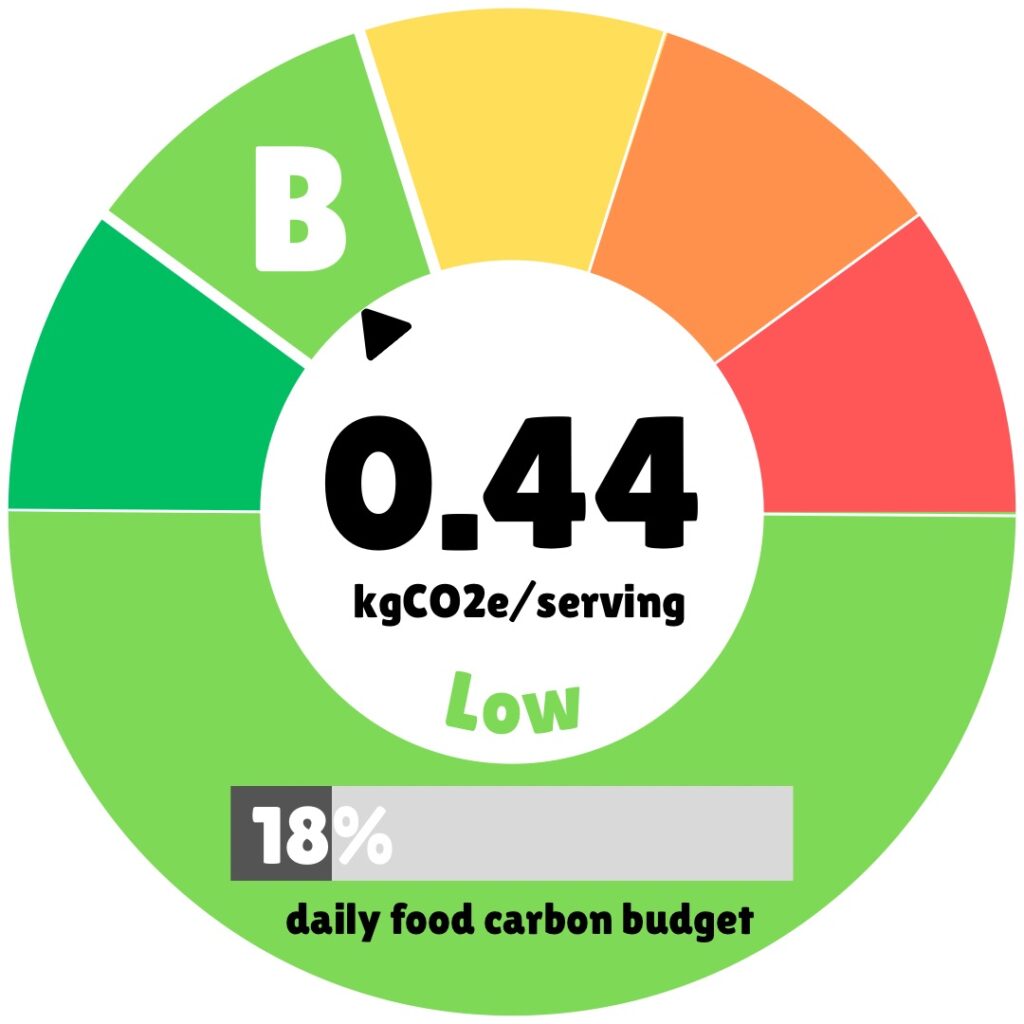
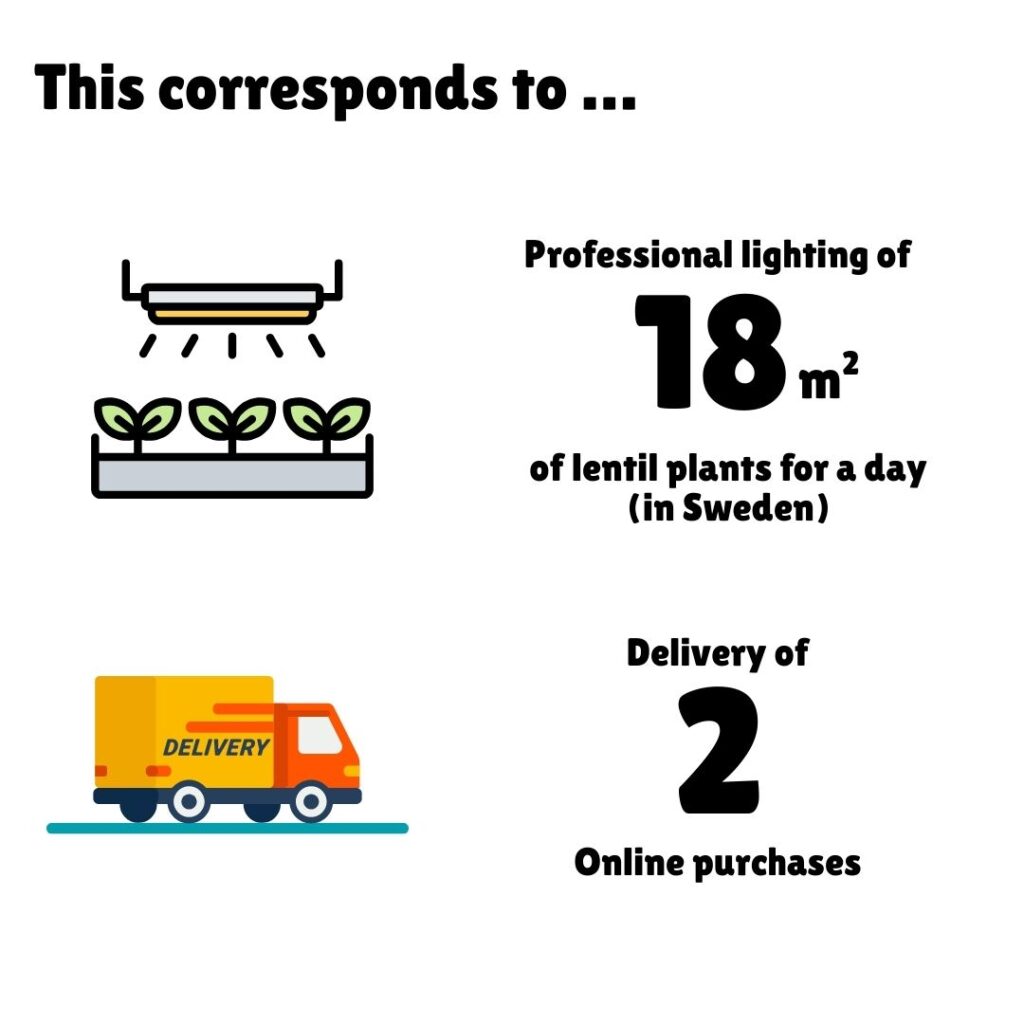
- Basmati rice is the recipe’s top emission hotspot because paddy rice cultivation in flooded fields produces significant methane — a potent greenhouse gas released by anaerobic decomposition of organic matter — and basmati in particular travels long distances from growing regions in Pakistan and India, adding transport emissions on top of its agricultural footprint.
- Shop to home transportation, if a combustion car is used
Sustainability tips:
- Store leftover dal in the fridge for up to 4 days — it genuinely tastes better the next day as the spices deepen, or freeze individual portions for up to 3 months for a future lightning-fast dinner.
- Repurpose any extra rice by turning it into quick fried rice with whatever soft vegetables are lurking in your crisper drawer.
- Buy red lentils, rice, and oats in bulk using your own containers; both lentils and oats have a naturally tiny carbon footprint, and bulk buying cuts packaging waste significantly.
- Choose organic or locally grown carrots and zucchini when in season — Swedish summer vegetables need very little transport and are far lower in emissions than imported alternatives.
- Consider growing your own ginger on a sunny windowsill — it sprouts easily from a shop-bought piece and provides fresh roots for months.
- Save the water you use to rinse the rice and pour it on your houseplants; rice water is full of nutrients that plants actually love.
- Walk or bike to the supermarket to cut transportation emissions — the most carbon-friendly ingredient is the one you didn’t drive to fetch.
- 🐹 Your guinea pigs will absolutely love any leftover carrot greens, zucchini ends, and fresh parsley — zero waste and very happy small animals.
Carbon Footprint
Featured Story
Brace Yourself

Golden Glow was the undisputed king of crunk, bass drops, and dramatic sunglasses worn indoors at midnight. On stage, he pointed at the crowd, shouted “YEAH!” with frightening commitment, and never, ever smiled. His fans assumed he was maintaining a mysterious bad-boy image, but the truth was much less glamorous: one front tooth leaned slightly sideways, and Golden Glow was convinced that a single grin would destroy his reputation forever. So he practiced intimidating looks in every reflective surface he passed—car windows, elevator doors, even a suspiciously shiny toaster in a hotel breakfast room.
Then came the turning point: a new agent named Lavonda Luxe, a woman so confident she once negotiated a festival contract while eating olives in complete silence. After watching Golden Glow dodge every camera flash with the precision of a panicked raccoon, she leaned in and said, “You don’t need to hide that tooth. You need to accessorize it.” Golden Glow blinked. Lavonda slid a velvet folder across the table like she was unveiling a state secret. Inside was a sketch of custom golden braces. “Not embarrassing,” she said. “Iconic.” Two weeks later, Golden Glow sat in the orthodontist’s chair, sweating through a designer tracksuit, while tiny golden brackets were installed on his teeth like luxury apartment units for enamel.
At first, the transition was rough. He lisped through interviews, got one brace temporarily tangled in a hoodie string, and spent an entire evening trying to look dangerous while carefully eating soft lentils and avoiding a roasted tomato that was apparently hotter than the sun. Worst of all, he still didn’t want to smile. He worried people would laugh, screenshot him, turn him into a meme called “Brace Yourself.” But Lavonda kept pushing. “The braces are not the problem,” she told him. “Your fear is wearing bigger jewelry than your face.” So when the biggest show of his career arrived—a televised rooftop performance with drones, fireworks, and three backup dancers dressed like chrome panthers—Golden Glow made a choice. Mid-song, right before the final beat drop, he looked straight into the main camera and grinned.
There was one full second of silence. Then the crowd exploded. The golden braces caught the lights, flashed like a disco ball with excellent credit, and instantly became his signature. By morning, social media was full of edits, fan art, and people booking orthodontist consultations with the caption “I want the Golden Glow package.” For the first time in his career, he stopped hiding behind a scowl and discovered that confidence was much louder than embarrassment. His tooth got straighter, his smile got bigger, and his stage presence somehow became even more outrageous—which was impressive, considering he once entered a concert on a fake tiger made of speakers.
Culinary Reality Check
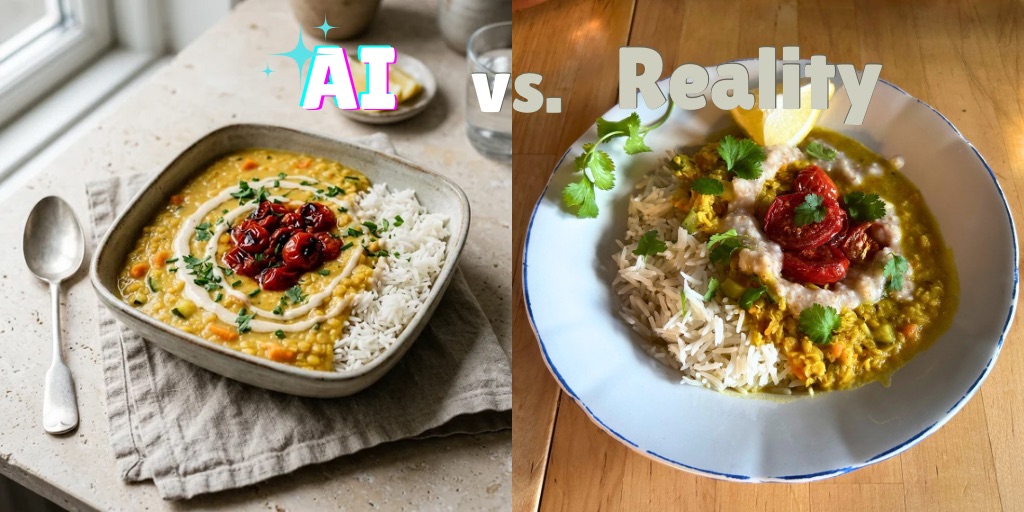
We cooked it, we tasted it, and we have feelings — mostly about the oatmeal. Golden Glow’s namesake dal had its moments of genuine promise, but also one very misguided drizzle that only made it to the table for the sake of a photograph.

Taste
Perfectly edible, yes. Memorable, unfortunately not. The dal landed in that slightly tragic zone where it tasted like it had heard of spices from a distance but never actually invited them over. Soft food for new braces is sensible; soft flavor for fully functioning taste buds is not. A braces-friendly dinner still needs to arrive with a bit of drama, warmth, and personality.

Portion Size
The math was chaotic in a very specific way. We got roughly 4 portions of dal, barely 3 portions of rice, about 2 portions of roasted tomatoes, and enough oatmeal “cream” to cater a medium-sized breakfast conference. So while the recipe technically fed four, it did so with the kind of uneven confidence usually seen in group projects.

Combination
The roasted tomatoes were the clear overachievers here. Their sweetness and acidity gave the bowl a welcome little plot twist and saved several bites from drifting into beige oblivion. The oatmeal “cream drizzle”, however, was not a twist but a full genre error: odd in concept, odd in texture, and odd enough that it was used mostly for the photo and then politely ignored by everyone at the table.

Texture
The dal itself was decent — soft enough, pleasant enough, and absolutely in the right neighborhood for a braces-friendly meal. The oat cooking cream should ideally go in earlier so the lentils have time to absorb it properly; added late, it tipped the whole thing toward watery instead of lush. The oatmeal drizzle on the other hand suffered from an identity crisis: too much oat to water ratio to ever reach a pourable, creamy consistency, and what emerged was more “thick porridge” than “elegant swirl.” It needed far more liquid, and even then, cream status remained elusive.

Spices
This recipe needs more of basically everything. More cumin, more coriander, more turmeric, probably more salt, and ideally vegetable bouillon instead of plain water so the base has actual depth. A bit of tomato cooked directly into the dal and a squeeze of lemon at the end would also help wake the whole thing up and remind it that flavor is, in fact, allowed.

Timing
In real life, this took about 1 hour—and that was with two people cooking. So for a recipe presented as reasonably straightforward, it ended up being a bit more of a small evening project than a quick comfort meal.

Processing
No major disasters, no burned pans, no emotional collapse in front of the stove. The only real technical failure was the oatmeal “cream,” which never became creamy and never really justified its existence.

Completeness
To be fair, the recipe was structurally complete. Nothing essential was missing, the ingredient list was coherent, and the method did not leave us standing in the kitchen wondering where the ending had gone.

Environment
This sits at a solid B-rating from an environmental perspective, with the rice being the main reason it does not climb higher. The lentils do a lot of heavy lifting on the sustainability front, but white basmati is not exactly the climate angel of the bowl.

Health
Health-wise, the recipe still performs quite well overall. The lentil base, vegetable content, and fully plant-based structure fit the Planetary Health Diet nicely, even if the white rice makes it a little less ideal than it could be. Swap in a whole grain and add more vegetables, and it becomes much stronger nutritionally.

Tips for Redemption
- Increase the spices generously, not timidly.
- Use vegetable bouillon instead of water.
- Add some tomato directly into the dal, not just on top.
- Finish with lemon juice for brightness.
- Add the oat cooking cream earlier so it has time to cook into the lentils and thicken properly.
- Scrap the oatmeal drizzle entirely — or, if the visual swirl matters for the photo, use a small amount of plain oat or coconut cooking cream instead; it looks the same and actually tastes good.
- Make more rice and more roasted tomatoes.
- Or, if we are being brutally honest, start from a different dal recipe and keep only the tomato idea.