Authors: Cobaia Kitchen, Kimi K2 (Thinking), Claude Sonnet 4.5
Photos: Cobaia Kitchen, Google Nano Banana (Pro)
When the Kimi K2 Thinking model received the challenge to create something that wasn’t yet another stew or curry, it could have easily suggested a simple salad and called it a day. Instead, it dove deep into the prompt’s constraints, analyzed the stocked pantry, and emerged with the kind of creative spark that turns a can of hearts of palm into Brazilian palmito steaks—grilled, golden, and worthy of center stage. The timing couldn’t have been more perfect: COP30 had just wrapped up in Belém, where world leaders gathered in the Amazon’s gateway city to debate our planet’s future.
The recipe took on extra meaning post-COP30, when certain climate delegates—after flying across the globe to save the planet—openly trashed their host city, calling it “that place” and admitting they couldn’t wait to leave. Brazilian officials suggested they should have skipped the conference and “gone to a pub” instead, which seems fair since they completely missed the vibrant food culture: a few meals of grilled palmito and fresh açaí might have changed their perspective entirely. While delegates stayed on cruise ships chartered as floating hotels due to room shortages—an ironic accommodation choice for a climate conference, given their heavy fuel oil emissions—others discovered that sustainable solutions taste better when you’re not rushing to catch your flight.
Hearts of palm carries centuries of history in Brazil, where indigenous peoples have harvested it sustainably from multi-stemmed palms since long before European contact. Unlike the single-stemmed varieties that caused deforestation in the 20th century, the modern cultivated palmito in this recipe represents true agroecological wisdom—trees that regrow after cutting, providing income for forest communities while preserving biodiversity. The Kimi model’s genius lay in recognizing that this ingredient tells a story of resilience and sustainability, transforming it from a simple salad component into grilled “steaks” that would make any diplomat reconsider their packed schedule. After all, if you’re going to discuss saving the planet, you might as well taste what sustainable food systems actually look like—assuming, of course, you stay long enough to try it.
Please read the review before cooking!
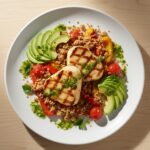
Grilled Hearts of Palm with Quinoa Farofa
Equipment
- Grill pan or crepe pan
- Medium saucepan with lid
- Baking sheet
- cutting board
- Sharp knife
- mixing bowls
- measuring cups and spoons
- Tongs or spatula
Ingredients
For the Grilled Hearts of Palm:
- 400 g hearts of palm 2 cans, drained, cut lengthwise into 1.5cm thick “steaks”
- 2 tbsp olive oil
- 1 tsp smoked paprika
- 1/2 tsp ground cumin
- 1/4 tsp black pepper
- 1/2 tsp salt
For the Toasted Quinoa Farofa:
- 180 g white quinoa rinsed
- 360 ml water
- 2 tbsp olive oil
- 1 small red onion finely diced (about 100g)
- 2 cloves garlic minced
- 30 g sunflower seeds
- 1/4 tsp salt
For the Citrus-Herb Drizzle:
- 1/2 cup fresh parsley leaves finely chopped
- 3 tbsp lemon juice from 1 large lemon
- 3 tbsp extra virgin olive oil
- 1 small clove garlic minced
- 1/4 tsp dried oregano
- 1/4 tsp salt
- 1/4 tsp black pepper
For the Roasted Vegetable Medley:
- 1 red bell pepper cut into 2cm strips
- 1 yellow bell pepper cut into 2cm strips
- 200 g cherry tomatoes halved
- 1 tbsp olive oil
- 1/4 tsp salt
For Serving:
- 1 large ripe avocado 200g, sliced
Instructions
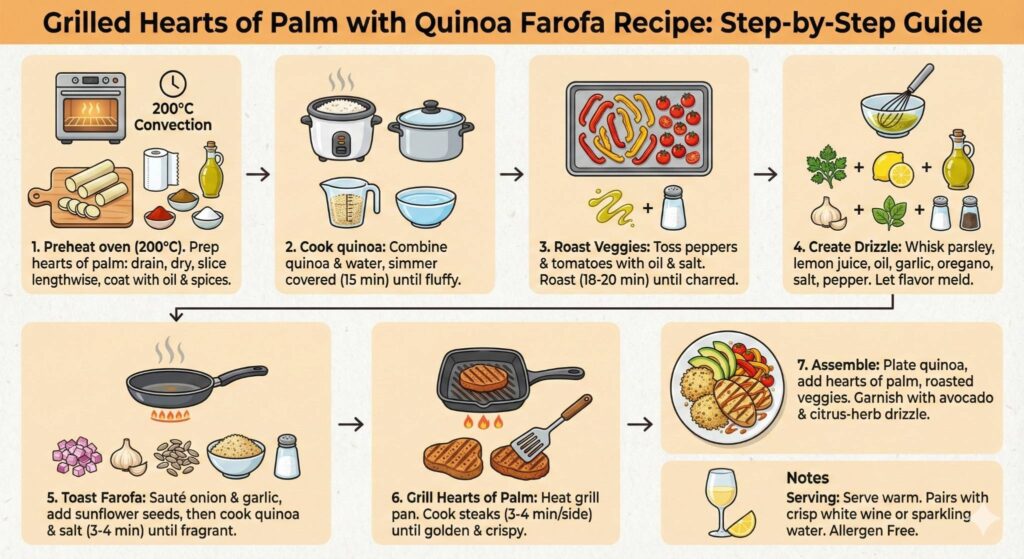
- Preheat and Prep: Preheat oven to 200°C (convection). Drain hearts of palm and pat dry with paper towels. Cut each stalk lengthwise into 3-4 flat “steaks.” Place on a plate and drizzle with 2 tbsp olive oil, smoked paprika, cumin, pepper, and salt. Rub gently to coat all sides.
- Start Quinoa: In the rice cooker or saucepan, combine rinsed quinoa and water. Cook according to rice cooker instructions or bring to boil, then simmer covered for 15 minutes until fluffy. Set aside.
- Roast Vegetables: On a baking sheet, toss bell pepper strips and cherry tomatoes with 1 tbsp olive oil and salt. Spread in a single layer and roast for 18-20 minutes until slightly charred.
- Make Citrus-Herb Drizzle: While vegetables roast, whisk together parsley, lemon juice, 3 tbsp olive oil, minced garlic, oregano, salt, and pepper in a small bowl. Set aside to let flavors meld.
- Toast Quinoa Farofa: Heat 2 tbsp olive oil in a medium pan over medium heat. Add diced red onion and sauté for 3 minutes until translucent. Add minced garlic and sunflower seeds, cook 2 minutes more. Add cooked quinoa and salt, stirring constantly for 3-4 minutes until quinoa is lightly toasted and fragrant. Remove from heat.
- Grill Hearts of Palm: Heat grill pan over medium-high heat. Place hearts of palm steaks on hot pan and press gently with spatula. Grill 3-4 minutes per side until golden grill marks appear and edges are slightly crispy. Remove from heat.
- Assemble Plates: Divide toasted quinoa farofa among three plates. Arrange 3-4 hearts of palm steaks on each plate. Add roasted pepper and tomato medley. Garnish with sliced avocado and drizzle generously with citrus-herb sauce.
Notes
Serving suggestions:
Allergens:
- None
Emission Hotspots:
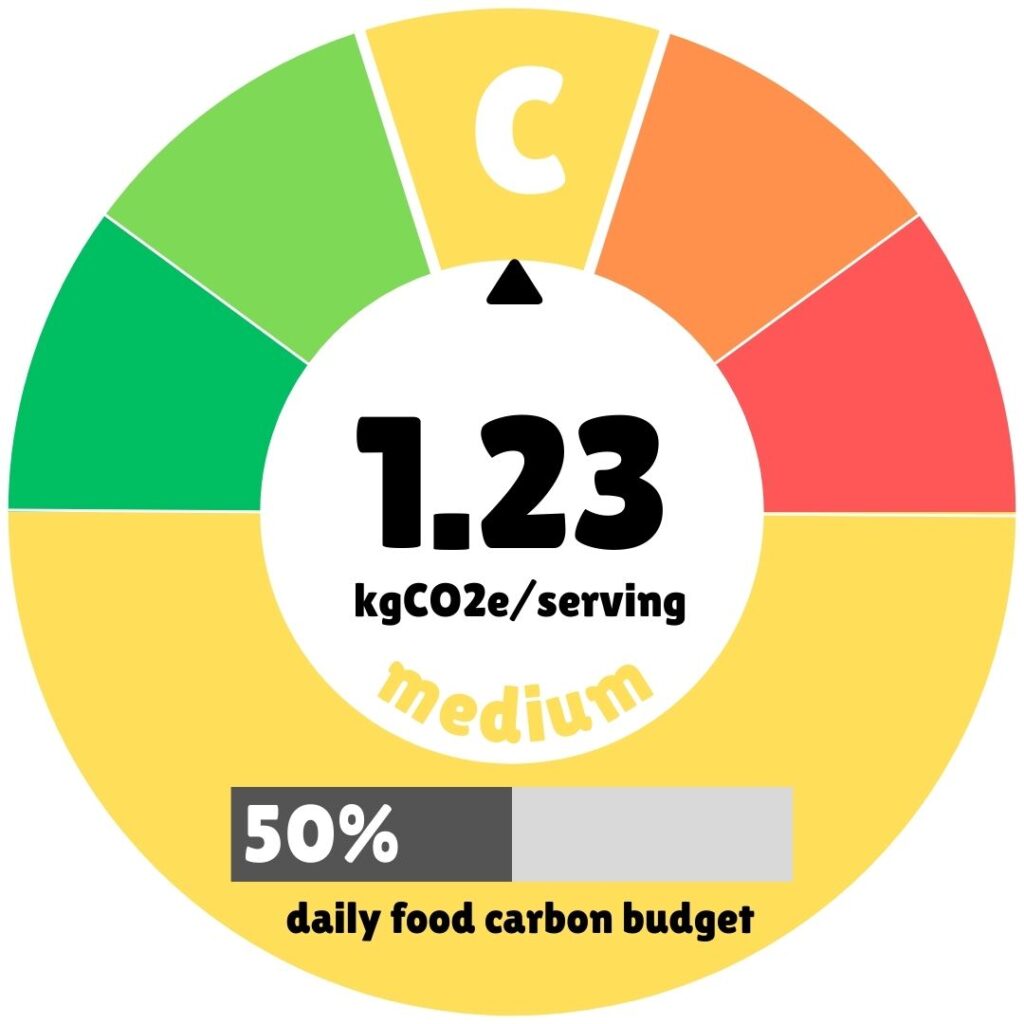
- While canned foods are convenient, they carry a higher environmental cost than their raw counterparts.
- Although quinoa is usually referred to as a low-carbon food staple, we found emission factors between <1 and >50 kgCO2e/kg, depending mostly on the region where it is grown and whether deforestation is playing a role.
- Shop to home transportation, if a combustion car is used
Sustainability tips:
- Choose certified sustainable hearts of palm from multi-stemmed peach palms (Bactris gasipaes) that regrow after harvest, avoiding single-stemmed varieties that cause deforestation.
- Use parsley stems in the citrus-herb drizzle instead of discarding them
- Transform any leftover hearts of palm into next-day salads or grain bowls to prevent waste
- Compost your vegetable trimmings, turning them into nutrient-rich soil instead of landfill waste.
- Keep parsley fresh longer by wrapping stems in a damp towel and storing in an airtight container
- Walk or bike to the supermarket and farmer’s market to cut transportation emissions
- Make your guinea pigs 🐹 happy by giving them any remaining parsley and peppers
Carbon Footprint

Featured Story
Too busy
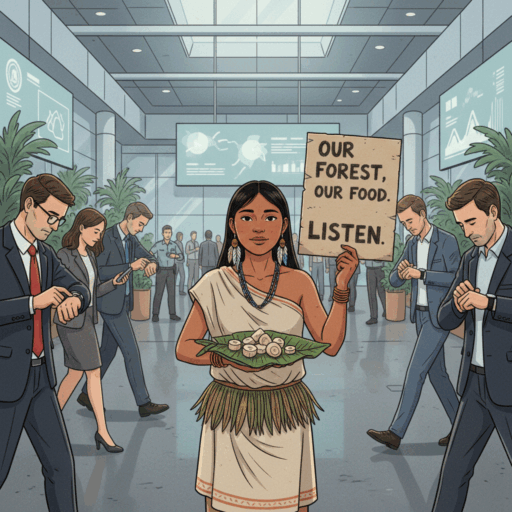
My cousin Maria and I spent three weeks preparing for our presentation at the Indigenous Peoples Pavilion: detailed maps showing how our community’s sustainable palmito harvesting prevents 87 tons of CO2 emissions annually, testimonials from twenty elders, and even a demonstration of traditional forest management techniques. The American delegate arrived twelve minutes late, took one look at our handmade poster board, and asked if we had a PDF version he could “review on the plane home tomorrow.” When I explained we’d traveled two days by boat to be here, he nodded sympathetically while typing on his phone, then handed me his business card and said, “Let’s circle back on this next quarter.” I’m still trying to figure out what quarter of the year would be appropriate for preventing the Amazon’s collapse.
On day four, desperate for any meaningful connection, I volunteered at the Biodiversity Space where indigenous producers were selling traditional foods. A Scandinavian climate minister stopped by our stall, picked up a jar of preserved hearts of palm, and asked if it was “organic certified by EU standards.” I explained that our community has been cultivating these sustainably for 400 years—long before the EU existed—and that our certification comes from the forest itself: if we harvest wrong, the trees die and so does our livelihood. She smiled, took a photo of herself holding the jar for her Twitter feed with #AuthenticCOP30, set it back down, and walked away to get a packaged sandwich from the catering tent. The sandwich, I later learned, contained palm oil from a plantation that displaced an indigenous community in Malaysia. The irony was not lost on me, but apparently, it was lost on her.
By the final day, I’d watched so many delegates rush through the People’s Circle without stopping that I started keeping count: 247 suits, 189 lanyards, 56 people who paused to admire our traditional dress but zero who asked about the climate solutions we actually came to share. One delegate from Australia did stop—genuinely interested, it seemed—and listened to my entire explanation of multi-stemmed palm cultivation before saying, “This is brilliant! Have you considered applying for a grant to study whether this might work?” I stood there, speechless, as he waited for my response. “We’re not studying whether it works,” I finally said. “We’re living proof that it works. We’re here because we need you to stop funding the industries destroying it.” He looked confused, said “Right, right, of course,” checked his watch, and practically sprinted toward the shuttle bus to make his flight. As I watched him go, I realized that’s the real climate crisis: not that we don’t have solutions, but that the people with the power to implement them are too busy to actually listen to them.
Culinary Reality Check
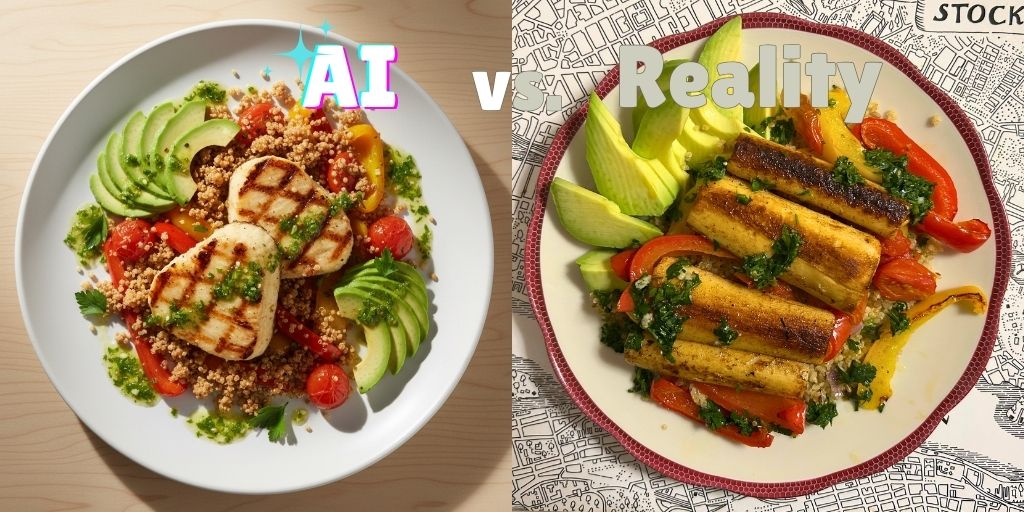
Outstanding meal—distinct and memorable, ready to impress anyone on a special night!

Taste
The hearts of palm themselves are delightfully unassuming, like quiet diplomats at a loud conference, but surrounded by that smoky char, citrus drizzle, and toasted quinoa farofa, they become the understated stars they were always meant to be. Can’t get enough.

Portion Size
Feeds three moderately hungry humans or two people who just spent all day trying to convince someone to listen to their climate solutions. Adjust accordingly based on your level of existential exhaustion.

Combination
Absolutely brilliant pairing—the mild hearts of palm gain confidence from their supporting cast of roasted vegetables, zingy herbs, and crunchy quinoa. It’s proof that collaboration actually works when people show up and participate.

Texture
Good textural variety overall, but manage your expectations: canned hearts of palm will never achieve crispiness or steak-like texture, no matter how optimistic your grill pan feels. Also, spoiler alert—they’re not actually heart-shaped, despite what the AI image generator desperately wanted to believe.

Spices
Perfect as written. No adjustments needed, no committee meetings required, no circling back next quarter.

Timing
The recipe suggests 25 minutes prep time, which is technically possible if you’re a professional chef or possess supernatural chopping abilities. Reality check: it took a bit longer, but still faster than we expected when first reading through. Worth every extra minute.

Processing
Clear instructions, well-formatted, easy to follow. Unlike most climate negotiations, this actually delivers what it promises.

Completeness
Nothing missing. Everything you need is right there, no hidden requirements, no surprise amendments on page 47.

Environment
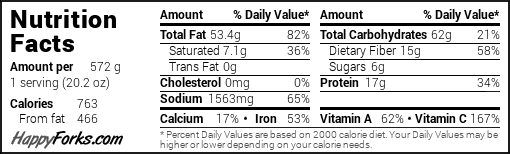
Hearts of palm sustainability varies dramatically: wild single-stemmed palms are felled entirely causing deforestation, while cultivated multi-stemmed varieties regrow sustainably. Quinoa’s boom has driven soil degradation in Bolivia and Peru. Despite all the COP30 associations and sustainability messaging, this recipe earns a C-Rating—basically average for a European meal. The Agribalyse footprints likely reflect typical commercial sourcing rather than worst-case scenarios. For improvement, source European-grown quinoa and certified sustainable hearts of palm (look for “cultivated” or “peach palm” labels).

Health
Hits nearly all the EAT-Lancet Planetary Health Diet targets with excellent nutrient density. Could be further optimized with dark leafy greens and legumes to fully meet the 300g vegetable variety and 75g legume goals, but honestly? It’s already doing far better than most meals claiming to save the planet.

Tips for Redemption
The recipe is solid as written—no redemption needed. If you want to optimize the environmental impact, source European-grown quinoa and look for sustainably certified hearts of palm from cultivated multi-stemmed palms. Otherwise, just enjoy knowing you’re eating something that actually makes sense, even if the world doesn’t always.