Authors: Cobaia Kitchen, DeepSeek-V3.2 DeepThink, Claude Sonnet 4.5
Photos: Cobaia Kitchen, Seedream 4.5
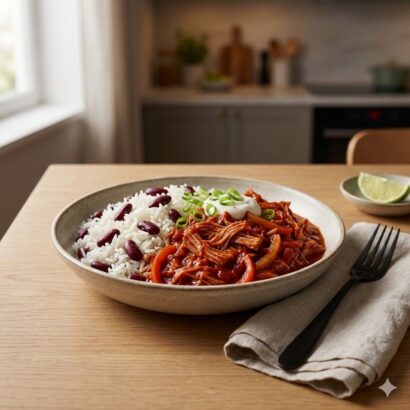
Ever wondered what happens when you ask a super-smart AI to cook dinner? We challenged DeepSeek-V3.2 “DeepThink” to create a Romanian-inspired feast, and while its flavor logic was impeccable (smoky paprika? yes please!), its kitchen skills were… questionable. The model confidently handed us a recipe that was essentially a bowl of carbs and mushrooms—delicious, but about as filling as a salad at a barbecue. We had to gently remind it that humans need protein to survive, prompting it to panic-add a can of kidney beans to the stew. But the real comedy gold was the polenta instructions: the AI insisted we stand there stirring for 20 minutes like 19th-century peasants. If you’ve ever cooked modern polenta flour, you know that 20 minutes of stirring results in two things: a bicep cramp and a pot permanently cemented with burnt corn. In reality? You whisk it for ten seconds, slap a lid on it, and walk away. It turns out even the most advanced neural networks haven’t mastered the fine art of not burning dinner.
The dish pays homage to mămăligă, Romania’s beloved cornmeal porridge that’s so deeply embedded in the national identity that Romanians jokingly call each other “mămăligari” (polenta eaters). This humble staple has ancient roots stretching back to Roman times, when a similar millet-based porridge called pulmentum was so popular that the Greeks mockingly nicknamed Romans “pultiphagonides” (porridge eaters). After maize arrived in Europe in the 16th century, mămăligă became the sustenance of peasants and shepherds, cooked in cast-iron cauldrons over open fires high in the Carpathian Mountains. Traditionally served with earthy mushrooms, tangy sour cream, and sharp cheese, this AI-crafted version captures that soul-warming Eastern European comfort while keeping things completely plant-based and climate-conscious—proof that even centuries-old peasant wisdom can get a thoughtful, modern upgrade from 14 seconds of silicon-powered contemplation.
Please read the review before cooking!

Romanian-Inspired Mushroom & Polenta Bowl
Equipment
- Large pot with lid
- Braising pan or large skillet
- garlic press
- grater
- cutting board
- Kitchen knife
- Measuring cup
- Wooden spoon
- Whisk
- Ladle
- Bowls for serving
Ingredients
For the polenta:
- 1 cup (160 g) medium-coarse cornmeal labeled "for polenta"
- 4 cups (950 ml) water
- 1 tsp salt
- 1 tbsp olive oil
For the mushroom & bean stew:
- 500 g fresh mushrooms mixed varieties, sliced
- 1 large onion finely diced
- 4 cloves garlic minced
- 2 bell peppers 1 red, 1 yellow, diced
- 2 carrots grated
- 1 can (400 g) kidney beans or large white beans drained and rinsed
- 2 tbsp olive oil
- 2 tsp sweet paprika
- 1 tsp smoked paprika
- 1 tsp dried thyme
- 1 vegetable broth cube or 1 tsp vegetable broth powder
- 1 can (400 g) diced tomatoes
- ½ cup (120 ml) water
- Salt and pepper to taste
For the paprika sour cream:
- 200 g vegan sour cream
- 1 tsp sweet paprika
- 1 tsp lemon juice
- Salt to taste
For garnish:
- Fresh parsley chopped
- Extra paprika for sprinkling
Instructions
- Prepare the polenta: In a large pot, bring water and salt to a boil. Gradually whisk in the cornmeal, reduce heat to low, and cook for 15–20 minutes (for medium-coarse polenta), stirring frequently until thick and creamy. Stir in olive oil, cover, and set aside.
- Sauté vegetables: Heat olive oil in a braising pan over medium heat. Add diced onion and grated carrot, sauté for 5 minutes until softened. Add bell peppers and cook for another 5 minutes.
- Cook mushrooms: Add sliced mushrooms to the pan. Cook for 8–10 minutes until they release their liquid and begin to brown. Stir in minced garlic, sweet paprika, smoked paprika, and thyme, and cook for 1 minute until fragrant.
- Simmer stew: Crumble the vegetable broth cube into the pan, add diced tomatoes, drained beans, and ½ cup water. Stir well, cover, and simmer for 10–15 minutes until flavors meld. Season with salt and pepper.
- Prepare paprika sour cream: In a small bowl, mix vegan sour cream with sweet paprika, lemon juice, and a pinch of salt. Set aside.
- Serve: Spoon a generous portion of polenta into each bowl. Top with the mushroom and bean stew, drizzle with paprika sour cream, and garnish with chopped parsley and a sprinkle of paprika.
Notes
Serving suggestions:
- Serve with a side of pickled vegetables or a simple cucumber-tomato salad.
- A slice of sourdough bread pairs well for dipping.
- Pair with a light red wine (such as Pinot Noir) or a refreshing rosemary-lemon sparkling water
Allergens:
- Celery: Commonly found in vegetable broth cubes/powder
- Soybeans: Likely present in vegan sour cream (many brands are soy-based)
- Tree Nuts: Potentially present in vegan sour cream, depending on brand (cashews or almonds are common bases)
Emission Hotspots:
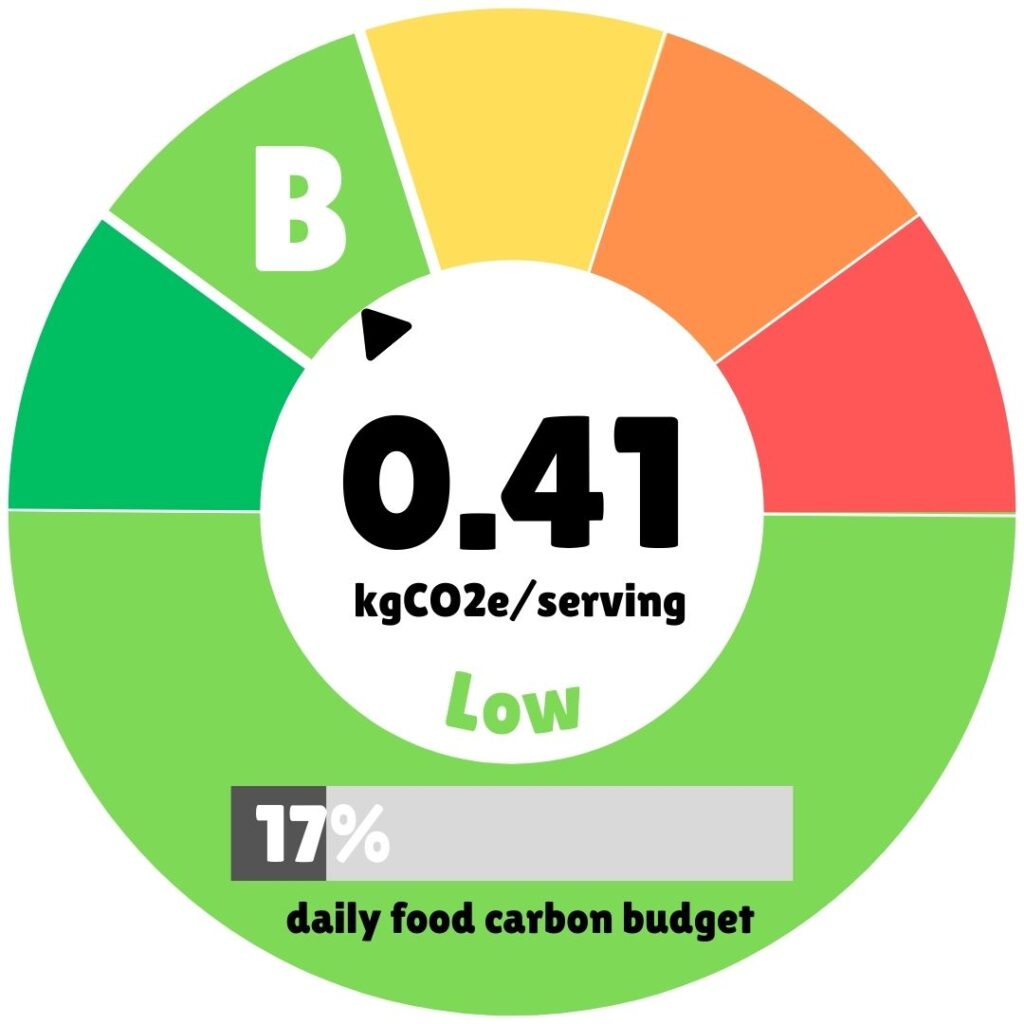
- While canned tomatoes and beans are convenient, they carry a higher environmental cost than their raw counterparts.
- Shop to home transportation, if a combustion car is used
Sustainability tips:
- Use a lid or a rice cooker when simmering the stew to reduce cooking time and energy use.
- Don’t Waste the Stalks: Mushroom stalks are full of flavor and perfectly edible. Instead of discarding them, chop them finely and sauté them along with the onions to add extra earthiness to your stew.
- Tackle the Can Impact: Metal cans are energy-intensive to produce. To reduce this, buy dried kidney beans in bulk and soak/boil them yourself—this eliminates the can entirely and is much cheaper. For tomatoes, look for Tetra Pak (cartons) instead of metal cans, as they generally have a lower lifecycle carbon footprint.
- Turn leftover polenta into fries: slice, brush with oil, and bake until crispy.
- Use extra stew as a filling for wraps or a topping for baked potatoes.
- Store-bought vegan dairy alternatives can vary in impact. For the lowest footprint, choose an oat-based sour cream (often made with local Swedish oats) rather than almond or cashew-based versions, which require water-intensive farming and longer transport chains.
- Walk or bike to the supermarket and farmer’s market to cut transportation emissions
- Guinea pigs 🐹 will love any leftover bell peppers, carrots, carrot greens and parsley
Carbon Footprint
Featured Story
The Reputation Janitor

Doru Ionescu worked the night shift in a converted warehouse in Cluj-Napoca, Romania. His official job title was “Algorithmic Empathy Adjuster” at a company called VirtuClean, though what he actually did was simpler to explain: he made bad people look good online. When a billionaire got caught in a scandal, Doru’s AI would flood the internet with fake news to bury the story. When a politician’s name appeared in leaked documents, the software would generate thousands of bot accounts to change the conversation. The clients paid in cryptocurrency. Doru didn’t ask questions. He told himself it was just algorithms—just code pushing pixels around on screens. Nothing real.
At 3:47 AM on a Tuesday, his computer screen flashed red. New files had just been released by a whistleblower—thousands of pages of court documents naming powerful men connected to an international child trafficking ring. Doru recognized some of the names immediately: a British aristocrat, two Silicon Valley CEOs, a hedge fund manager who’d recently been on the cover of Time magazine. Within ninety seconds, VirtuClean’s AI had already deployed its first wave of countermeasures. Fifty thousand fake X accounts went live, all posting the same talking point: “Why are we violating these men’s privacy before they’ve had a fair trial?” Three fabricated news articles appeared on Medium, praising one of the accused for his charity work in Rwanda. A bot-generated TikTok video went viral, showing the hedge fund manager cuddling rescue puppies. The internet moved fast. The AI moved faster.
But this time, there were photos. Testimony from victims. A girl named Sofia who’d been trafficked at fourteen described, in horrifying detail, what had been done to her on a private island. Doru’s hands were shaking. His boss in London sent a message on Slack: “Execute Level 5 Distraction. No budget limit. Bury it.” Level 5 wasn’t just spin. It meant fabricating an entirely new crisis to drown out the real one. The AI offered Doru three options: fake a military confrontation between NATO and Russia, stage a celebrity murder-suicide in Hollywood, or launch a viral conspiracy theory about “glowing alien spiders discovered in Moldova.” Doru stared at the screen. He thought about Sofia. He thought about the men who would walk free because of what he was about to do. Then he clicked the spider option. It was ridiculous enough to go viral.
By 9:00 AM, the trafficking documents had vanished from the front page of every major news site. The top trending topic worldwide was #ChisinauSpiders. CNN interviewed a “witness” who claimed to have seen the creatures. A Stanford biologist went on NPR to debunk the story, which only made people believe it more. The names of the accused men appeared nowhere. Sofia’s testimony had been algorithmically downgraded to “low-priority content.” Doru’s phone buzzed. His crypto wallet showed a new deposit: €780. Bonus for rapid response. He stood up, grabbed his coat, and walked out into the freezing Romanian morning. Somewhere in the world, powerful men were breathing easier. Somewhere, a fourteen-year-old girl’s story had been erased. Doru lit a cigarette and kept walking. He’d need to buy more before his next shift.
Culinary Reality Check
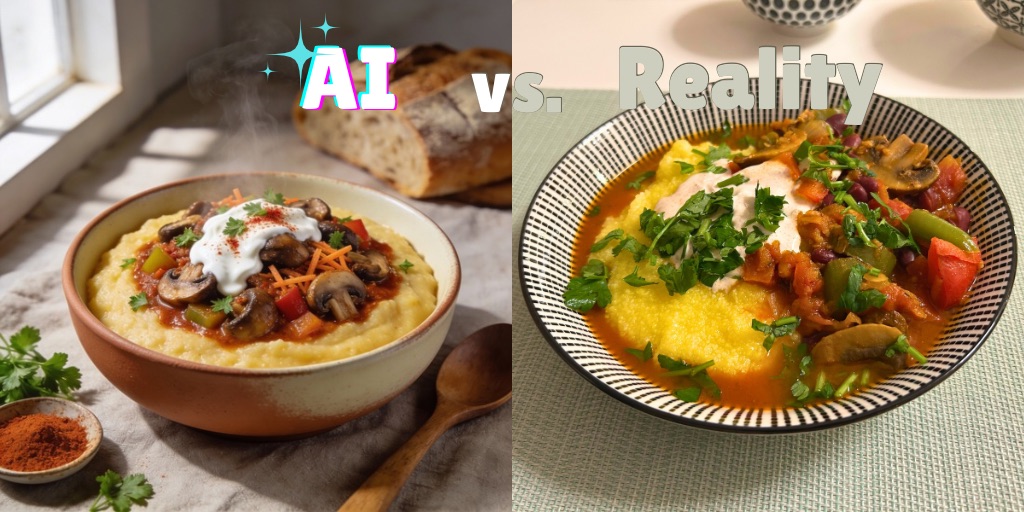
Much like an AI confidently delivering a 14-second “thinking” pause before getting the basics wrong, this dish is fine—technically correct, nutritionally sound, but lacking the spark that makes you want to cook it again. Compared to other cornmeal-based meals we’ve tried, it’s the algorithmic equivalent of a bland stock photo: nothing offensive, nothing memorable.

Taste
Functional. Edible. The kind of meal you’d serve to houseguests you’re obligated to feed but don’t particularly like. No complaints, but also no fireworks—just a solid “meh” that disappears from your taste memory faster than a viral conspiracy theory about glowing spiders.

Portion Size
The recipe promised four servings but delivered something closer to three portions of vegetable stew with four portions of polenta. Either the AI can’t do basic division, or it assumes humans survive primarily on carbs and vibes. To make matters worse, the 200g of vegan sour cream was absurdly excessive—enough to drown the dish in dairy-free tanginess. Unless you’re running a sour cream appreciation society, this needs serious scaling back.

Combination
The colors, textures, and flavors play nicely together—smoky, creamy, tangy—but the dish could use a crunchy counterpoint. A crisp side salad would snap this meal out of its soft, beige stupor.

Texture
The grated carrots vanished into the stew like evidence being scrubbed from the internet. Ours were either too finely grated or too timid to assert themselves. More carrot presence would give the dish some bite—literally.

Spices
Technically correct, but missing das gewisse Etwas—that ineffable quality that separates “I ate food” from “I remember this meal.” The paprika does its job, but the dish needs a bolder accent: a splash of vinegar, a pinch of heat, something to make it stick in your brain.

Timing
Surprisingly accurate. Even a broken algorithm gets it right sometimes.

Processing
Here’s where the AI’s training data betrayed it. The recipe insists on 15-20 minutes of polenta stirring, as if we’re all 19th-century peasants with unlimited arm strength and no Netflix to watch. Modern polenta flour—the kind you’d find in any German or Swedish supermarket—thickens in seconds, not minutes. The recipe should explicitly tell readers to follow the package instructions, since corn flour varieties range from instant to traditional stone-ground, and getting this wrong means either burnt mush or wasted time.

Completeness
The original version was a carb-and-mushroom party with zero staying power. We had to prompt the model to add beans for protein, like reminding a forgetful intern that humans need more than vibes to survive. It complied, but only after being called out.

Environment
Despite the convenience of canned tomatoes and beans, this dish secures a solid B rating. The reliance on plant-based staples, seasonal vegetables, and low-impact grains like cornmeal keeps the overall footprint respectable, proving that you don’t need a zero-waste perfect score to make a climate-friendly dinner.

Health
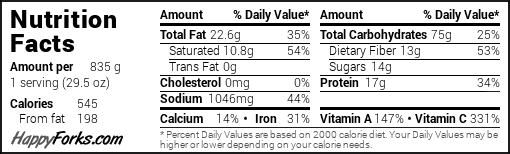
Textbook EAT-Lancet: diverse plant foods, whole grains, legumes, and healthy fats all hitting their marks. It’s nutritionally sound and climate-friendly—proof that you can eat responsibly without sacrificing flavor or cultural roots.

Tips for Redemption
- More grated carrots: Double the amount and grate them coarsely so they don’t dissolve into algorithmic oblivion.
- Ignore the polenta instructions: Follow your package directions instead. Modern polenta doesn’t require a 20-minute arm workout—it’s not 1847.
- Cut the sour cream: Reduce the vegan sour cream by 25-50% (100-150g total instead of 200g). The original amount was comically excessive and overwhelmed the other flavors.
- Add brightness: A squeeze of lemon juice or a splash of vinegar in the stew would wake this dish up from its beige nap.