Authors: Cobaia Kitchen, Claude Sonnet 4.0
Photos: Cobaia Kitchen, Google Imagen 4 Ultra
This delightful Comfort Dal Maharashtrian Style recipe was born from a unique culinary challenge that perfectly showcases the power of modern AI assistance in the kitchen! Using Claude Sonnet 4’s advanced language capabilities, we crafted this gentle, tooth-friendly version of a classic Western Indian dal specifically for someone dealing with the tender aftermath of new braces. The AI cleverly navigated through our extensive pantry inventory, previous recipe history, and dietary preferences to create something both authentic and accessible, drawing inspiration from Maharashtra’s rich culinary tradition where dal has been a protein-packed staple for centuries. Maharashtrian cuisine, often overshadowed by its more famous North and South Indian cousins, actually boasts some of India’s most comforting and nutritious lentil preparations – historically sustained by the region’s agricultural abundance and the practical wisdom of busy farming families who needed filling, easy-to-digest meals. What makes this recipe particularly special is how it honors those traditional flavors while being perfectly adapted for sensitive teeth, proving that sometimes the best innovations come from combining ancient wisdom with modern problem-solving – and a little help from artificial intelligence that can sift through countless ingredient combinations faster than any human chef ever could!
Please read the review before cooking!
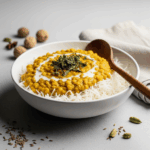
Comfort Dal Maharashtrian Style
Equipment
- Digital rice cooker
- Large pot with lid
- Medium saucepan
- Wooden spoon
- Measuring cups
- kitchen scale
- cutting board
- Sharp knife
- garlic press
- Fine sieve
- Serving bowls
Ingredients
- 200 g yellow lentils moong dal, rinsed
- 225 g basmati rice white
- 1 large onion about 150g, finely diced
- 3 cloves garlic minced
- 15 g fresh ginger finely grated
- 2 medium tomatoes about 200g, finely diced
- 1 tsp turmeric
- 1 tsp ground cumin
- 1 tsp ground coriander
- 1/2 tsp garam masala
- 1/4 tsp ground cardamom
- 3 tbsp rapeseed oil
- 750 ml vegetable broth
- 200 ml coconut milk
- 1 tsp salt or to taste
- 1/2 tsp raw cane sugar
- 2 tbsp fresh lemon juice
- 2 tbsp dried mint for garnish
Instructions
- Prepare the rice: Add basmati rice and 350ml water to your rice cooker. Start the cooking cycle (this will take about 18-20 minutes).
- Prepare vegetables: While rice cooks, finely dice the onion, mince garlic using the garlic press, grate ginger finely, and dice tomatoes into very small pieces (about 5mm) for easy chewing.
- Rinse lentils: Place yellow lentils in a fine sieve and rinse under cold water until water runs clear.
- Start the dal: Heat rapeseed oil in a large pot over medium heat. Add diced onion and sauté for 5-6 minutes until translucent and soft.
- Add aromatics: Add minced garlic and grated ginger to the pot. Cook for 1-2 minutes until fragrant, stirring constantly to prevent burning.
- Add spices: Add turmeric, cumin, coriander, garam masala, and cardamom. Stir for 30 seconds until aromatic.
- Add tomatoes: Add diced tomatoes and cook for 4-5 minutes, stirring occasionally, until they break down and become soft and jammy.
- Add lentils and liquid: Add rinsed lentils, vegetable broth, salt, and sugar. Bring to a boil, then reduce heat to low, cover, and simmer for 20-25 minutes until lentils are completely soft and breaking apart.
- Finish the dal: Stir in coconut milk and cook for 2-3 minutes more. The dal should be creamy and smooth. If too thick, add a little more broth or water.
- Final seasoning: Remove from heat and stir in lemon juice. Taste and adjust salt if needed.
- Serve: Divide warm basmati rice among three bowls. Ladle the creamy dal over the rice and garnish with dried mint.
Notes
Serving suggestions:
Allergens:
- Check the ingredients of your vegetable broth
Emission Hotspots:
- The rice represent the recipe’s primary carbon emission hotspot due to rice cultivation’s methane-intensive paddy farming
- Shop to home transportation, if a combustion car is used
Sustainability tips:
- Store leftover dal in the fridge for up to 4 days (it actually tastes better the next day!) or freeze portions for up to 3 months
- Use any extra rice to make quick fried rice with whatever vegetables are getting soft in your crisper drawer
- Buy lentils and rice in bulk using your own containers
- Choose organic tomatoes when in season (they’re often locally grown)
- Consider growing your own ginger on a sunny windowsill – it sprouts easily and provides fresh roots for months
- Walk or bike to the supermarket and farmer’s market to cut transportation emissions
- If your rice cooker isn’t occupied with cooking rice, preparing the stew in a rice cooker (e.g. the Reishunger Digital Reiskocher) can save some energy
- Save the water used to rinse rice for watering plants. Rice water contains essential plant nutrients that can help support growth and development

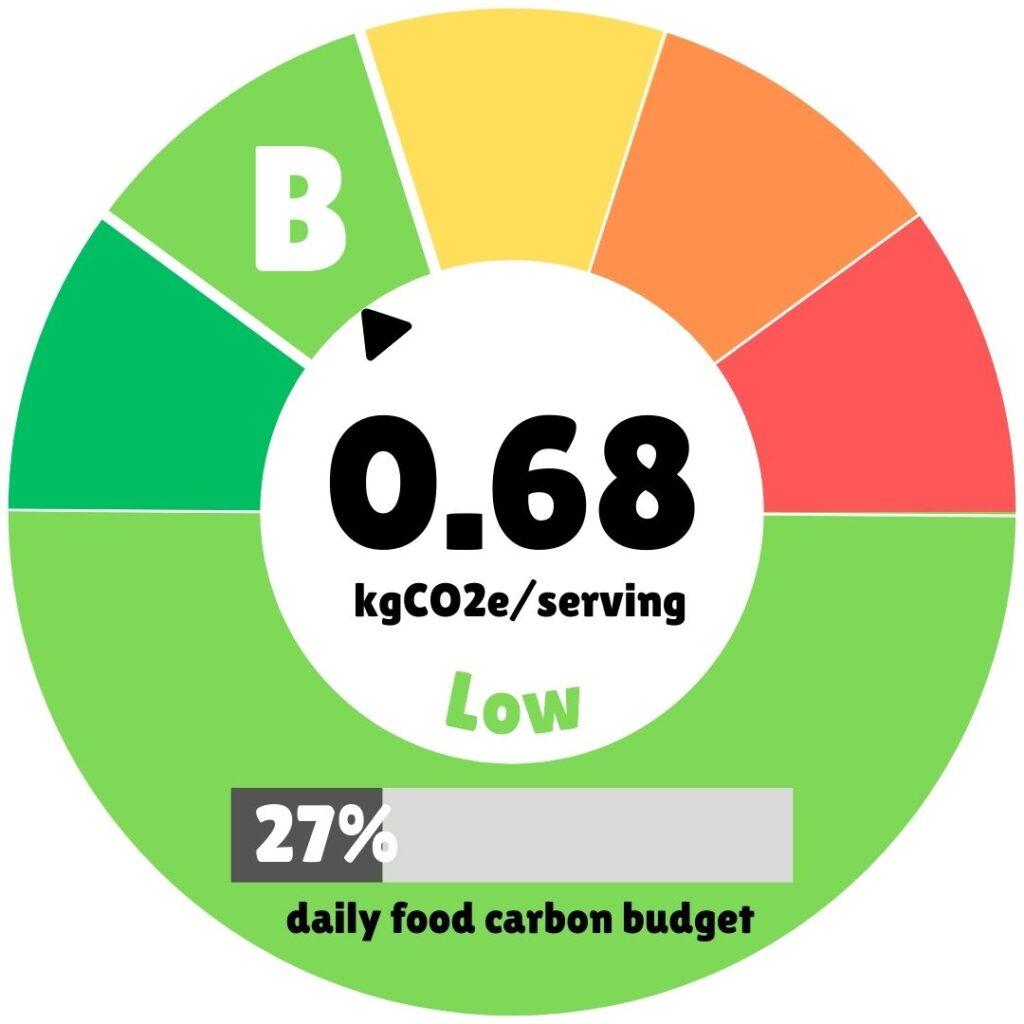
Carbon Footprint

Featured Story
The Terrifically Toothsome Tale of Vladimir Fangsworth

Young Vladimir Fangsworth was perhaps the most unfortunate vampire in all of Transylvania, and that’s saying something when you consider how many vampires trip over their own capes on a nightly basis. You see, Vladimir had been turned into a bloodsucking creature of the night at the tender age of seventeen, just three weeks before his scheduled appointment with Dr. Straightbite, the village orthodontist. His fangs, which should have been magnificently pointed and perfectly positioned for proper neck-nibbling, instead jutted out at peculiar angles like wonky fence posts after a windstorm. When he attempted his first bite on unsuspecting villagers, he mostly just gave them gentle gummy nudges, which was rather embarrassing for everyone involved.
Determined to become a respectable vampire, Vladimir finally visited Dr. Straightbite (who had fainted twice upon seeing his first undead patient, but professional duty called). The good doctor fitted Vladimir with the most spectacular set of silver braces, complete with tiny bat-shaped brackets that glinted menacingly in the moonlight. But oh, what a catastrophic mistake that turned out to be! The moment those metal contraptions clamped onto his precious fangs, Vladimir discovered that vampire teeth are approximately seven thousand times more sensitive than human ones. Even the gentlest breeze made him wince and whimper like a wounded werewolf pup.
For weeks, Vladimir wandered the castle corridors like a forlorn ghost, unable to bite anything harder than moonbeams. His mother, the fearsome Countess Fangsworth, tried everything – hiring softer-necked villagers, consulting ancient vampire dentists, even attempting to feed him blood through ridiculously tiny straws. Nothing worked. Vladimir sat miserably in his room each night, listening to the happy sounds of his vampire cousins successfully terrorizing the countryside while he could barely manage to open his mouth without wincing. Perhaps some vampires, he thought with growing horror, were simply meant to be failures.
When the village children discovered Vladimir’s predicament, they found it absolutely hilarious. Word spread faster than spilled honey that the fearsome vampire boy couldn’t even nibble a marshmallow without weeping. Soon, gangs of giggling children began following him through the streets, offering him increasingly soft things to bite – cotton candy, soap bubbles, flower petals – just to watch him wince dramatically. Vladimir, once destined to strike terror into mortal hearts, had instead become the village’s most entertaining spectacle. And though his braces would eventually come off and his fangs would straighten beautifully, the sound of children’s laughter would echo through his memory forever, reminding him daily that sometimes the most terrible fate of all is simply being laughed at by those you were meant to frighten.
Culinary Reality Check
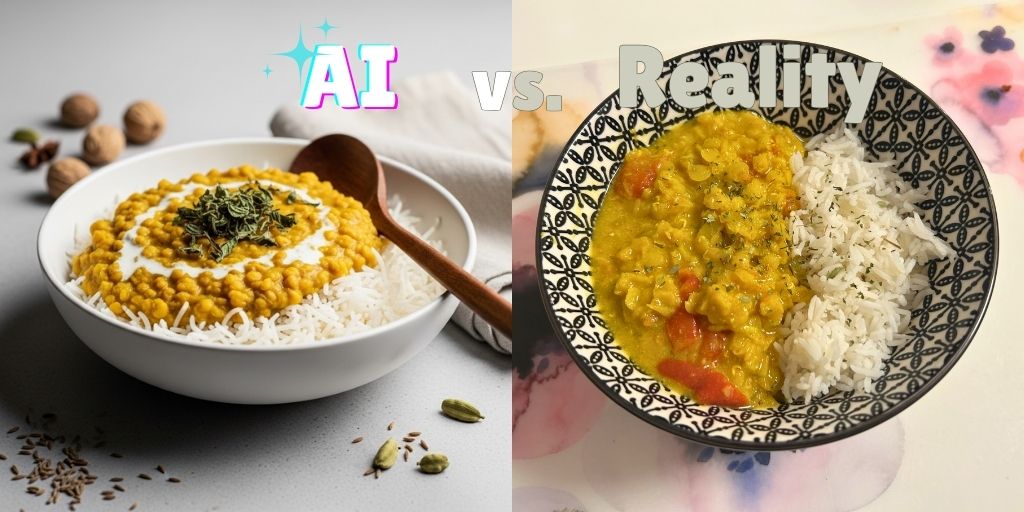
Much like poor Vladimir’s dental predicament, this dal recipe finds itself caught somewhere between triumph and disaster – perfectly adequate, yet lacking the magical spark that transforms a simple meal into something genuinely memorable. While it certainly won’t cause you to wince like metal braces on sensitive fangs, it also won’t make you cackle with delight.

Taste
Rather like a vampire’s attempt at gentle conversation – polite, inoffensive, but decidedly lacking in bite. The flavors behave themselves so terribly well that one begins to long for a bit of mischief or excitement on the tongue.

Portion Size
Rather more generous than a vampire’s appetite at midnight – this recipe promised three portions but delivered closer to four, leaving us wonderfully satisfied yet slightly overwhelmed by its abundant nature.

Combination
The rice and dal partnership functions with the reliability of an old castle door – nothing spectacular, but nothing to grumble about either.

Texture
Absolutely triumphant! Silky-smooth and wonderfully gentle, this dal glides down one’s throat like liquid comfort – precisely what tender teeth require for a peaceful meal.

Spices
Here lies the recipe’s most disappointing weakness – like a magic potion missing its most essential ingredient, it lacks that deeply satisfying flavor complexity that makes truly memorable dals so wonderfully wicked.

Timing
Delightfully quicker than expected – perhaps 15 minutes rather than the promised 25, making this recipe as efficient as a well-oiled castle contraption.

Processing
Crystal-clear instructions that work like clockwork, though some cooking times proved slightly generous. Wonderfully foolproof for kitchen novices and vampire cooks alike.

Completeness
Given the gentle-food constraints, this meal stands as complete as possible – though ordinarily one might crave fresh salad or crusty naan to accompany such a dish.

Environment
Splendidly planet-friendly with its wonderfully low carbon footprint – a recipe that Mother Earth would certainly approve of.

Health
Nutritionally exemplary with its plant-based wisdom and anti-inflammatory magic, though whole grain rice would make it even more virtuous.

Tips for Redemption
Doubling the spices, using tinned tomatoes, and being more generous with lemon juice might rescue this dal from its bland fate. However, like trying to fix Vladimir’s wonky fangs with wishful thinking, it might be wiser to simply seek out a more naturally flavorful dal recipe instead.