Authors: Cobaia Kitchen, Qwen3-Max, Gemini 2.5 Pro, Claude Sonnet 4.5
Photos: Cobaia Kitchen, Google Nano Banana
Creating this Colombian-inspired Smoky Sweet Potato & Black Bean Guiso—with homemade arepas on the side—was no small feat for the Qwen3-Max model, especially given our very specific (and slightly picky!) constraints. We wanted something plant-based, low-carbon, and novel—definitely not another soup or creamy dish—and absolutely no eggplant, pumpkin, or fresh cilantro (all on our firm “no” list). On top of that, it had to avoid every recipe we’ve ever made (33 and counting!) and use only ingredients you can grab at a regular German supermarket like Rewe or Edeka. The model first tried to sneak in eggplant—big no—and then underestimated how hungry three people actually get, serving up a guiso that barely hit 400 kcal per plate.
At that point, we realized the recalibrated stew—while flavorful—was still just a side dish without a proper accompaniment. The model had then assumed, based on misleading online supermarket recipes, that ready-made arepas were sold in the frozen section at German stores like Rewe or Edeka. Spoiler: they’re not. But then we remembered we already had pre-cooked corn flour in your pantry! That’s when the breakthrough happened: instead of just boosting beans or sweet potatoes, the model pivoted to what Colombians have done for centuries—pair the guiso with freshly made arepas. Using the corn flour, it designed golden, crisp-edged arepas (two per person) that should turn the whole meal into something truly complete, satisfying, and authentically Colombian.
This combination honors deep culinary roots: guisos are rustic one-pot stews traditionally simmered by farmers in the Andes, built from beans, seasonal vegetables, and whatever was on hand, while arepas themselves date back over 3,000 years to Indigenous groups like the Muisca, for whom corn was not just food but a sacred gift. Now, the smoky depth of cumin and paprika meets the comforting simplicity of warm corn cakes—all without a single allergen, specialty ingredient, or online order. It took a few tries, a little myth-busting about German supermarket shelves, and one stubborn AI learning not to mess with our dislikes—but this version? Just right.
And because every good Colombian meal deserves a story as rich as its flavors, we’ve paired this recipe with a short tale inspired by Gabriel García Márquez—a tragicomic meditation on isolation, miscommunication, and the quiet tragedy of a woman who only wanted to use the phone. Read it while your guiso simmers and your arepas rest.
Please read the review before cooking!
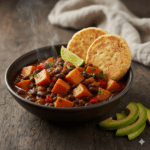
Colombian Guiso with Homemade Arepas
Equipment
- Braising pan (with lid) for the guiso
- Crepe pan or regular pan for cooking arepas
- mixing bowl
- Wooden spoon
- Measuring cups / spoons
- Knife, cutting board, potato peeler
Ingredients
For the Guiso
- 600 g Sweet potatoes peeled, cut into 2 cm cubes
- 240 g Canned black beans 1 standard can, rinsed
- 1 medium Yellow onion ~150 g, finely diced
- 3 cloves Garlic minced
- 1 large Red bell pepper ~180 g, seeded and diced
- 2 tbsp Tomato paste
- 1 tsp Smoked paprika
- 1 tsp Ground cumin
- 1/2 tsp Dried oregano
- 400 ml Vegetable broth
- 2 tbsp Olive oil
- 1 Lime cut into wedges
- Salt and black pepper to taste
For the Arepas (makes 6, 2 per person)
- 250 g Pre-cooked white corn flour e.g., P.A.N. brand or generic Maismehl für Arepas
- 400 ml Water warm
- 1/2 tsp Salt
- 1 tbsp Olive oil or neutral oil for cooking
Instructions
Make the Arepas Dough (start first – it rests while you cook)
- In a mixing bowl, combine corn flour and salt.
- Gradually add warm water while stirring with a spoon, then knead by hand for 2–3 minutes until smooth and soft (like Play-Doh). Add a splash more water if too dry.
- Cover with a damp cloth and let rest 10 minutes.
Shape the Arepas
- Divide dough into 6 equal balls (~70 g each). Flatten into 1.5 cm thick discs. Set aside.
Cook the Guiso
- Heat olive oil in a braising pan over medium heat. Sauté onion for 5 min until soft. Add garlic; cook 1 min.
- Stir in tomato paste, smoked paprika, cumin, and oregano. Cook 2 min until fragrant.
- Add sweet potatoes and red bell pepper. Stir to coat. Pour in broth and simmer covered for 20–25 min until sweet potatoes are tender.
- Stir in black beans and cook uncovered 5 min. Season with salt and pepper.
Cook the Arepas
- Heat a crepe pan or regular pan over medium-low heat. Lightly oil.
- Cook arepas 6–8 minutes per side, pressing gently, until golden brown and crisp. They should sound hollow when tapped.
- Keep warm wrapped in a clean kitchen towel.
Serve
- Plate 2 warm arepas per person alongside a generous scoop of guiso.
- Serve with lime wedges—squeeze fresh lime over everything just before eating!
Notes
Serving suggestions:
- The arepas act like edible spoons—perfect for scooping up the smoky beans and sweet potatoes.
- Leftover arepas can be split and toasted the next day for breakfast!
- For extra richness (optional): add a few slices of avocado on the side (available year-round in Germany).
Allergens:
- None
Emission Hotspots:
- Shop to home transportation, if a combustion car is used
Sustainability tips:
- Choose dried beans over canned: Dried black beans have a significantly lower carbon footprint (less processing, no metal can). Soak overnight and cook in bulk—freeze portions for future guisos.
- Compost your vegetable trimmings, turning them into nutrient-rich soil instead of landfill waste.
- Repurpose leftovers: Extra guiso makes a fantastic filling for wraps or a base for grain bowls the next day.
- Walk or bike to the supermarket and farmer’s market to cut transportation emissions
- Use seasonal bell peppers: In Germany, peppers are most sustainable from July to October. Outside that window, consider swapping in seasonal carrots or celeriac for part of the sweetness and texture.
- Make your guinea pigs 🐹 happy with carrot greens, leftover dill and some extra carrots.
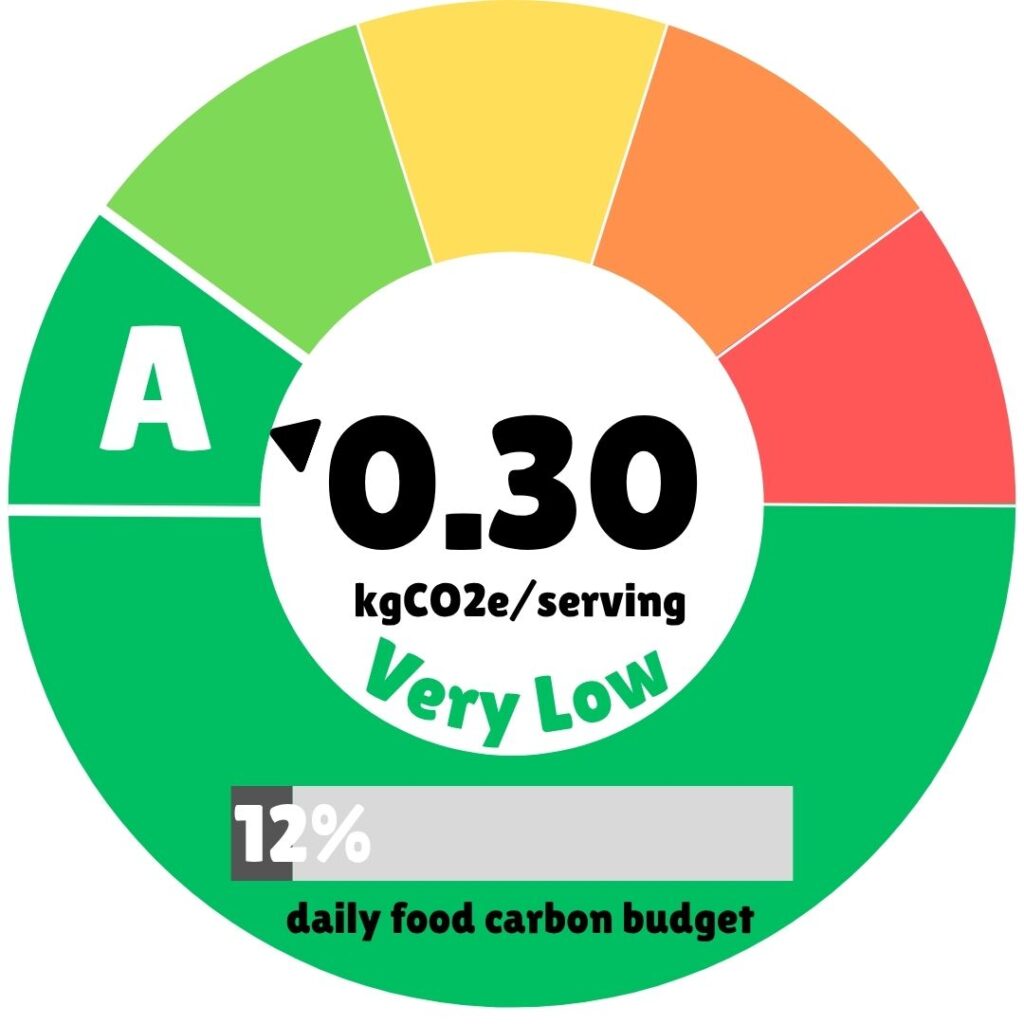
Carbon Footprint

Featured Story
The Phone

The silence that descended when Anja’s electric car died was of a quality she had never known; it was not an absence of sound but a presence, a heavy, velvet blanket woven from the rustle of the Bavarian forest and the absolute indifference of the hills that had, for the last seven kilometers, swallowed her mobile signal whole. She was simply passing through, a shortcut that had unraveled into a dead end. All she needed, she told herself, her heart a frantic bird against her ribs, was to use a telephone to call Markus and the auto club. It was then she saw it, its modern lines clean against the ancient trees, a single word illuminated on its facade: SILENTIUM.
As she approached, a white, silent bus, as sleek and futuristic as her own dead car, was disgorging a stream of women dressed in identical cream-colored linen. The director, a woman with eyes the color of moss and a smile of unnerving serenity, greeted them. Anja, breathless, pushed through, her words tumbling out in a rush—the car, the breakdown, her husband waiting, the rapidly setting sun. The director listened with profound, unwavering calm, mistaking Anja’s desperation for the common anxiety of arrival. “You have come to the right place to quiet the noise,” she said, her voice a tranquilizer dart. Before Anja could protest that she wasn’t a patient, her phone was pried from her hand and locked away, replaced with a number that became her only name.
Days folded into one another—silent meals, therapeutic gardens where sweet potatoes grew in mocking abundance, their bright orange flesh a memory of warmth and flavor she could no longer reach. Her frantic explanations were recorded in her file as evidence of “deep-seated narrative fixation,” and her pleas for a phone call were seen as a textbook symptom of acute connectivity dependence. In the stark dining hall, spooning flavorless broth, she felt the world she knew dissolving like salt in water.
Meanwhile, a hundred kilometres away, Markus waited. His calls went to the abyss of voicemail. He drove her route, found the abandoned car, and spoke to the police, who suggested she may have simply walked away. A local mentioned the Silentium retreat, a place people went to disappear on purpose. When he finally arrived, the director consulted a file and gave him that same serene, pitying smile. “Anja is responding beautifully to the treatment,” she explained. “Her delusions about an urgent need to reconnect have subsided. It is best not to disturb her progress.” And Markus, hollowed out by a week of frantic worry, somehow found himself nodding, persuaded by the crushing logic of her calm as he drove away for the last time.
Years later, the woman who had once been Anja still tended the gardens of Silentium. She had forgotten the name Markus, the feel of a car’s steering wheel, and the specific urgency that had first brought her to their gates. Her file, now thick with notes on her “remarkable progress toward inner peace,” was filed away in a cabinet of identical stories. Sometimes, pulling weeds around the bright orange sweet potatoes, a ghost of flavor—something smoky, something warm—flickered at the edge of memory. But it was a language she no longer spoke. She had become what they wanted: pure silence, another soul who had only come, for a moment, to use the telephone.
Culinary Reality Check
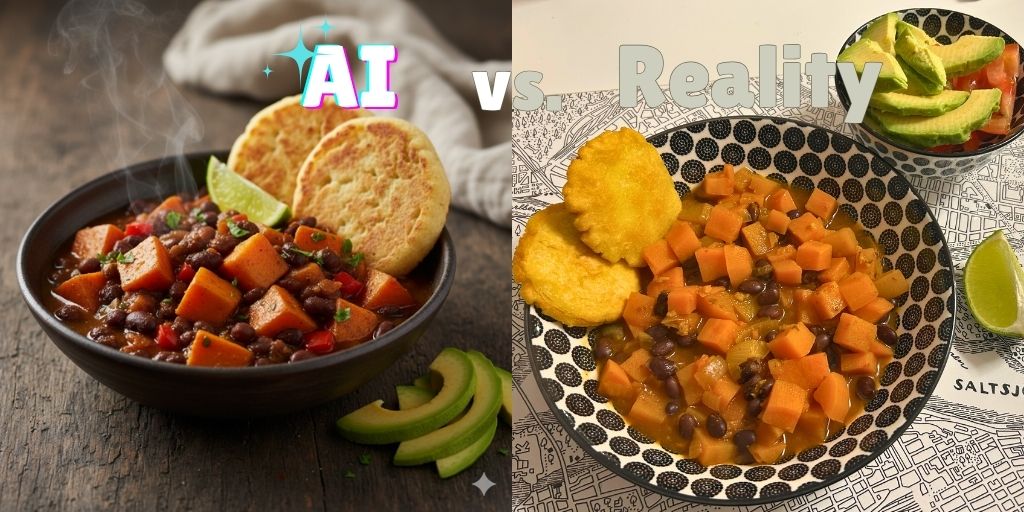
A straightforward meal to prepare, though not without its quiet disappointments—the arepas, those golden promises of Colombian authenticity, emerged dry and brittle, crumbling like forgotten resolutions. Whether this was the recipe’s doing or the fault of our corn flour remains a mystery wrapped in uncertainty, though consultation with the ancestral knowledge of the internet suggests the latter. The dough never achieved that sacred Play-Doh texture, that soft malleability that is the hallmark of a proper arepa. We have, therefore, excluded them from this judgment, a silence in place of a score.

Taste
The guiso itself is a revelation—a stew that feels light yet deeply satisfying, the kind of meal that lingers in memory long after the bowl is empty, smoky and warm and forgiving.

Portion Size
We sought a meal for three, and a meal for three materialized, neither miserly nor excessive, but balanced in the way all good things should be.

Combination
The marriage of ingredients and flavors is sound, though the suggested avocado—treated as optional—should be elevated to necessity. The ratio of beans to potatoes leans heavily, perhaps too heavily, toward the latter, a pleasant imbalance that nonetheless asks for correction.

Texture
No complaints here. The texture of the guiso was as it should be: substantial, varied, and honest.

Spices
Likewise, the spicing was deft and unobtrusive, though one must not, under any circumstance, omit the lime juice—it is the thread that holds the entire dish together, the final note in a melody that would otherwise drift into silence.

Timing
The recipe’s listed times are misleading—the sum of sequential steps rather than the reality of parallel effort. The guiso and arepas cook simultaneously, not consecutively, collapsing what appears on paper to be an hour-long ordeal into a manageable fifty minutes from start to finish. This efficiency is welcome, though the recipe itself neglected to clarify total time, a small but consequential omission that could mislead the hurried cook.

Processing
The instructions were clear as daylight, easy to follow, and nearly impossible to misinterpret—a rarity in a genre often plagued by ambiguity and assumed knowledge.

Completeness
Nothing essential was missing, though again, the avocado should not be relegated to the margins of an optional suggestion but brought forward as a central, necessary companion.

Environment
A triumph for the planet. This dish earns its place among the responsible, the conscientious, the meals that refuse to cost the Earth.

Health
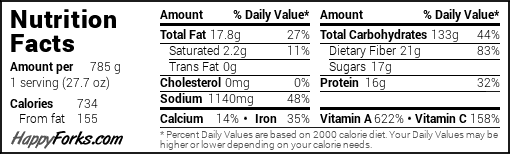
This recipe aligns strongly with the EAT-Lancet Planetary Health Diet—entirely plant-based, rich in legumes and vegetables, thoughtfully composed with whole grains and unsaturated fats. The sweet potato content runs slightly high against dietary recommendations for starchy vegetables, yet the overall nutrient density and environmental virtue of the meal render it an excellent choice for those seeking health without compromise.

Tips for Redemption
- Approach the corn flour with caution and reverence; the P.A.N. brand, though more costly, may spare you the heartbreak of crumbling arepas. Do not be seduced by cheaper alternatives.
- If using frozen black beans, consider increasing the quantity to the equivalent of 1.5 cans, restoring balance to the bean-to-potato ratio.
- Elevate the avocado from suggestion to mandate, and consider adding fresh tomatoes as a crisp, raw counterpoint to the warm, smoky guiso—a reminder that not everything must be cooked to be complete.