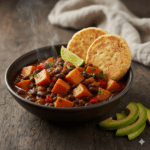
Colombian Guiso with Homemade Arepas
Smoky, hearty, and 100% plant-based—this Colombian-inspired guiso of sweet potatoes and black beans simmers with cumin and paprika, then gets scooped up with warm, golden arepas fresh off the pan. A complete, low-carbon dinner that’s as satisfying as it is simple!
Servings 3
Equipment
- Braising pan (with lid) for the guiso
- Crepe pan or regular pan for cooking arepas
- mixing bowl
- Wooden spoon
- Measuring cups / spoons
- Knife, cutting board, potato peeler
Ingredients
For the Guiso
- 600 g Sweet potatoes peeled, cut into 2 cm cubes
- 240 g Canned black beans 1 standard can, rinsed
- 1 medium Yellow onion ~150 g, finely diced
- 3 cloves Garlic minced
- 1 large Red bell pepper ~180 g, seeded and diced
- 2 tbsp Tomato paste
- 1 tsp Smoked paprika
- 1 tsp Ground cumin
- 1/2 tsp Dried oregano
- 400 ml Vegetable broth
- 2 tbsp Olive oil
- 1 Lime cut into wedges
- Salt and black pepper to taste
For the Arepas (makes 6, 2 per person)
- 250 g Pre-cooked white corn flour e.g., P.A.N. brand or generic Maismehl für Arepas
- 400 ml Water warm
- 1/2 tsp Salt
- 1 tbsp Olive oil or neutral oil for cooking
Instructions
Make the Arepas Dough (start first – it rests while you cook)
- In a mixing bowl, combine corn flour and salt.
- Gradually add warm water while stirring with a spoon, then knead by hand for 2–3 minutes until smooth and soft (like Play-Doh). Add a splash more water if too dry.
- Cover with a damp cloth and let rest 10 minutes.
Shape the Arepas
- Divide dough into 6 equal balls (~70 g each). Flatten into 1.5 cm thick discs. Set aside.
Cook the Guiso
- Heat olive oil in a braising pan over medium heat. Sauté onion for 5 min until soft. Add garlic; cook 1 min.
- Stir in tomato paste, smoked paprika, cumin, and oregano. Cook 2 min until fragrant.
- Add sweet potatoes and red bell pepper. Stir to coat. Pour in broth and simmer covered for 20–25 min until sweet potatoes are tender.
- Stir in black beans and cook uncovered 5 min. Season with salt and pepper.
Cook the Arepas
- Heat a crepe pan or regular pan over medium-low heat. Lightly oil.
- Cook arepas 6–8 minutes per side, pressing gently, until golden brown and crisp. They should sound hollow when tapped.
- Keep warm wrapped in a clean kitchen towel.
Serve
- Plate 2 warm arepas per person alongside a generous scoop of guiso.
- Serve with lime wedges—squeeze fresh lime over everything just before eating!
Notes
Serving suggestions:
- The arepas act like edible spoons—perfect for scooping up the smoky beans and sweet potatoes.
- Leftover arepas can be split and toasted the next day for breakfast!
- For extra richness (optional): add a few slices of avocado on the side (available year-round in Germany).
For a Colombian-inspired meal like this, keep drinks bright and refreshing to balance the smoky, earthy guiso. Alcohol-free, try a Lulo Agua Fresca—simply blend 2–3 lulos (or substitute with passion fruit or lime if unavailable), 1 tbsp sugar, and 500 ml cold water, then strain and serve over ice. It’s tangy, light, and authentically Colombian. For an alcoholic pairing, a crisp Colombian lager (like Águila or Club Colombia, available in some German supermarkets or specialty stores) works perfectly—or, if you prefer something mixed, a Canchanchara-inspired mocktail-turned-cocktail: muddle lime juice and honey, add 4 cl white rum, top with soda, and serve chilled. Both are easy, flavorful, and won’t steal the spotlight from your arepas!
Allergens:
- None
Emission Hotspots:
- Shop to home transportation, if a combustion car is used
Sustainability tips:
- Choose dried beans over canned: Dried black beans have a significantly lower carbon footprint (less processing, no metal can). Soak overnight and cook in bulk—freeze portions for future guisos.
- Compost your vegetable trimmings, turning them into nutrient-rich soil instead of landfill waste.
- Repurpose leftovers: Extra guiso makes a fantastic filling for wraps or a base for grain bowls the next day.
- Walk or bike to the supermarket and farmer's market to cut transportation emissions
- Use seasonal bell peppers: In Germany, peppers are most sustainable from July to October. Outside that window, consider swapping in seasonal carrots or celeriac for part of the sweetness and texture.
- Make your guinea pigs 🐹 happy with carrot greens, leftover dill and some extra carrots.