Authors: Cobaia Kitchen, Perplexity Deep Research, Claude Sonnet 4.5
Photos: Cobaia Kitchen, Seedream 4.5, Nano Banana
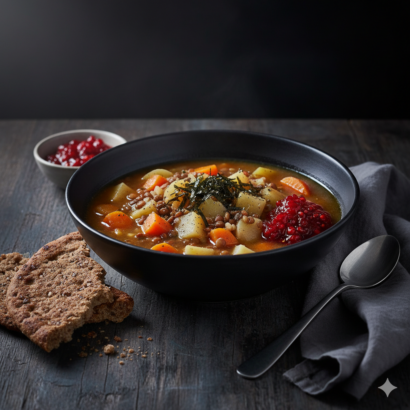
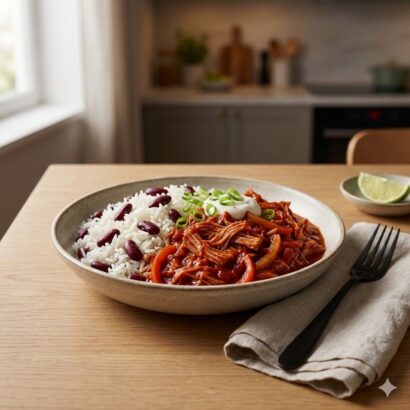
This Golden Freedom Bowl was born from a delightfully specific challenge: create a novel Persian dinner recipe that’s plant-based, low-carbon, uses only ingredients available in German supermarkets (plus our well-stocked pantry), works with a Reishunger Digital Rice Cooker, and—here’s where it gets interesting—connects to Iran’s current protests happening right now in January 2026. No pressure, right? Armed with this detailed brief, the Perplexity Deep Research model dove into real-time news about the ongoing demonstrations, explored traditional Persian cooking techniques that could be adapted for modern kitchens, and cross-referenced everything against our “Previous Recipes” file to ensure we weren’t accidentally recreating last month’s dinner. The research model scoured even the official Reishunger rice cooker manual to understand how the CRISPY mode creates that coveted tahdig—the golden, crispy rice crust that’s basically the Persian equivalent of fighting over the corner brownie piece.
Please read the review before cooking!

Golden Freedom Bowl
Equipment
- Reishunger Digital Rice Cooker (with CRISPY mode)
- Oven with convection
- Baking sheet with baking paper
- kitchen scale
- Cutting board and knives
- Mixing bowls (2 medium, 1 small)
- Whisk or fork
- measuring cups and spoons
- garlic press
- Small bowl or cup (for blooming saffron)
- Kitchen towel (for removing hot inner pot)
- Large flat serving plate (for flipping tahdig)
- Small dry pan (for toasting nuts)
Ingredients
For the Saffron Rice with Tahdig (Rice Cooker Method):
- 200 g white basmati rice
- Large pinch of saffron threads approximately 15-20 threads
- 3 tablespoons hot water for blooming saffron
- 255 ml (approximately 1 cup) water
- 1½ tablespoons olive oil
- ¾ teaspoon salt
For the Roasted Vegetables:
- 300 g cauliflower cut into bite-sized florets
- 1 large red bell pepper (approximately 200g) cut into 3cm pieces
- 1 can (240g drained weight) chickpeas rinsed and patted dry
- 2 medium carrots (approximately 150g) peeled and sliced into rounds
- 1 medium onion (approximately 120g) cut into wedges
- 2 tablespoons olive oil
- 1 teaspoon ground turmeric
- 1 teaspoon ground cumin
- ½ teaspoon ground cinnamon
- ½ teaspoon sumak
- ½ teaspoon salt
- ¼ teaspoon black pepper
For the Herbed Yogurt Sauce:
- 150 g (approximately ⅔ cup) vegan yogurt, unsweetened
- 2 teaspoons dried dill
- 1 teaspoon dried mint
- 2 tablespoons lemon juice from ½ fresh lemon
- 1 garlic clove minced or pressed
- ¼ teaspoon salt
For Garnish:
- 30 g slivered almonds or sunflower seeds toasted
- 2 spring onions thinly sliced
- Lemon wedges from remaining ½ lemon
- Optional: Extra pinch of sumak for sprinkling
Instructions
Step 1: Prepare and Start the Saffron Rice in Rice Cooker (5 minutes active, then 75-80 minutes automatic)
This is your first task—start the rice cooker so it finishes just as you complete the other components!
- Bloom the saffron: Grind the saffron threads using a mortar and pestle, or crush between your fingers into a fine powder. Add to a small cup with 3 tablespoons hot (not boiling) water. Stir and set aside while you prepare the rice.
- Prepare the rice: Place the basmati rice in a bowl. Rinse thoroughly under cold water 3-4 times until the water runs clear. Drain completely.
Set up the rice cooker:
- Add 1½ tablespoons olive oil (or ghee) to the inner pot of your Reishunger Digital Rice Cooker
- Press the WARM/STOP button and hold it briefly to activate Keep-Warm mode
- Let the oil heat for about 1-2 minutes until it becomes liquid and warm
Add ingredients to rice cooker:
- Pour the bloomed saffron water (with all the saffron threads) into the warm oil and swirl gently
- Add the washed and drained rice
- Add 255ml (1 cup) water
- Add ¾ teaspoon salt
- Gently stir everything together with a wooden or plastic spoon to distribute the saffron evenly
Select CRISPY mode and start:
- Press the MENU button until “CRISPY” appears on the display
- Use the +1HR and +10MIN buttons to set the cooking time to 75 minutes (this will give you a beautiful golden-brown tahdig without being too dark)
- Press START
- The rice cooker will now work automatically for 75 minutes. You don’t need to do anything more with the rice!
- While the rice cooks automatically, prepare all other components (Steps 2-7).
Step 2: Prepare the Vegetables (10 minutes)
- Preheat your oven to 200°C (convection setting).
- Wash and cut the cauliflower into bite-sized florets (approximately 3-4cm).
- Wash the bell pepper, remove seeds and membranes, and cut into 3cm pieces.
- Peel the carrots using a potato peeler and slice into rounds (approximately 0.5cm thick).
- Peel the onion and cut into 6-8 wedges.
- Drain and rinse the canned chickpeas, then pat them completely dry with a kitchen towel (this helps them crisp up).
Step 3: Season and Roast the Vegetables (5 minutes prep, then 30-35 minutes roasting)
- In a large mixing bowl, combine all the vegetables and chickpeas.
- Drizzle with 2 tablespoons olive oil.
- Add the turmeric, cumin, cinnamon, sumak, salt, and black pepper.
- Toss thoroughly with your hands or a spoon until everything is evenly coated with oil and spices.
- Spread the mixture in a single layer on a baking sheet lined with baking paper.
- Place in the preheated oven and roast for 30-35 minutes, flipping the vegetables halfway through (around the 15-minute mark), until they are golden and caramelized at the edges.
- Remove from oven when done and set aside.
Step 4: Prepare the Herbed Yogurt Sauce (5 minutes)
- In a small bowl, combine the dried dill and dried mint with 2 tablespoons warm water. Let sit for 5 minutes to rehydrate the herbs and release their aromatics.
- In a medium bowl, whisk together the vegan yogurt, rehydrated herbs (including the soaking water), lemon juice, minced garlic, and salt.
- Taste and adjust seasoning if needed. The sauce should be tangy, garlicky, and herbaceous.
- Cover and refrigerate until ready to serve.
Step 5: Prepare Garnishes (3 minutes)
- In a small dry pan over medium-low heat, toast the slivered almonds or sunflower seeds for 3-4 minutes, stirring frequently, until golden and fragrant. Watch carefully to prevent burning. Transfer to a small bowl.
- Wash and thinly slice the spring onions (both white and green parts).
- Cut the remaining lemon half into 3 wedges.
Step 6: Remove and Flip the Tahdig (5 minutes)
- The rice cooker will beep when finished and automatically switch to Keep-Warm mode.
- When the rice cooker beeps (after 75 minutes), press the WARM/STOP button to turn off Keep-Warm mode.
- Carefully remove the lid (steam will escape).
- Using a kitchen towel to protect your hands, carefully lift the inner pot out of the rice cooker and place it on a heat-safe surface.
- Let the rice rest for 2-3 minutes. This allows the tahdig to firm up slightly and makes flipping easier.
- Place a large flat serving plate (larger than the rice cooker pot) upside down over the top of the inner pot.
- Holding the plate and pot firmly together, quickly and confidently flip them over in one smooth motion.
- Gently lift the inner pot straight up. The rice should release beautifully, revealing the golden, crispy tahdig on top like a cake.
- Don’t worry if a few pieces stick to the pot—simply use a wooden or plastic spoon to gently loosen them and place them on top of the rice.
Step 7: Assemble the Golden Freedom Bowls (5 minutes)
- Using a large serving spoon, gently scoop portions of the fluffy saffron rice into 3 individual serving bowls, being careful not to break up the rice too much.
- Break off pieces of the golden, crispy tahdig and place 2-3 generous pieces on top of the rice in each bowl (distribute evenly—tahdig is the prized part!).
- Top each rice portion generously with the roasted vegetables and chickpeas.
- Drizzle or dollop 2-3 tablespoons of the herbed yogurt sauce over the vegetables in each bowl.
- Sprinkle each bowl with toasted almonds or sunflower seeds.
- Garnish with sliced spring onions.
- Place a lemon wedge on the side of each bowl.
- Optional: Add a tiny pinch of sumak over the top for extra color and a bright, tangy finish.
Notes
Serving suggestions:
- Serve the Golden Freedom Bowl immediately while the tahdig is still warm and crispy. Encourage everyone to squeeze fresh lemon juice over their bowls for brightness and to mix all the components together—the crispy tahdig pieces, fluffy rice, roasted vegetables, and creamy yogurt create a perfect harmony of textures and flavors.
- The dish is complete and balanced on its own, but pairs beautifully with:
- A simple side salad of sliced cucumbers and tomatoes with lemon dressing
- Warm flatbread or naan bread (from your frozen stock)
- A glass of refreshing mint tea
- Additional vegan yogurt on the side for those who love extra creaminess
Rice Cooker Tips & Troubleshooting
- CRISPY mode timing guide:
- 60 minutes = light golden crust (subtle crunch)
- 75 minutes = golden-brown crust (perfect balance – recommended)
- 90 minutes = deep golden-brown crust (very crispy and dark)
- First-time users: Your rice cooker may need to “acclimate” during the first 1-2 uses. If your tahdig is lighter or darker than expected, adjust the time by ±10 minutes next time.
- Flipping confidence: The non-stick inner pot makes flipping easy, but if you’re nervous, you can also serve the rice directly from the pot and simply break the tahdig into pieces to serve on top.
- Cleaning: Never put the non-stick inner pot in the dishwasher. Hand wash with a soft sponge to preserve the coating.
- Energy efficiency: The rice cooker is more energy-efficient than using both a stovetop and oven. Consider this sustainable cooking method for your future rice dishes!
- Nuts (Almonds): If you choose almonds for the garnish.
- Soybeans: If your vegan yogurt is soy-based (check the specific brand used).
Emission Hotspots:
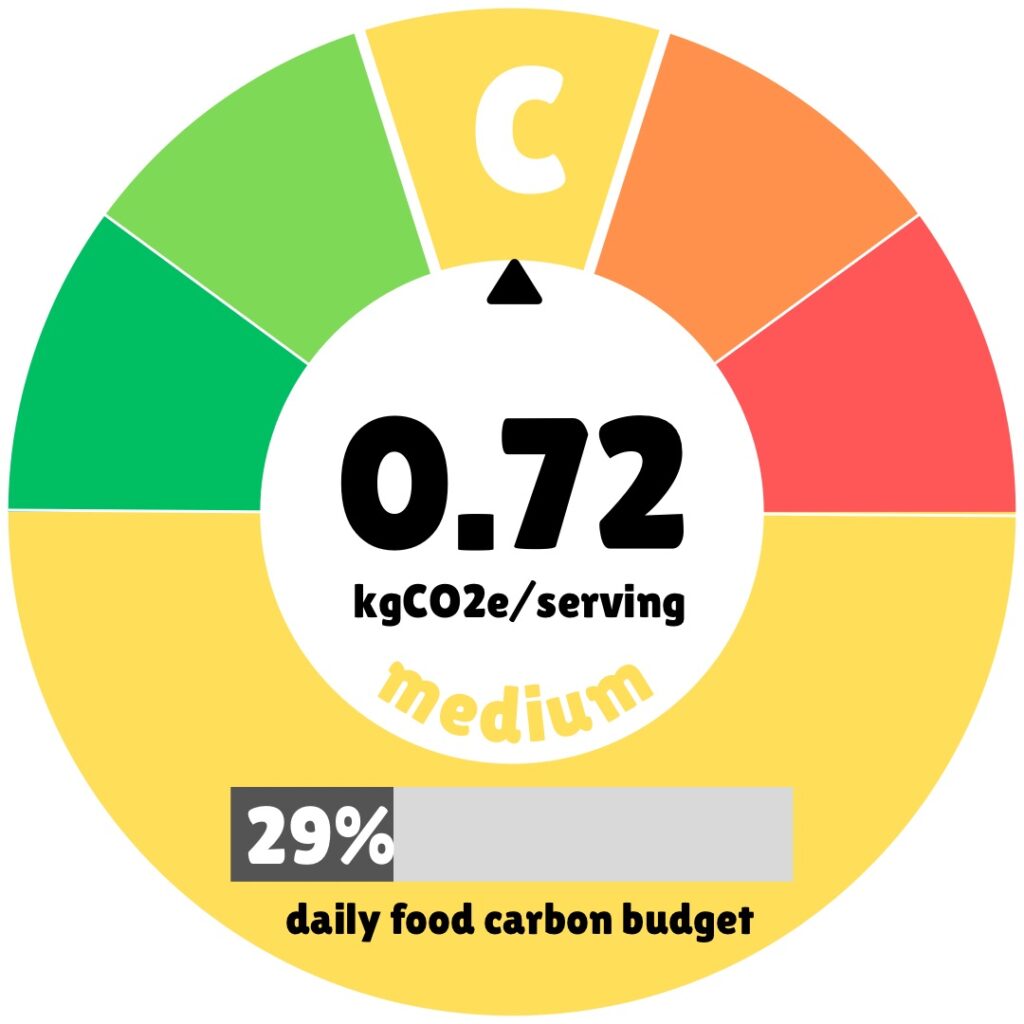
- The rice represent the recipe’s primary carbon emission hotspot due to rice cultivation’s methane-intensive paddy farming
- While canned chickpeas are convenient, they carry a higher environmental cost than their dried counterparts.
- Shop to home transportation, if a combustion car is used
Sustainability tips:
- Root-to-Leaf Cooking: Don’t toss the cauliflower leaves or stalk! Chop the stalk into small cubes and roast them alongside the florets—they become tender and sweet. The fresh leaves can be sliced and sautéed with the onions or roasted until crispy for a zero-waste garnish.
- Aquafaba Magic: Save the liquid from the can of chickpeas (aquafaba). It can be whipped into a vegan chocolate mousse for dessert or used as an egg binder in future baking recipes, keeping perfectly in the fridge for up to a week.
- Go Local & Seasonal: While basmati rice and saffron are imported staples of this dish, you can maximize local impact by swapping out the bell peppers (which are likely greenhouse-grown or imported in German winter) for more seasonal root vegetables like parsnips, beetroot, or winter squash, which have a much lower transport footprint.
- Bulk Buying: Purchase your basmati rice, dried chickpeas (instead of canned), and spices in the largest bulk packages available. This significantly reduces single-use plastic packaging waste and transport emissions per kilogram of food.
- Smart Energy Use: Since the oven is already on for the vegetables, try to roast a double batch or roast veggies for tomorrow’s lunch at the same time. Maximizing oven capacity makes the energy usage per meal much more efficient.
- Walk or bike to the supermarket and farmer’s market to cut transportation emissions
- Make your guinea pigs 🐹 happy by giving them cauliflower and carrot greens.
Carbon Footprint

Featured Story
The Geometry of Silence

Leyla always counted her steps on the way home from the university. Forty-three from the gate to the corner where the fruit seller nodded at her. Sixty-two more to the bus stop where she could let her scarf slip back just slightly while pretending to fix her hair. The Tehran winter air tasted of smoke and gasoline and something else—possibility, perhaps, or its ghost. She studied architecture, which her husband Hamid tolerated because the money was useful, though he controlled their joint account. “We are a team,” he would say. The first time he checked her phone—”Just making sure you’re safe”—she told herself it was protection. The second time, she said nothing. By the tenth time, she had learned to delete messages before coming home, but he had already installed the tracking app.
It had been small things at first. A male classmate who helped her carry her portfolio. A faculty lecture she attended in the evening. The day she forgot to text him when her bus was delayed. Each time, Hamid’s voice would go soft—dangerous-soft—and he would explain about honor, about the neighbors watching, about how modern university women brought shame to their families. When she started staying fifteen minutes after class to work on group projects, he began calling her professors to verify her schedule. When she mentioned wanting to visit her mother alone, he reminded her that a woman’s place was with her husband’s family. When she laughed at a joke her classmate Maryam told her, he asked what man had made her so happy. The apartment grew smaller each month, the walls pressing inward like a fist slowly closing.
Then came the invitation to a classmate’s study group. Mixed gender, five students working on their final projects, meeting at a café near Vanak Square. Leyla knew better, but something in her—some last ember of the person she used to be—made her say yes. She told him casually: “We’re studying together Thursday afternoon. I’ll be home by seven.” His face remained perfectly still, but she saw the calculation behind his eyes, the adding up of all her small betrayals. “With men?” he asked. She nodded. He smiled. “Of course. Education is important.” The ease of his permission terrified her more than his anger ever had. That night, he made her favorite rice, the tahdig coming out golden and perfect, and watched her eat with the focused attention of a scientist observing an experiment.
On Thursday, she went. The tracking app on her phone blinked its location every thirty seconds—the café in Vanak, exactly where she said she’d be. She worked on sketches, drank tea, spoke about load-bearing walls and cantilevers, felt briefly like a person and not a possession. At 6:30, she left, taking the bus home with a small, guilty lightness in her chest. But when she opened the apartment door, Hamid was waiting, and his stillness was absolute. “You sat next to Arash,” he said quietly. “My cousin saw you. You were laughing at something he said. Your scarf had slipped back.” She tried to explain—it was nothing, just studying, just architecture—but he was no longer listening to her words, only to the story he had written in his mind, the one where her freedom was the same as betrayal, where every smile she gave away was stolen from him.
The neighbors later told police they had heard an argument, muffled shouting, then a long silence. The official report called it a “family dispute.” Hamid told the officers she had fallen during a fight, that she’d been defiant, that she’d brought shame to his family, that he’d only been trying to protect their honor. The judge would likely be lenient—these things happened, women these days had too much freedom, the West had poisoned their minds. No one mentioned the months of surveillance, the financial control, the slow suffocation that preceded the final violence. Outside, Tehran continued its grey exhale, swallowing another name, another woman who had committed the unforgivable crime of wanting to live as if she owned herself.
Culinary Reality Check
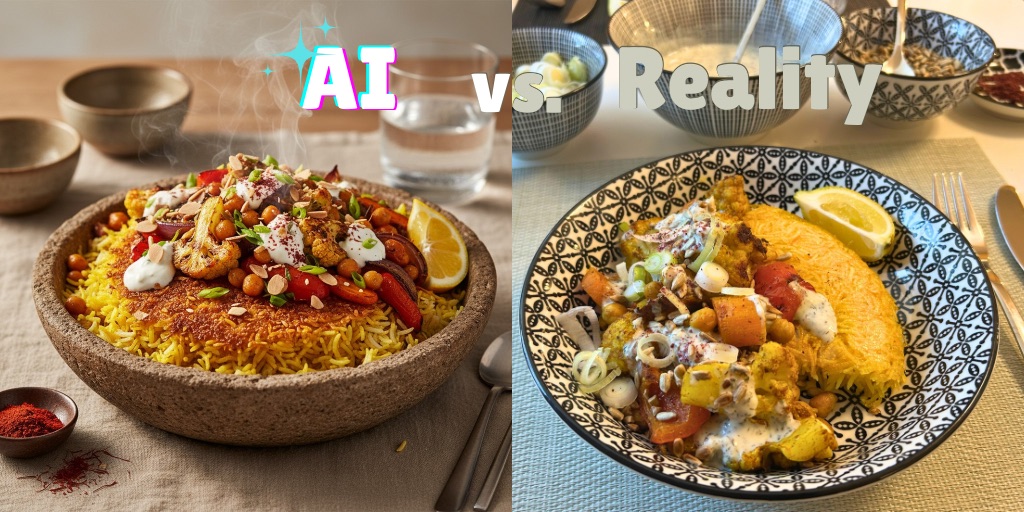
A striking dish that demands attention—beautiful, vibrant, and deeply flavorful. It feeds the senses just as it feeds the body.

Taste
The flavor profile is excellent, anchored by the distinct, metallic-floral warmth of saffron. This feels like a meal for an occasion, a dish with presence. Definitely one to revisit.

Portion Size
The recipe promised a meal for three and technically delivered, but the balance felt slightly off. The vegetable portion was abundant—perhaps even overwhelming—while the rice and yogurt felt scarce in comparison. A generous hand with the base elements would serve the dish better.

Combination
A flawless interplay of color, texture, and taste. The components work together in perfect harmony, creating a plate that looks as vibrant as it tastes.

Texture
The roasted vegetables were tender and well-prepared. However, the rice texture presented a challenge. Because the portion was small relative to the cooker’s surface area, the result was almost entirely tahdig—hard, crispy crust—with very little soft, fluffy rice to balance it. For anyone with dental sensitivities (like my fellow diner with braces), this relentless crunch can be more of a trial than a pleasure.

Spices
Impeccable. The seasoning was balanced, precise, and needed no adjustment. It tasted exactly as it should.

Timing
The estimated preparation and cooking times were accurate, respecting the reality of the kitchen clock.

Processing
The instructions were clear and easy to follow, but the AI’s understanding of the rice cooker hardware had gaps. The machine defaults to a 90-minute cycle for tahdig, and the controls only allow adding time, not subtracting it—a small but frustrating friction between digital theory and mechanical reality.

Completeness
Nothing was forgotten. Every necessary element was listed and accounted for.

Environment
A C-rating—the current European average. The carbon footprint is pulled down primarily by the rice and canned chickpeas, two staples that carry heavier environmental costs than dried legumes or lower-impact grains. It’s neither exceptional nor egregious, sitting squarely in the middle of the sustainability spectrum.

Health
This recipe aligns strongly with the EAT-Lancet Planetary Health Diet, offering excellent plant-based proteins, plentiful vegetables, and healthy fats. To truly optimize it, swapping white basmati for a whole-grain variety would improve fiber content and glycemic balance, moving it closer to the ideal.

Tips for Redemption
- Increase the rice quantity significantly to ensure a balance between soft grains and crispy crust.
- Work with the machine, not against it: use the standard Crispy setting but set an external timer for 75 minutes to stop it manually.