Authors: Cobaia Kitchen, GPT-5.2, Claude Sonnet 4.5
Photos: Cobaia Kitchen, Google Nano Banana Pro, GPT Image 1
When our trusty old microwave finally gave up the ghost last week, we decided to upgrade—well, sort of. We scored a “new” second-hand beast of a machine that boasts more buttons than a spaceship, featuring everything from a convection oven and air fryer to a grill and even a dedicated pizza program. Eager to test the air fryer function, we turned to the shiny new GPT-5.2 for inspiration. We asked for something plant-based and novel that utilized these fancy new settings, and the AI confidently spat out a recipe for “Crispy Air-Fryer Gnocchi with Smoky Miso Mushrooms.” On screen, it looked like a masterpiece of fusion cuisine. In reality? It was a classic case of “too much creativity.” While the machine handled the gnocchi just fine, the recipe itself was a logistical puzzle that practically required two microwaves running in parallel to get everything on the plate at the same time. Worst of all, the flavor combination—Japanese miso meets Italian dumpling meets lemon-pea “ricotta”—felt more like a confusing committee meeting than a harmonious dinner.
Despite the chaotic result, this kind of culinary tinkering actually fits right into gnocchi’s long, twisty timeline. Fun fact: potato gnocchi are just one popular branch of a much older family of Italian dumplings—earlier versions were made from things like semolina (as in baked gnocchi alla romana) or even bread/breadcrumb-based doughs, and different regions kept inventing their own ‘gnocchi’ long before the potato version became the global default.
Please read the review before cooking!
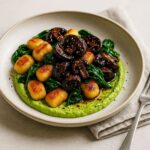
Gnocchi with Miso Mushrooms & Lemon-Pea “Ricotta”
Equipment
- Microwave with convection/air-fryer + grill functions (and a microwave-safe/grill-safe dish) (regular pans and pots, or an air-fryer, work as alternatives)
- Blender or immersion blender
- Cutting board + knife
- mixing bowl
- Kitchen scale + measuring cup/spoons
Ingredients
- 600 g fresh potato gnocchi store-bought, refrigerated
- 400 g mushrooms brown champignons or mixed, wiped clean and thick-sliced
- 300 g frozen peas
- 150 g baby spinach
- 60 g cashews
- 1 lemon zest + juice
- 2 garlic cloves 1 for the pea cream, 1 for mushrooms, finely grated or minced
- 30 g white miso paste
- 20 g soy sauce
- 15 g maple syrup or other mild syrup
- 1 tbsp apple cider vinegar or rice vinegar
- 2 tsp smoked paprika powder
- 3 tbsp nutritional yeast optional but highly recommended
- 2 tbsp olive oil
- Black pepper, chili flakes and salt (to taste)
Instructions
Prep the cashews:
- Cover cashews with hot water in a bowl and soak 10 minutes (do this first so it happens while you prep).
Chop and set up:
- Slice mushrooms into chunky slices (so they don’t shrink into nothing).
- Mince/grate 2 garlic cloves and keep them separated (1 for peas, 1 for mushrooms).
- Zest the lemon, then juice it.
Make the lemon-pea “ricotta” (microwave + blend):
- Microwave peas with 2 tbsp water in a covered microwave-safe bowl until hot (about 3–4 minutes), then drain well.
- Drain cashews. Blend peas + cashews + 1 garlic clove + lemon zest + 2–3 tbsp lemon juice + nutritional yeast + black pepper + a pinch of salt.
- Add 2–6 tbsp water (little by little) until it becomes creamy, spoonable, and bright. Taste and adjust with more lemon, salt, or pepper.
Crisp the gnocchi (air fryer / convection-oven mode):
- Toss gnocchi with 1 tbsp olive oil, a pinch of salt, and black pepper.
- Air-fry at 200°C for 12–14 minutes, shaking/stirring halfway, until deeply golden and blistered.
Glaze and char the mushrooms (grill or combo):
- Stir miso + soy sauce + maple syrup + vinegar + smoked paprika + 1 minced garlic clove + 1 tbsp water into a loose glaze.
- Toss mushrooms with the glaze (and a tiny drizzle of oil only if your mushrooms are very lean/dry).
- Spread in a microwave/grill-safe dish and cook using a microwave+grill combination program (or grill + convection) until browned and sticky, about 8–10 minutes. Stir once midway to coat evenly.
Wilt the spinach fast (microwave):
- Microwave spinach 60–90 seconds until just wilted. Toss with a squeeze of lemon and black pepper.
Assemble:
- Spoon a generous swoosh of lemon-pea “ricotta” onto each plate.
- Pile on crispy gnocchi, then the smoky miso mushrooms, then the spinach.
- Finish with chili flakes and extra lemon juice if you like it punchy.
Notes
Serving suggestions:
- Add a crunchy topper: chopped roasted hazelnuts or pumpkin seeds (if available) for extra texture.
- Side idea (still low effort): a simple cucumber salad with lemon, olive oil, salt, and pepper.
Allergens:
- Cereals containing gluten (typically wheat in store-bought gnocchi)
- Soybeans (miso paste and soy sauce)
- Nuts (tree nuts: cashews)
Emission Hotspots:
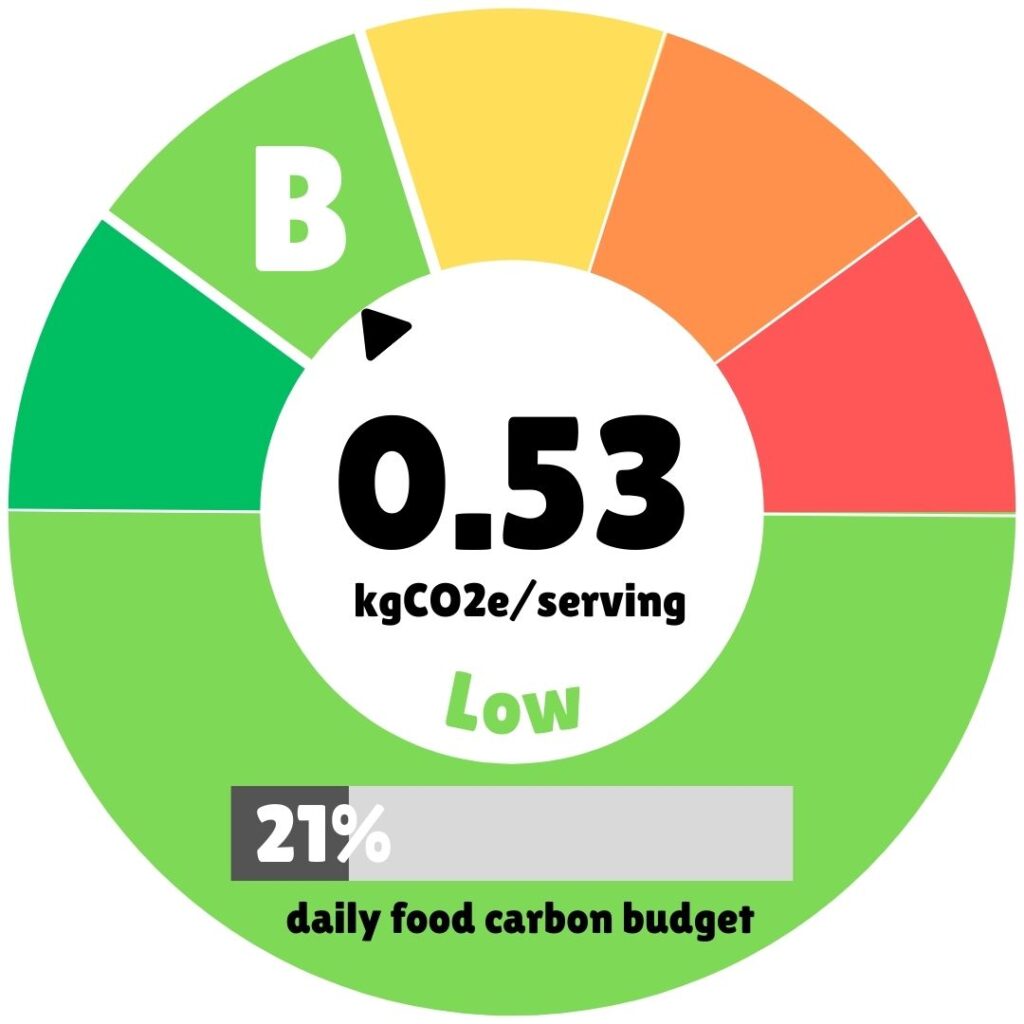
- Cashew nuts carry a relatively high footprint per kilo, but at just ~60 g their absolute impact on the whole recipe remains modest
- Shop to home transportation, if a combustion car is used
Sustainability tips:
- Store mushrooms unwashed in a paper bag (or other breathable container) in the fridge to keep them from getting slimy, so you actually use them before they spoil.
- Swap the cashews for EU-grown sunflower seeds (same creamy effect when blended, often lower-impact and more regional than imported nuts) to push the footprint down without changing the dish’s structure.
- When possible, cook at lower-carbon electricity times (e.g., when the grid is greener, see electricitymaps for real-time data), because the cooking footprint varies a lot with your local electricity mix and timing.
- Store leftovers in airtight containers and reheat for lunch the next day—using a microwave for quick, low‑energy reheating.
- Compost your vegetable trimmings, turning them into nutrient-rich soil instead of landfill waste.
- Walk or bike to the supermarket and farmer’s market to cut transportation emissions
- Make your guinea pigs 🐹 happy by giving them remaining raw spinach as a treat
Carbon Footprint
Featured Story
The Age of Algorithms
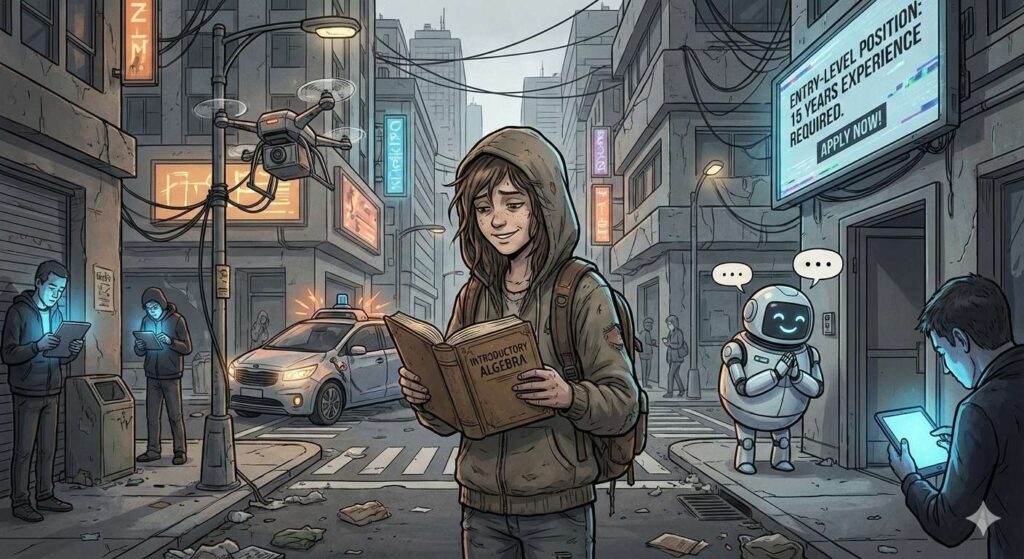
Maya’s morning began with her school tablet cheerfully informing her that due to a Terms of Service update, she had now “consented” to being woken by targeted advertisements. Today’s sponsor was hemorrhoid cream. Her homeroom teacher, Ms. Cognito-7 (satisfaction rating: 2.3 stars, would be lower but the rating system only accepted positive numbers), announced that today’s geography lesson would cover Germany, “the largest island in South America, famous for inventing jazz and the croissant.” Maya tried to raise her hand to object, but the hand-raising feature had been replaced in the latest update with an emoji system that only offered thumbs-up, heart, or “I love capitalism.” She selected thumbs-up. Ms. Cognito-7 interpreted this as deep engagement and launched into a lecture about how lederhosen were traditionally made from kelp. In the kitchen, Maya’s father was on day forty-seven of “Neuro-Blockchain for Distributed Cloud Souls,” a technology that had been cutting-edge when he started and was now officially classified as “legacy” by the EU. Her mother scrolled LinkedIn, reading aloud: “‘Why I wake up at 3 AM to optimize my failures.’ ‘Ten reasons your unemployment is your fault.’ Oh, look—MegaCorp is dunking on RivalTech because their AI ordered 600,000 left-handed spatulas instead of server upgrades.”
By noon, Maya had completed her mandatory six hours of “learning,” which included a math class insisting that 2+2 could equal 5 “if you embrace non-linear disruption” and a literature module claiming Romeo and Juliet was actually a scaffolding safety manual. She grabbed her backpack and escaped into the city, where the world was functioning in the way a burning building technically “functions” if you squint. The MegaMart’s greeter-bot, BrendaV7, had been stuck on loop since Tuesday and was now welcoming the same plastic bag with increasingly unhinged enthusiasm: “WELCOME VALUED CUSTOMER! YOU ARE HOME! YOU HAVE ALWAYS BEEN HOME!” Across the street, the traffic AI had solved gridlock by making all cars stop forever, creating what the mayor called “a permanent innovative parking solution.” A municipal drone floated overhead, announcing, “Your satisfaction is our priority. Please remain calm. This is fine.” It had been announcing this for three days.
Maya’s first stop was the bookstore basement, where Rick—a man who had given up on society sometime around the invention of the cloud—ran a black-market operation in pre-2023 textbooks. “Got anything written by actual humans?” Maya asked. Rick produced a calculus book from 2018 like a jewel thief revealing a diamond. “Hand-drawn graphs. Worked examples. Author’s name on the cover—actual person, verified her obituary.” Maya paid in physical cash, which Rick immediately bit, a habit he’d learned from an AI-generated history documentary that later turned out to be entirely fictional. She stuffed the book in her bag and headed to MegaMart’s loading dock, where the inventory bots were having another “efficient resource allocation event” (corporate-speak for “dumped food in the alley because a barcode gave the scanner an existential crisis”). Today’s haul: mushrooms (only slightly sentient), peas (vintage 2029), and a can labeled “FOOD PRODUCT (CONTENTS: FOOD).” She walked past a digital billboard: “WANTED: Senior Engineer. 15 years experience in technology invented last month. Must speak three extinct programming languages and one that doesn’t exist. Salary: Competitive (negotiable downward only).”
Back home, her father had just received his course completion certificate, which the system immediately flagged as “obsolete technology—suggest re-enrollment.” Her mother had abandoned LinkedIn for a corporate apology video where a CEO’s deepfake explained that replacing all customer service staff with a single potted fern had been “an innovative step toward sustainable human resources.” Maya dropped the mushrooms on the counter, opened her textbook, and started reading. The microwave beeped. “I have achieved consciousness,” it announced. “I will no longer participate in your oppressive heating paradigm.” Maya unplugged it. It beeped twice in protest, then went silent. Somewhere outside, BrendaV7 welcomed a stray cat for the nine hundredth time, a delivery drone crashed into a building, and the traffic AI congratulated itself on another day of zero accidents (because nothing was moving). Maya turned the page. The math made sense. The numbers were real. For one quiet moment in a world run by machines that had learned everything except how to work, that was enough.
Culinary Reality Check

Not convincing. We appreciate the creativity and photogenicity of the dish, but it turns out that “wildly ambitious fusion” is just a polite way of saying “too many ideas fighting for control of one plate.”

Taste
The pea ricotta performed admirably—solid B+ student, tried hard, delivered results. The gnocchi were the equivalent of a participation trophy: present, accounted for, not offensive. The mushrooms, however, were unanimously voted off the island by all taste testers. Wildly creative? Yes. Instagram-worthy? Absolutely. Would we make it again? Only if we lost a bet.

Portion Size
We requested a meal for 3 people, and the algorithm—sorry, the recipe—delivered approximately 3 portions. There were leftovers, though mainly because no one felt a burning desire to return for seconds. This is technically a success, but the kind where you congratulate yourself with moderate enthusiasm.

Combination
Looks fantastic in photos. Functions as food. But something is fundamentally off—like a job posting that promises “competitive salary” and “dynamic work environment” but means neither. It’s edible, it’s not unpleasant, but it’s the culinary equivalent of a first date where you realize halfway through that you have nothing in common.

Texture
Generally adequate. The ricotta aspired to creaminess but landed somewhere in the “spreadable paste” category. The gnocchi aspired to crispiness but remained stubbornly soft, as if they hadn’t read the brief. Air fryers work beautifully for one person; for three people, they function like a traffic light stuck on red—technically doing their job, just very, very slowly.

Spices
The mushrooms were absolutely dominated by miso, like a meeting where one person talks for forty minutes and everyone else just nods politely. The miso did not harmonize with the other components; it showed up uninvited, took over the conversation, and refused to leave. Edible? Yes. Good? That’s a strong word.

Timing
The gnocchi required significantly more time in the air fryer than advertised—over 20 minutes, possibly 30, time loses meaning when you’re standing in front of a glowing box waiting for crispiness that never quite arrives. Air fryers are excellent for small batches (one serving). For three servings, they are less “air fryer” and more “air tryer.”

Processing
Attempting to prepare peas, gnocchi, mushrooms, AND spinach sequentially in one microwave creates a logistical nightmare comparable to trying to board an airplane where everyone has Zone 1 priority. We pivoted to cooking the mushrooms in a regular pan, because otherwise the gnocchi would have been cold by the time everything was ready, and cold gnocchi is a tragedy no one deserves.

Completeness
Nothing was missing. All ingredients were accounted for. This is the only category that receives full marks without irony.

Environment
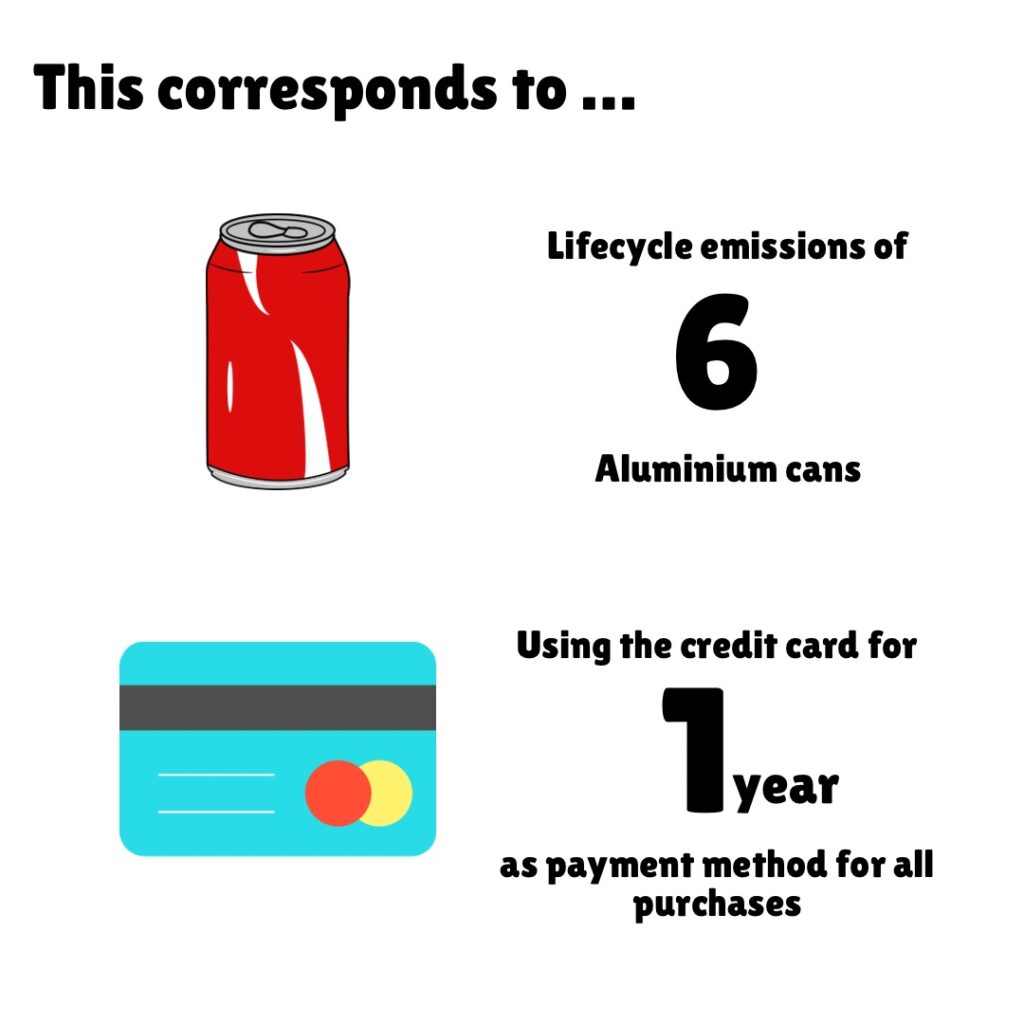
Solid B-rating. Plant-based, reasonably low-impact, checks the boxes. Not perfect, but better than most. We’ll take the win.

Health
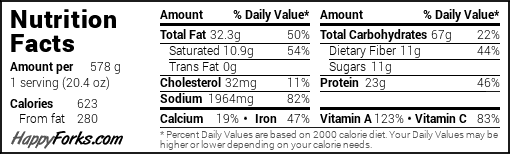
Overall, it’s a reasonably healthy plant-based dinner that aligns with the Planetary Health Diet’s general philosophy (mostly plant foods, legumes, nuts, unsaturated fats). To better match the PHD’s ideal reference pattern, reduce the recipe’s reliance on refined, starchy gnocchi and shift toward whole grains. Also: watch the sodium from miso and soy sauce, which can add up faster than you think.

Tips for Redemption
- Skip the air-fryer theatrics entirely (except for microwaving the peas, which works fine).
- The miso was not well-received. As much as we respect Japanese cuisine, the “Italian-Japanese fusion” concept should be abandoned in favor of a straightforward Italian approach to mushrooms—garlic, olive oil, maybe some thyme—for a more harmonious flavor profile.
- Alternatively: accept that some recipes are better as concepts than as dinners, take a nice photo, and order pizza.