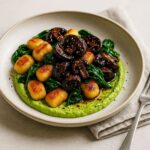
Gnocchi with Miso Mushrooms & Lemon-Pea “Ricotta”
Push your air fryer to its limits with this bold fusion experiment, featuring ultra-crispy gnocchi, sticky miso-glazed mushrooms, and a vibrant lemon-pea cream. It’s a complex, plant-based adventure that brings serious crunch and deep umami flavors to the table.
Servings 3
Calories 623kcal
Equipment
- Microwave with convection/air-fryer + grill functions (and a microwave-safe/grill-safe dish) (regular pans and pots, or an air-fryer, work as alternatives)
- Blender or immersion blender
- Cutting board + knife
- mixing bowl
- Kitchen scale + measuring cup/spoons
Ingredients
- 600 g fresh potato gnocchi store-bought, refrigerated
- 400 g mushrooms brown champignons or mixed, wiped clean and thick-sliced
- 300 g frozen peas
- 150 g baby spinach
- 60 g cashews
- 1 lemon zest + juice
- 2 garlic cloves 1 for the pea cream, 1 for mushrooms, finely grated or minced
- 30 g white miso paste
- 20 g soy sauce
- 15 g maple syrup or other mild syrup
- 1 tbsp apple cider vinegar or rice vinegar
- 2 tsp smoked paprika powder
- 3 tbsp nutritional yeast optional but highly recommended
- 2 tbsp olive oil
- Black pepper, chili flakes and salt (to taste)
Instructions
Prep the cashews:
- Cover cashews with hot water in a bowl and soak 10 minutes (do this first so it happens while you prep).
Chop and set up:
- Slice mushrooms into chunky slices (so they don’t shrink into nothing).
- Mince/grate 2 garlic cloves and keep them separated (1 for peas, 1 for mushrooms).
- Zest the lemon, then juice it.
Make the lemon-pea “ricotta” (microwave + blend):
- Microwave peas with 2 tbsp water in a covered microwave-safe bowl until hot (about 3–4 minutes), then drain well.
- Drain cashews. Blend peas + cashews + 1 garlic clove + lemon zest + 2–3 tbsp lemon juice + nutritional yeast + black pepper + a pinch of salt.
- Add 2–6 tbsp water (little by little) until it becomes creamy, spoonable, and bright. Taste and adjust with more lemon, salt, or pepper.
Crisp the gnocchi (air fryer / convection-oven mode):
- Toss gnocchi with 1 tbsp olive oil, a pinch of salt, and black pepper.
- Air-fry at 200°C for 12–14 minutes, shaking/stirring halfway, until deeply golden and blistered.
Glaze and char the mushrooms (grill or combo):
- Stir miso + soy sauce + maple syrup + vinegar + smoked paprika + 1 minced garlic clove + 1 tbsp water into a loose glaze.
- Toss mushrooms with the glaze (and a tiny drizzle of oil only if your mushrooms are very lean/dry).
- Spread in a microwave/grill-safe dish and cook using a microwave+grill combination program (or grill + convection) until browned and sticky, about 8–10 minutes. Stir once midway to coat evenly.
Wilt the spinach fast (microwave):
- Microwave spinach 60–90 seconds until just wilted. Toss with a squeeze of lemon and black pepper.
Assemble:
- Spoon a generous swoosh of lemon-pea “ricotta” onto each plate.
- Pile on crispy gnocchi, then the smoky miso mushrooms, then the spinach.
- Finish with chili flakes and extra lemon juice if you like it punchy.
Notes
Serving suggestions:
- Add a crunchy topper: chopped roasted hazelnuts or pumpkin seeds (if available) for extra texture.
- Side idea (still low effort): a simple cucumber salad with lemon, olive oil, salt, and pepper.
For an easy alcoholic match, pour a lightly chilled Pinot Noir: its earthy, savory character is a classic fit with mushrooms, and it won’t bully the gnocchi or the miso glaze. For an alcohol-free option, go simple with sparkling water plus a squeeze of lemon or grapefruit and a few bruised thyme leaves—the bubbles and citrus lift the dish’s rich umami and keep the whole plate feeling fresh.
Allergens:
- Cereals containing gluten (typically wheat in store-bought gnocchi)
- Soybeans (miso paste and soy sauce)
- Nuts (tree nuts: cashews)
Emission Hotspots:
- Cashew nuts carry a relatively high footprint per kilo, but at just ~60 g their absolute impact on the whole recipe remains modest
- Shop to home transportation, if a combustion car is used
Sustainability tips:
- Store mushrooms unwashed in a paper bag (or other breathable container) in the fridge to keep them from getting slimy, so you actually use them before they spoil.
- Swap the cashews for EU-grown sunflower seeds (same creamy effect when blended, often lower-impact and more regional than imported nuts) to push the footprint down without changing the dish’s structure.
- When possible, cook at lower-carbon electricity times (e.g., when the grid is greener, see electricitymaps for real-time data), because the cooking footprint varies a lot with your local electricity mix and timing.
- Store leftovers in airtight containers and reheat for lunch the next day—using a microwave for quick, low‑energy reheating.
- Compost your vegetable trimmings, turning them into nutrient-rich soil instead of landfill waste.
- Walk or bike to the supermarket and farmer's market to cut transportation emissions
- Make your guinea pigs 🐹 happy by giving them remaining raw spinach as a treat