
Authors: Cobaia Kitchen, Qwen3.5-Plus, Claude Sonnet 4.6
Photos: Cobaia Kitchen, Nano Banana 2
What happens when you hand an AI the keys to the kitchen and simply whisper “mushrooms”? Magic — or at least that’s what happened when we handed our latest dinner challenge to Qwen3.5-Plus. Our constraints were minimal: use brown champignons and king oyster mushrooms, avoid coconut milk (we’ve been through a phase, let’s not talk about it), and keep it plant-based. Everything else? Entirely Qwen’s call. The model apparently thought very long and hard — as thinking models do — and eventually surfaced from its computational depths with something equal parts Alpine comfort and weeknight genius: a Swiss-Style Creamy Mushroom & White Bean Ragout with Crispy Rösti. We did not see that coming. The AI, apparently, did.
Now, Rösti has been quietly making Swiss farmers very happy since at least the 16th century, when it began its illustrious career as a humble breakfast in the canton of Bern — nothing but grated potatoes, a sizzling pan, and the sheer determination to survive another day in the Alps. It became so synonymous with German-speaking Swiss culture that the linguistic border between French- and German-speaking Switzerland is still cheekily known as the Röstigraben — literally, the “Rösti ditch”. Creamy mushroom ragouts, meanwhile, have long been a staple of Swiss mountain cooking, where the forests generously supply wild mushrooms and the dairy tradition demands something rich and velvety to ladle over everything. Combining a silky mushroom-and-white-bean stew on top of a golden, crispy potato cake isn’t exactly traditional — but then again, neither is letting a Chinese AI invent your Swiss dinner. And yet here we are, and it works beautifully.
Please read the review before cooking!

Swiss-Style Mushroom & White Bean Ragout with Rösti
Equipment
- grater
- cutting board
- Knives (Japanese kitchen knife or standard)
- mixing bowl
- Pans (2 large frying pans)
- spatula
- Wooden spoon
- Measuring cup
- kitchen scale
- Soup ladle
- Bowls for serving
Ingredients
Mushrooms:
- 300 g Brown Champignons Cremini, cleaned and sliced
- 300 g King Oyster Mushrooms Kräuterseitlinge, cleaned and sliced into half-moons
Potatoes:
- 600 g waxy potatoes peeled and coarsely grated
Beans:
- 2 cans 400g each Large White Beans, drained and rinsed
Aromatics:
- 2 large Onions finely diced
- 3 cloves Garlic minced
- 2 medium Carrots finely diced
Cream Base:
- 250 g Vegan Sour Cream
- 50 g Ground Almonds
Liquid:
- 500 ml Vegetable Broth
Binding & Frying
- 2 tbsp Whole Wheat Flour for Rösti
- 4 tbsp Rapeseed Oil divided
Seasoning:
- 1 tsp dried Thyme
- ½ tsp dried Savory
- Salt and Pepper to taste
- 1 tbsp Apple Cider Vinegar
Garnish:
- 2 Spring Onions sliced into rings
Instructions
- Prepare the Rösti: Place the grated potatoes in a clean kitchen towel or sieve and squeeze out excess moisture. Transfer to a mixing bowl, add 1 tbsp of whole wheat flour, salt, and pepper. Mix well.
- Start the Ragout Base: Heat 2 tbsp of rapeseed oil in a large pan or braising pan over medium heat. Add the diced onions and carrots. Sauté for 5 minutes until softened. Add the minced garlic and cook for another minute until fragrant.
- Cook the Mushrooms: Add the sliced brown champignons and King Oyster mushrooms to the pan. Increase heat slightly and cook for 5-7 minutes until the mushrooms release their moisture and begin to brown.
- Simmer: Stir in the dried thyme and savory. Pour in the vegetable broth and bring to a simmer. Add the drained white beans. Reduce heat to low, cover, and let simmer for 10 minutes to allow flavors to meld.
- Fry the Rösti: While the ragout simmers, heat 2 tbsp of rapeseed oil in a second large frying pan (or crepe pan) over medium-high heat. Divide the potato mixture into 4 equal portions. Flatten each into a patty shape in the pan. Fry for 5-7 minutes per side until golden brown and crispy. Keep warm in the oven if necessary.
- Finish the Ragout: Stir the vegan sour cream and ground almonds into the mushroom and bean mixture. Heat gently for 2-3 minutes (do not boil vigorously after adding cream). Stir in the apple cider vinegar. Season with salt and pepper to taste.
- Serve: Place one crispy potato Rösti on each plate. Ladle the creamy mushroom and bean ragout alongside or over the Rösti. Garnish with fresh spring onion rings.
Notes
Serving suggestions:
- Serve with a side of pickled gherkins (if available) to cut through the creaminess.
- A simple green salad with white balsamic vinegar complements the hearty main dish.
- For a gluten-free option, omit the flour in the Rösti and ensure the vegetable broth is certified GF.
Drinks:
- 🍷 Pinot Gris (Grauburgunder) — A full-bodied, lightly oaked Pinot Gris from Germany or Alsace is a near-perfect match for this dish: its creamy texture mirrors the ragout’s richness, while its gentle acidity cuts right through it. Bonus Alpine points for choosing one from Baden or the nearby Alsace region — you’ll feel like you’re eating in a Swiss mountain hut with a very good wine list.
- 🍵 Sparkling Apple & Ginger Drink — Mix cold sparkling water with a good splash of cloudy apple juice (Apfelsaft naturtrüb) and a few slices of fresh ginger steeped for 10 minutes; serve over ice. The apple’s mild sweetness complements the savory thyme-and-cream notes in the ragout, while the ginger adds a fresh, slightly spicy lift that keeps the palate from getting overwhelmed by the heartiness of the dish — no cocktail shaker required.
Allergens:
- Cereals containing gluten — from the whole wheat flour used in the Rösti
- Tree nuts (almonds) — from the ground almonds used to enrich the ragout
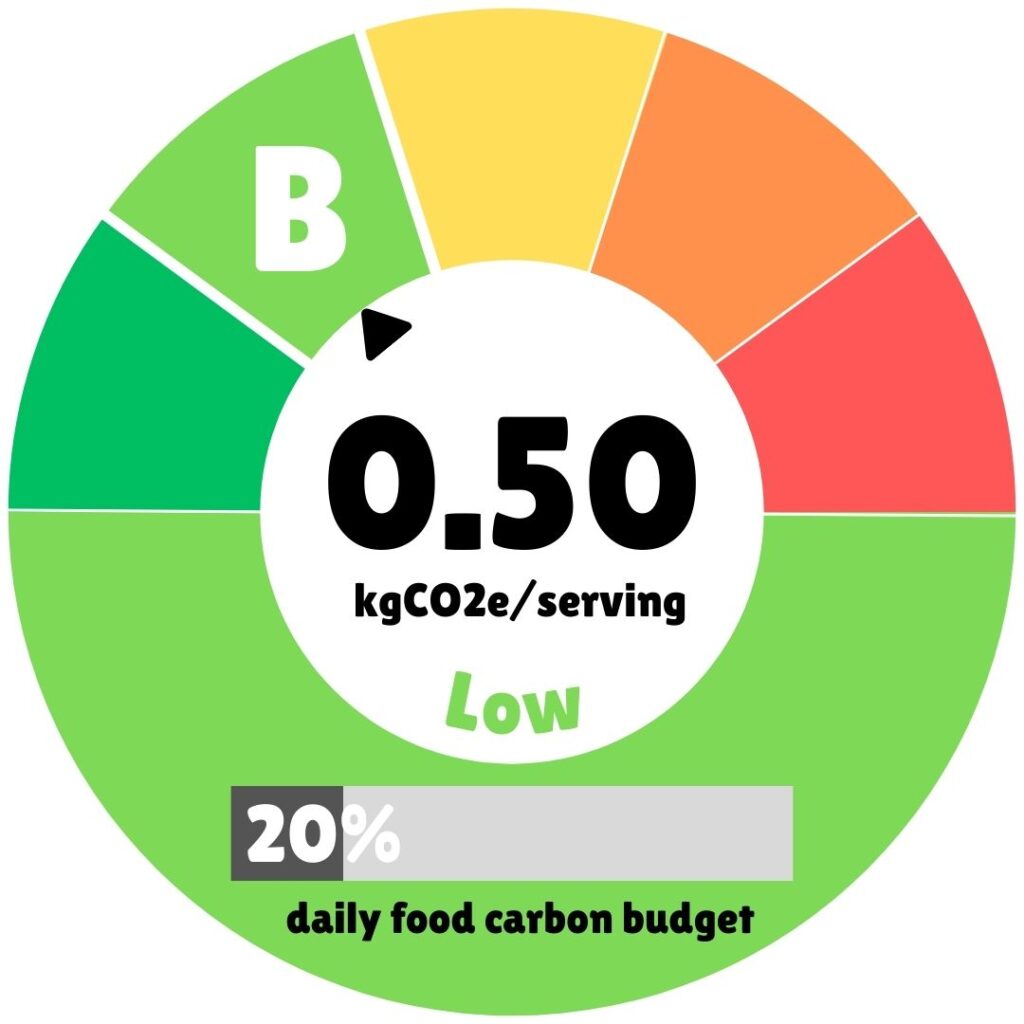
Emission Hotspots:
- While canned beans are convenient, they carry a higher environmental cost than their dried counterparts.
- Shop to home transportation, if a combustion car is used
Sustainability tips:
- Go dried for the beans — canned beans are convenient, but dried white beans have a noticeably lower carbon footprint due to less processing and no metal packaging. Soak them overnight, cook a big batch, and freeze the rest for future recipes.
- Skip the peeler for the Rösti — scrubbing the potatoes instead of peeling them eliminates waste and actually retains more nutrients just under the skin. Nobody will notice, and the Rösti will still be gloriously crispy.
- Switch to oat-based vegan sour cream — almond and cashew-based vegan dairy alternatives require water-intensive farming and often long transport chains. Oat-based versions, often made with local European oats, carry a significantly lower footprint.
- Don’t ditch the mushroom stalks — both champignon and king oyster stalks are fully edible. Chop them finely and toss them in with the ragout base; they add extra umami depth and you waste absolutely nothing.
- Compost the unavoidable scraps — any trimmings that can’t be repurposed should go to the compost rather than the bin, turning kitchen waste into nutrient-rich soil
- Walk or bike to the supermarket and farmer’s market to cut transportation emissions

Carbon Footprint

Featured Story
A Cardiac Event

The call came at 7:43 on a Tuesday. Markus Brändli stared at his phone for two full rings before answering, because his therapist in Zurich had once said that two rings of deliberate pause represented a healthy boundary. His therapist had also said that moving to Appenzell was “a bold choice,” in the tone people use when they mean the opposite. The caller was Gemeinderat [local councillor] Werner Huber, sixty-one, founder and sole member of the Vorderbüel Emergency Preparedness Committee, a man who approached every minor incident as if he had spent his whole life training for it and feared it might be his last. “Es isch öppis passiert,” he said [something has happened], and paused for effect. Markus thought: it is always something. That is, philosophically speaking, the entire problem with Tuesdays. He put the mindfulness pamphlet in the drawer where it lived with the other mindfulness pamphlets, and drove to the fountain.
Vreni Zahler, eighty-one, was seated on the low stone wall beside the village fountain, hands folded neatly in her lap, head slightly inclined, with the serene expression of a woman who had decided she had heard enough. At first glance she looked entirely peaceful. At second glance, she looked entirely dead. Markus had a third glance just to be sure, and it confirmed the second. Werner Huber stood beside her in a hi-vis vest labelled EMERGENCY on the back, photographing the cobblestones with enormous focus. Bauer [farmer] Köbi Frick was present with a rake, for reasons that remained unclear and would, Markus sensed, remain that way indefinitely. “She was completely fine yesterday,” Köbi said. “Helped me carry in the mushrooms. Complained the whole time about the smell. Very energetic complaints.” He offered this as though cheerful complaining was a reliable vital sign, which, in Vorderbüel, Markus reflected, it probably was.
The doctor from Urnäsch arrived at eleven, spent four minutes with Vreni, and pronounced it a cardiac event, natural causes, unremarkable. Markus would have accepted this — he was, by training and by temperament, a man who preferred the simple explanation, because simple explanations had fewer steps and fewer steps meant less opportunity for things to become his problem. But then he noticed the cup. Vreni’s herbal tea sat on the stone wall beside her, barely touched, which struck him as wrong the way a crooked picture strikes you wrong: quietly, persistently, against the will. He had seen Vreni Zahler drink tea. She drank tea the way Köbi Frick complained about the municipal recycling system — with total commitment and no remainder. He bagged the cup. Werner Huber asked what he was doing. Markus said, “Documenting.” Werner said, “I’ve already documented.” Markus thought: yes, but you documented the cobblestones.
The cantonal laboratory reported back in four days: Digitalis purpurea — foxglove, concentrated, introduced into the tea before it was poured. Enough to stop a heart quietly, leaving no drama, no scene, nothing that looked like anything except an old woman sitting down and deciding not to get up. Markus went back to the village. He knocked on seven doors. At the sixth, he found a dog-eared Kräuterführer [wild plant guide] with three pages torn out, the relevant pages, the ones about plants that resemble harmless herbs and are not. The seventh door was opened by an elderly man who offered him a Schnapps and had nothing to do with anything, but Markus accepted anyway, because some doors you knock on just to be sure, and some Schnapps you drink for the same reason. He did not rush. Rushing, he had found, gave the impression that the situation was surprising, and nothing in Vorderbüel should be treated as surprising. It only encouraged people. He arrested Hansruedi Keller, sixty-eight, retired postal worker and secretary of the Vorderbüel Garden Association, who had, it emerged, been in a boundary dispute with Vreni Zahler over forty-three centimetres of garden path for eleven years, and who had, when Markus showed him the evidence, said, with tremendous dignity: “Das hätte auch anders gelöst werde chöne.” [That could have been resolved differently.] Markus agreed. It could have been.
Werner Huber held a village assembly that evening, distributed a nine-page incident report titled Community Crisis: Status RESOLVED — Outstanding Leadership by Local Emergency Preparedness Committee, and received a round of applause that lasted nearly fifteen seconds, which was, by Vorderbüel standards, a standing ovation. Köbi Frick said he had always thought it was suspicious. Markus drove home in the dark, past the fountain, past the noticeboard, past Fränzi Meier the goat who was, technically, a registered resident of Vorderbüel and who watched him pass with the calm, level gaze of someone who had seen things and filed no report. He sat at his desk. He considered the mindfulness pamphlet. He opened it to a random page, which said: You are exactly where you need to be. He closed it, turned off the light, and accepted, in the quiet and unhurried way that Vorderbüel taught everything, that this was almost certainly true, and that this was the most unsettling part.
Culinary Reality Check
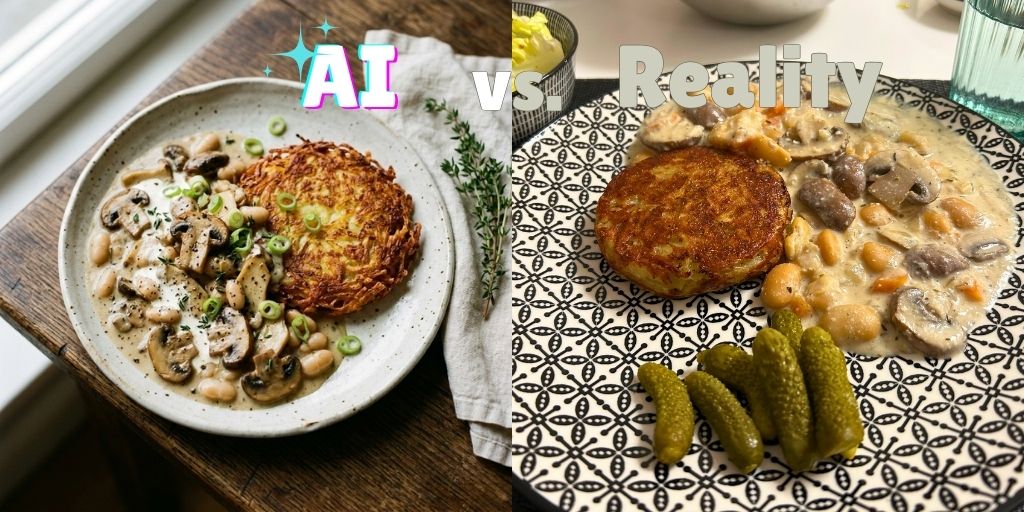
This is a welcome variation of our standard mushroom rotation. And since someone recently gifted us a Wonder Pan, we are now officially capable of producing small, round things — like Rösti — without them immediately turning into a unified potato catastrophe. Overall, Qwen delivered a solid recipe, though it leaned on the vegetable broth with a bit too much optimism.

Taste
Good, but deeply unremarkable in a way that suggests it was trying not to offend anyone. My taste tester filed a formal complaint about an excess of black pepper, but I had only escalated the pepper situation in a desperate attempt to create a flavour profile that extended beyond “warm broth.” Between the cream and the sheer volume of beans, the poor mushrooms never really stood a chance to announce themselves.

Portion Size
We asked the AI for exactly four portions. The AI gave us exactly four portions. We accepted this quietly and moved on.

Combination
A fundamentally sound pairing, though if I were to intervene in this situation again, I would reduce the beans and escalate the potatoes and mushrooms. We followed the AI’s serving advice and added pickled gherkins alongside a green salad. The salad was perfectly sensible. The pickles felt like an uninvited guest who had brought their own chair to the dinner table.

Texture
Acceptable, but perilously close to becoming a beverage. We had to perform an emergency intervention with cornstarch to prevent the ragout from classifying as a soup. The liquid ratios are off: mushrooms release water of their own, so starting with half a litre of broth was asking for trouble. Swapping the almond flour for a spoonful of almond or cashew butter mixed with water would have provided a much better thickening strategy. As for the Rösti: they were not strictly crispy, though whether this was an error in potato-squeezing technique or just a lack of commitment from the pan remains undocumented.

Spices
Adequate in theory, but thoroughly drowned in practice. As noted in the incident report above, the resulting panic led to a heavy-handed application of pepper, which solved one problem by creating an entirely different one.

Timing
The 25-minute cooking time is highly accurate. The 25-minute preparation time, however, assumes a level of knife-work efficiency that only exists in professional kitchens or deep states of denial. Realistic, perhaps, but optimistic.

Processing
Everything unfolded exactly according to the instructions. No drama, no sudden surprises. Just quiet, steady procedure.

Completeness
The AI left no gaps. All required ingredients were present, accounted for, and successfully integrated.

Environment
A solid B-rating. The canned beans are the main drag — the carbon cost of the cans holds this back from an A. Dried beans, soaked overnight, would close the gap.

Health
A strong performer by EAT-Lancet Planetary Health Diet standards: rich in legumes, vegetables, and unsaturated fats. The two areas for improvement are the potato-to-grain ratio (the PHD favours whole grains over tubers) and the saturated fat content, which depends heavily on which vegan sour cream you use. Choose an oat-based one.

Tips for Redemption
- Use significantly less broth and thicken with almond or cashew butter mixed with water instead of almond flour — it binds, it enriches, it does not panic
- Halve the beans, increase the mushrooms, and give the Rösti a bit more real estate on the plate
- Add a splash of soy sauce for umami depth — the mushrooms are trying to tell you something and the broth keeps interrupting