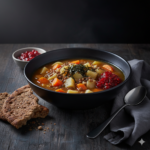
Arctic Suaasat Stew with Seaweed
Embrace the rugged spirit of the Arctic with this comforting plant-based twist on Greenland’s national dish, featuring hearty barley, root vegetables, and a hint of ocean flavor from seaweed. It’s a warming, sustainable bowl that brings the taste of the North straight to your kitchen, perfect for cozying up on a cold evening.
Servings 3
Calories 679kcal
Equipment
- Cutting board and sharp knife
- Large pot with lid
- Medium frying pan (preferably non‑stick)
- mixing bowl
- Wooden spoon or spatula
- Measuring cup and spoons
- Ladle
Ingredients
Arctic suaasat-style stew
- 1 tbsp rapeseed oil plus 1 tbsp reserved for bread
- 1 medium onion about 150 g, finely diced
- 1 small leek about 80 g, halved lengthwise, then sliced into half-moons
- 2 garlic cloves finely chopped
- 2 medium carrots about 160 g, peeled, cut into 1 cm cubes
- 1 small piece celeriac about 100 g, peeled, cut into 1 cm cubes
- 300 g waxy potatoes peeled, cut into 1.5 cm cubes
- 75 g pearl barley rinsed under cold water
- 90 g dry green or brown lentils rinsed (or “mountain lentils” from your stock)
- 1 L water + 2 tsp vegetable broth powder or equivalent ready-made broth
- 1 bay leaf
- ½ tsp dried thyme
- 1 tbsp seaweed flakes or 1 nori sheet finely crumbled, for a “sea” aroma
- 50 ml oat or soy cooking cream optional, for extra richness
- Salt and freshly ground black pepper to taste
Berry–apple Arctic relish
- 150 g frozen raspberries
- 1 medium apple about 150 g, peeled, cored, cut into small cubes
- 1 tbsp lemon juice
- 1 tbsp sugar or to taste
Quick rye skillet bread
- 90 g rye flour
- 45 g wheat flour regular or bread flour
- 1 tsp baking powder
- ¼ tsp fine salt
- 1 tbsp rapeseed oil from total oil amount above
- About 80–90 ml lukewarm water as needed to form a soft dough
Instructions
Start the stew base
- Heat 1 tbsp rapeseed oil in a large pot over medium heat.
- Add the diced onion and sliced leek; sauté 5–6 minutes until soft and lightly golden, stirring occasionally.
- Add chopped garlic and cook 1 minute until fragrant, without browning.
Build the Arctic vegetable mix
- Add carrot and celeriac cubes; stir and cook for 3 minutes.
- Add the potato cubes, rinsed barley and rinsed lentils, and stir to coat everything in the aromatic oil.
Simmer with seaweed
- Pour in 1 L water and stir in the vegetable broth powder until dissolved.
- Add bay leaf, dried thyme and seaweed flakes or crumbled nori.
- Bring to a boil, then reduce to a gentle simmer, cover and cook 30–35 minutes, stirring occasionally, until barley and lentils are tender and the soup is thick and hearty.
Finish the stew
- Remove the lid for the last 5 minutes if you want it thicker; add a splash of water if it gets too thick.
- Stir in the oat/soy cream (if using), then season generously with salt and black pepper.
- Remove the bay leaf, taste and adjust seasoning. Keep warm over very low heat.
Make the berry–apple relish
- While the stew simmers, place raspberries and apple cubes in a small saucepan.
- Add lemon juice and sugar, stir and bring to a gentle simmer over medium‑low heat.
- Cook 5–7 minutes, stirring occasionally, until the berries break down and the apple is just tender but still holds some shape.
- Taste and adjust sweetness or acidity; set aside to cool slightly.
Prepare the rye skillet bread
- In a mixing bowl, combine rye flour, wheat flour, baking powder and salt.
- Add 1 tbsp rapeseed oil and about 80 ml water; mix with a spoon, then knead briefly with your hands until you have a soft, non‑sticky dough, adding a teaspoon more water or flour if needed.
- Divide the dough into 3 equal balls (one per portion).
- On a lightly floured surface, roll or press each ball into a thin round or oval, about 3–4 mm thick.
- Heat a dry frying pan over medium heat. Cook each flatbread 2–3 minutes per side until puffed in spots and lightly browned, pressing down with a spatula for even contact.
- Wrap the finished breads in a clean kitchen towel to keep them warm and soft.
Notes
Serving suggestions:
- Ladle the hot Arctic suaasat-style stew into deep bowls, making sure each portion gets a good mix of barley, lentils and root vegetables.
- Spoon a generous dollop of berry–apple relish on top or on the side of each bowl; the sweet–tart berries echo Greenlandic berry garnishes served with savoury dishes.
- Serve immediately with warm rye skillet bread for dipping; the combination of barley, rye, seaweed and berries gives a distinctly Nordic/Greenlandic flavour profile while remaining fully plant-based and low in climate impact compared to meat‑based versions of suaasat.
For an alcohol-free drink option, reach for a Nordic lingonberry mocktail: Simply combine 80 ml of unsweetened lingonberry juice with a tablespoon of fresh lemon juice, top with sparkling water or soda, and garnish with a frozen lingonberry—the tartness of the berry echoes your stew's berry relish while adding brightness and a Nordic touch. For an alcoholic choice, try an Aquavit and Lingonberry Soda: Mix 1.5 oz aquavit (a traditional Scandinavian spirit infused with caraway and herbs) with 3/4 oz lingonberry concentrate and 1/2 oz lemon juice, then top with sparkling water and a lemon slice. Both drinks cut through the richness of the stew while celebrating the same wild Arctic berries and herbal notes that make this meal feel utterly Greenlandic.
Allergens:
- Cereals containing Gluten (present in Pearl Barley, Rye Flour, Wheat Flour, and Oat Cream)
- Celery (present in Celeriac and likely in the Vegetable Broth)
- Soybeans (only if using Soy Cream instead of Oat Cream)
Emission Hotspots:
- Shop to home transportation, if a combustion car is used
Sustainability tips:
- Use a rice cooker with soup function for the soup to cut energy use compared to cooking everything on the stovetop.
- Energy-Efficient Simmering: Soaking your pearl barley and lentils for a few hours or overnight before cooking can significantly reduce the simmering time (and thus your energy usage) by up to 50%.
- Choose seasonal, locally grown vegetables to reduce transport and storage emissions while supporting regional farmers.
- Store leftover purée and toppings in airtight containers and reheat for lunch the next day—using a microwave for quick, low‑energy reheating.
- Compost your vegetable trimmings, turning them into nutrient-rich soil instead of landfill waste.
- Walk or bike to the supermarket and farmer's market to cut transportation emissions
- Make your guinea pigs 🐹 happy by giving them all the remaining carrots and carrot greens.