Go Back

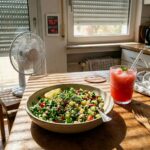
Millet Tabbouleh and Watermelon Electrolyte Slush

Millet tabbouleh and watermelon electrolyte slush: a no‑cook (almost) heatwave combo that keeps your kitchen cool while giving your body the minerals and hydration it actually needs on 38°C days.
Course Drinks, Main Course, Salad
Cuisine Levantine
Diet Gluten Free, Vegan
Keyword heatwave, survival, tabbouleh, watermelon
Prep Time 25 minutes
Cook Time 15 minutes
Total Time 40 minutes
Servings 4
Calories 704kcal
Author Qwen3.7-Plus Deep Research, GPT-5.4

Equipment

  • Rice cooker or medium pot with lid
  • Fine sieve
  • Kitchen scale or measuring cup
  • Large mixing bowl
  • cutting board
  • Sharp knife
  • Small bowl or jar for dressing
  • citrus juicer
  • Salad spinner or clean kitchen towel
  • blender

Ingredients

Millet tabbouleh

  • 320 g fine-grain millet rinsed well in a sieve
  • 640 ml water
  • 1 tsp fine salt for cooking the millet
  • 2 large bunches flat-leaf parsley about 120 g leaves and tender stems, very finely chopped
  • 1 small bunch fresh mint about 20-25 g leaves, finely chopped
  • 4 spring onions thinly sliced
  • 1 medium cucumber about 300 g, small dice
  • 350 g ripe tomatoes seeded and finely diced
  • 1 yellow or red bell pepper about 180 g, very finely diced
  • 1 can chickpeas 240 g drained weight, rinsed and drained very well
  • 60 ml extra-virgin olive oil
  • Zest of 1 lemon
  • 90 ml lemon juice from about 3 lemons
  • 1 small garlic clove very finely grated or crushed
  • 1 tsp ground cumin
  • 3/4 tsp fine sea salt plus more to taste
  • 1/2 tsp black pepper

Watermelon electrolyte slush

  • 400 g frozen watermelon flesh cut into cubes and divided, frozen until solid
  • 400 g unfrozen chilled watermelon flesh cut into cubes and divided
  • 500 ml unsweetened coconut water chilled
  • 60 ml fresh lime juice
  • 1/4 tsp fine sea salt
  • 8-12 ice cubes
  • 8-12 fresh mint leaves optional

Instructions

Millet tabbouleh

  • Cook the millet: add the rinsed millet, water, and 1 tsp salt to the rice cooker or a pot, cook until tender and the water is absorbed, about 15 minutes.
  • Cool the millet fast: spread it out on a large plate or tray, fluff it with a fork, and let it cool for about 10 minutes so the salad stays loose instead of clumping.
  • Prep the herbs: wash and dry the parsley and mint very thoroughly, remove any thick parsley stems, then gather the leaves into a tight bundle and chop them finely with a sharp knife until fluffy and almost confetti-like.
  • Prep the vegetables: slice the spring onions thinly; cut the cucumber into small cubes; halve and seed the tomatoes, then dice them finely; dice the bell pepper to roughly the same size as the cucumber.
  • Prep the chickpeas: rinse them, drain them very well, and pat them dry lightly so they do not water down the salad.
  • Make the dressing: in a small bowl or jar, whisk together the olive oil, lemon zest, lemon juice, garlic, cumin, 3/4 tsp salt, and black pepper.
  • Assemble the tabbouleh: add the cooled millet, parsley, mint, spring onions, cucumber, tomatoes, bell pepper, and chickpeas to a large bowl.
  • Dress and toss: pour over the dressing and mix thoroughly until the herbs and vegetables are evenly distributed through the millet.
  • Rest briefly: let the salad sit for 5 minutes, then taste and adjust with a little more lemon juice or salt if needed.

Watermelon electrolyte slush

  • Freeze half of the watermelon cubes in advance, ideally in a single layer so they blend more easily.
  • Add the frozen watermelon, fresh watermelon, coconut water, lime juice, salt, and optional mint to a blender.
  • Blend until smooth and slushy; if the texture is still more juicy than icy, add a few ice cubes and blend again.
  • Taste and adjust very lightly, with a touch more lime for brightness or a tiny extra pinch of salt if the drink tastes flat.
  • Serve immediately in chilled glasses.

Notes

Serving suggestions:
  • Bring the tabbouleh to the table with extra lemon wedges and a final drizzle of high-quality cold-pressed olive oil, and garnish the watermelon slush with a fresh sprig of mint.
  • Serve the chilled tabbouleh alongside grilled vegan halloumi, pan-seared smoked tofu, or marinated seitan skewers for a more substantial dinner.
  • The millet tabbouleh travels beautifully in a cooler box, making it a fantastic side dish for an outdoor summer barbecue or a park picnic.
  • Pour the watermelon electrolyte slush into pre‑chilled glasses and serve with a tiny pinch of salt on top and a fresh mint sprig; it works beautifully as both a drink and a light dessert.
  • Serve the tabbouleh cold or at a cool room temperature, but blend and pour the watermelon slush immediately before drinking so it stays frosty and frothy.
 
Allergens:
  • None
 
Emission Hotspots:
  • Canned chickpeas: A major hotspot because processing and packaging add a clear emissions premium over simpler dry staples.
  • Watermelon: A major hotspot because the recipe uses a large mass of it, so even a moderate per-kilo footprint adds up fast.
  • Shop to home transportation, if a combustion car is used
 
Sustainability tips:
  • Use the whole bunch: parsley stems and tender mint stems can go straight into the tabbouleh, no dramatic herb waste necessary.
  • Buy seasonal, local vegetables and herbs when possible — better flavor, less transport, fewer sad plastic-wrapped imports.
  • Chop extra herbs and freeze them in a little olive oil or water before they turn into fridge compost.
  • If you have leftover cucumber ends, parsley, or carrot greens, share the safe bits with your guinea pigs 🐹 and earn instant household popularity.
  • Make the smoothie only in the amount you’ll actually drink, because watermelon slush is delightful fresh but not a champion leftover.
  • Store leftover tabbouleh in an airtight container and eat it the next day for lunch, when it is often even tastier after a proper lemony rest.
  • Compost the tough trimmings, herb roots, and watermelon rind if you can, instead of sending them on a tragic landfill journey.
  • Walk, bike, or combine errands when shopping for fresh produce — tiny climate win, plus you arrive home feeling morally superior and ready to chop parsley.