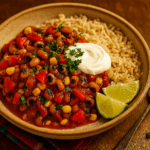
Smoky Mexican Black-Eyed Pea Skillet
Smoky Mexican Black-Eyed Pea Skillet brings together bold spices, sweet vegetables, and hearty beans for a vibrant, one-pan dinner bursting with flavor and sustainability. Whole grain rice and creamy soy yogurt make it a fresh, plant-based twist that’s as quick to cook as it is satisfying to eat.
Servings 3
Calories 706kcal
Equipment
- Large pan or skillet with a lid
- Chef’s knife
- cutting board
- Measuring spoons
- Wooden spoon
- Rice cooker or medium pot
Ingredients
- 2 tbsp olive oil
- 2 medium onions finely chopped
- 4 cloves garlic minced
- 1 red bell pepper diced
- 1 can (400g) diced tomatoes
- 1 can (285g) drained sweet corn
- 450 g cooked mini black-eyed peas frozen
- 100 ml vegetable broth
- 180 g whole grain basmati rice
- Optional Garnish: A dollop of unsweetened soy yogurt and fresh parsley chopped
For the Mexican spice mix:
- 1 tbsp sweet paprika
- 2 tsp chili powder
- 1 tsp smoked paprika
- 1 tsp ground cumin
- 1/2 tsp dried oregano
- Salt and black pepper to taste
Instructions
- Prepare the Rice: Rinse the whole grain basmati rice and cook it according to the package directions or using your rice cooker. It will take about 20-25 minutes.
- Sauté Vegetables: Heat the olive oil in a large skillet over medium heat. Add the chopped onions and cook for about 5-7 minutes, until softened and translucent. Add the diced red bell pepper and cook for another 5 minutes until it begins to soften. Stir in the minced garlic and cook for one more minute until fragrant.
- Toast the Spices: Add the sweet paprika, chili powder, smoked paprika, cumin, and oregano to the skillet. Stir continuously for about 30 seconds until the spices are aromatic.
- Simmer the Skillet: Pour in the diced tomatoes and vegetable broth. Stir everything together, scraping up any toasted spices from the bottom of the pan. Bring the mixture to a simmer.
- Add Beans and Corn: Add the frozen black-eyed peas and the drained sweet corn to the skillet. Stir to combine, then reduce the heat to low, cover, and let it simmer for 10-15 minutes, allowing the flavors to meld and the beans to heat through.
- Final Touches: Season the skillet generously with salt and pepper to your taste.
Notes
Serving suggestions:
Serve the Smoky Mexican Black-Eyed Pea Skillet hot over the cooked whole grain basmati rice. For a creamy and fresh counterpoint, top each portion with a spoonful of unsweetened soy yogurt and a sprinkle of fresh parsley (a great alternative if you dislike cilantro).
For a refreshing pairing with the Smoky Mexican Black-Eyed Pea Skillet, try a chilled glass of light Mexican lager—its crispness complements the dish’s subtle heat and savory notes wonderfully. If you prefer an alcohol-free option, serve a tall glass of ice-cold multivitamin juice with a squeeze of fresh lime for a simple, fruity twist that cools and balances the spices perfectly.
Allergens:
- Soy (in the soy yogurt. Replace with any soy-free alternative)
Emission Hotspots:
- While canned goods are convenient, they carry a higher environmental cost than their raw counterparts. The processing, metal packaging, and shipping of these heavier water-filled cans all contribute to their larger carbon footprint.
- Rice farming
- Shop to home transportation, if a combustion car is used
Sustainability tips:
- Using fresh corn during harvest season, or frozen corn as alternative significantly reduces the footprint while improving flavor.
- Choose seasonal, locally grown vegetables; in Germany, opt for domestic onions and bell peppers, as transports from abroad increase emissions.
- Energy-Efficient Cooking: Keep the lid on your pot while the skillet is simmering. This traps heat, reduces cooking time, and therefore saves energy. You can even turn off the stove a few minutes early and let the residual heat finish the cooking process
- Compost your vegetable trimmings and herb stems, turning them into nutrient-rich soil instead of landfill waste.
- Consider growing your own herbs on a sunny windowsill
- Walk or bike to the supermarket and farmer's market to cut transportation emissions
- Embrace Leftovers: This skillet tastes even better the next day as the flavors have more time to meld. Store leftovers in an airtight container in the fridge for a quick lunch, or use them as a filling for wraps or quesadillas to create an entirely new meal.
- Parsley and bell peppers are a great source of Vitamin C for Guinea pigs 🐹