Go Back

The Blackout Kitchen Menu

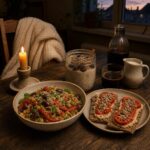
A complete no-cook blackout menu: cold-brew coffee, creamy breakfast oats, a Mediterranean couscous bowl and crispbread with smoky bean-tahini spread. Designed for when power and refrigeration are unavailable but a decent meal remains non-negotiable.
Course Breakfast, Drinks, Main Course
Diet Vegan
Keyword no-cook
Prep Time 40 minutes
Resting time 10 hours
Servings 2
Calories 1886kcal
Author GPT-5.6

Equipment

  • Cold-brew bottle with filter, or a clean bottle/jar plus a fine sieve or tea strainer
  • Manual coffee grinder, if storing whole coffee beans
  • Manual can opener
  • Two lidded jars or sealable containers for overnight oats and cold-soaking couscous
  • Large mixing bowl
  • Measuring cup or jug
  • Kitchen scale, or a marked measuring cup for repeatable coffee and couscous ratios
  • Small knife and cutting board for peppers, olives and any fresh herbs

Ingredients

Part One: Overnight Blackout Cold Brew

  • 50 g coarse-ground coffee
  • 400 ml safe drinking water
  • 200-400 ml UHT plant milk or extra safe water for serving
  • Optional: pinch of cardamom or cinnamon

Part Two: Power-Down Breakfast Jar

  • 100 g gluten-free rolled oats
  • 2 tablespoons ground flaxseed
  • 2 tablespoons hemp seeds
  • 2 tablespoons chia seeds optional
  • 2 tablespoons dried blueberries
  • 1/2 teaspoon vanilla powder
  • 1/2 teaspoon cinnamon
  • Pinch of salt
  • 350 ml UHT soy oat or other plant milk
  • 1 tablespoon almond or peanut butter optional
  • Optional: walnuts extra hemp seeds or chopped dark chocolate

Part Three: Grid-Down Mediterranean Couscous Bowl

  • 150 g couscous
  • 170 ml safe drinking water
  • 1/2 teaspoon salt
  • 1 tablespoon olive oil
  • 1 can chickpeas or white beans about 240 g drained
  • 100 g roasted red peppers from a jar drained and sliced
  • 8 –10 olives sliced
  • 1 tablespoon capers optional
  • 2 tablespoons sunflower seeds or hemp seeds
  • 1 tablespoon tomato paste from a tube
  • 2 tablespoons olive oil
  • 1 tablespoon bottled lemon juice or apple-cider vinegar
  • 1 teaspoon dried oregano
  • 1/2 teaspoon smoked paprika
  • 1/2 teaspoon ground cumin
  • Black pepper and chilli flakes to taste
  • Optional: familiar garden herbs or safely foraged greens

Part Four: Lights-Out Crispbread Supper

  • 8 to 10 gluten-free crispbreads rye crispbreads or corn crackers
  • 1 small can white beans or chickpeas about 240 g drained
  • 2 tablespoons tahini
  • 1 tablespoon olive oil
  • 1 tablespoon bottled lemon juice or apple-cider vinegar
  • 1 teaspoon tomato paste
  • 1/2 teaspoon smoked paprika
  • 1/2 teaspoon garlic powder
  • Pinch of salt and black pepper
  • 1 small jar roasted peppers drained and sliced
  • 8 to 10 olives sliced
  • 2 tablespoons hemp seeds sunflower seeds or pumpkin seeds
  • Chilli flakes or dried oregano optional

Instructions

Part One: Overnight Blackout Cold Brew

  • Add the coffee and optional spice to a clean cold-brew bottle.
  • Pour in 400 ml safe drinking water, seal and gently shake until all grounds are wet.
  • Steep for 8–12 hours in the coolest practical spot, away from direct sun or heat. Strain in the morning and drink it that day
  • Strain. Serve one part concentrate with one part UHT plant milk or safe water; taste and adjust.
  • Drink the same day. Do not turn unrefrigerated cold brew into a long-term biology project.
  • Water-smart note: Using UHT plant milk to dilute the concentrate saves part of the drinking-water reserve.

Part Two: Power-Down Breakfast Jar

  • Divide the oats, flaxseed, hemp seeds, optional chia, dried blueberries, vanilla, cinnamon and salt between two jars or bowls.
  • Add 175 ml UHT plant milk to each portion and stir thoroughly.
  • Cover and leave for at least 30 minutes; overnight makes it even creamier.
  • Stir again and top with nut butter, walnuts, extra hemp seeds or chocolate if using.
  • Eat straight away once hydrated. A prepared oat jar without refrigeration is breakfast, not tomorrow’s breakfast.

Part Three: Grid-Down Mediterranean Couscous Bowl

  • Combine couscous, salt, olive oil and water in a bowl or lidded container. Stir, cover and leave for 25–30 minutes.
  • Meanwhile, stir tomato paste, olive oil, lemon juice or vinegar, oregano, paprika, cumin, pepper and chilli into a dressing.
  • Fluff the couscous. If necessary, add one tablespoon of water, cover and wait another 10 minutes.
  • Fold in the chickpeas, peppers, olives, capers, seeds and dressing.
  • Add garden herbs or safe, familiar greens just before serving. Eat immediately.
  • No-rinse rule: Canned pulses are already cooked. In a water interruption, drain them but do not spend precious drinking water rinsing them unless you have plenty.

Part Four: Lights-Out Crispbread Supper

  • Drain the beans. In a bowl, mash them roughly with a fork.
  • Mix in tahini, olive oil, lemon juice or vinegar, tomato paste, smoked paprika, garlic powder, salt and pepper. It should be thick, rustic and spreadable; add no water unless you have plenty and actively prefer a softer texture.
  • Spread the bean-tahini mixture generously over crispbreads.
  • Top with roasted peppers, olives and seeds. Add oregano or chilli if wanted.
  • Eat immediately. Anything opened or mashed belongs in the meal, not in tomorrow’s unrefrigerated archaeology project.

Notes

Serving suggestions:
  • Serve the cold brew in a small glass with a splash of UHT oat or soy milk; add cinnamon or cardamom if the power cut has also affected your optimism.
  • Eat the Power-Down Breakfast Jar straight from its soaking jar, topped with extra hemp seeds, crushed almonds, a spoonful of almond butter or a square of dark chocolate chopped over the top. If safe fresh fruit is still available in the first days, add apple, banana or berries.
  • Serve the Mediterranean Couscous Bowl at room temperature with crispbread, corn crackers or a tortilla wrap for scooping. A little extra bottled lemon juice, chilli flakes or dried mint makes it feel much less like a logistical achievement.
  • Turn the Lights-Out Crispbread Supper into a small sharing board: arrange topped crispbreads with extra olives, jarred peppers, capers, roasted seeds and a few squares of dark chocolate for a dessert that requires neither power nor emotional fortitude.
  • In warmer weather, keep the menu out of direct sun and eat prepared food promptly.
 
Allergens:
  • Cereals containing gluten (wheat) — from the couscous in the Mediterranean Couscous Bowl.
  • Sesame — from tahini in the Lights-Out Crispbread Supper.
  • Soybeans — if soy milk is used for the breakfast jar or to dilute the cold brew.
  • Nuts — if almond butter, almonds or walnuts are used as optional breakfast toppings.
  • Peanuts — if peanut butter is used as the optional breakfast topping.
 
Emission Hotspots:
  • Canned chickpeas: A major hotspot because processing and packaging add a clear emissions premium over simpler dry staples.
  • Vanilla powder has a very high footprint per kg. Vanilla is mostly grown in Madagascar, cured by hand over months and shipped long distances.
  • Shop to home transportation, if a combustion car is used
 
Sustainability tips:
  • Prepare only what you will eat immediately. Without a fridge, leftover soaked oats, couscous, mashed beans and opened plant milk cannot be stored reliably, so the two-portion format prevents avoidable food waste.
  • Choose small cans and jars, or plan to finish a larger one across lunch and dinner. Opened chickpeas, peppers, olives and tahini-bean spread should all be eaten the same day if refrigeration is unavailable.
  • Use the whole product. Add oil from roasted peppers or sun-dried tomatoes to the dressing, use a little olive or caper brine for seasoning, and scrape out tomato paste and tahini jars thoroughly.
  • Measure water before soaking. Couscous should receive only the water it can absorb; add extra a tablespoon at a time. This avoids wasting stored drinking water and prevents a sad, watery bowl.
  • Use UHT plant milk first only after opening. An unopened carton is shelf-stable; an opened carton is not. Choose a small carton for the breakfast jar and cold brew, or use the rest that same day.
  • Make a small cold-brew batch. Brew only the amount you plan to drink that morning, strain it after 8–12 hours and do not keep it sitting around for several days without refrigeration.